Plenary authority refers to the complete and absolute power granted to an individual or governing body to make decisions and take action on a specific matter without requiring further approvals or oversight. Derived from the Latin word "plenus," meaning full or complete, plenary authority represents a form of unqualified and unrestricted power within a defined scope. In legal terms, it implies comprehensive control that is not subject to limitations except those explicitly stated by law. This concept is significant in governance and administrative contexts where rapid and decisive action is needed on particular issues, such as immigration, taxation, or military matters. For example, the United States Congress is often described as having plenary authority over immigration policy, giving it broad discretion to create, modify, and enforce immigration laws without interference from states. Plenary authority is relatively rare in governmental systems that emphasize checks and balances precisely because it concentrates power in a single entity or individual, raising important questions about accountability and constitutional limits.
Plenary authority in the context of the U.S. presidency
Plenary authority, a term rooted in legal and constitutional discourse, signifies complete and absolute power granted to an individual or governing body over a specified area. Within the U.S. presidency, plenary authority is often invoked in discussions regarding the extent and limits of executive power—especially during emergencies or situations demanding swift national action. It suggests that the president may wield broad, unqualified powers in domains such as national defense, foreign policy decision-making, or interactions with federal agencies, providing the ability to act decisively without requiring further legislative or judicial approvals.
However, plenary authority within the American constitutional system is inherently constrained by the principles of checks and balances. The Constitution establishes distinct powers and responsibilities shared among the executive, legislative, and judicial branches precisely to prevent unilateral or arbitrary governance. Legislative oversight, statutory constraints, and the judiciary’s power of review serve as critical mechanisms to check presidential authority. For example, while the president can issue executive orders directing immigration policy or deploy federal troops under the Insurrection Act, such actions remain subject to legal scrutiny and potential invalidation if found unconstitutional or beyond statutory authorization. The U.S. legal tradition conceptualizes plenary authority not as limitless but as conditional, defined by law and limited by democratic norms to safeguard civil liberties.
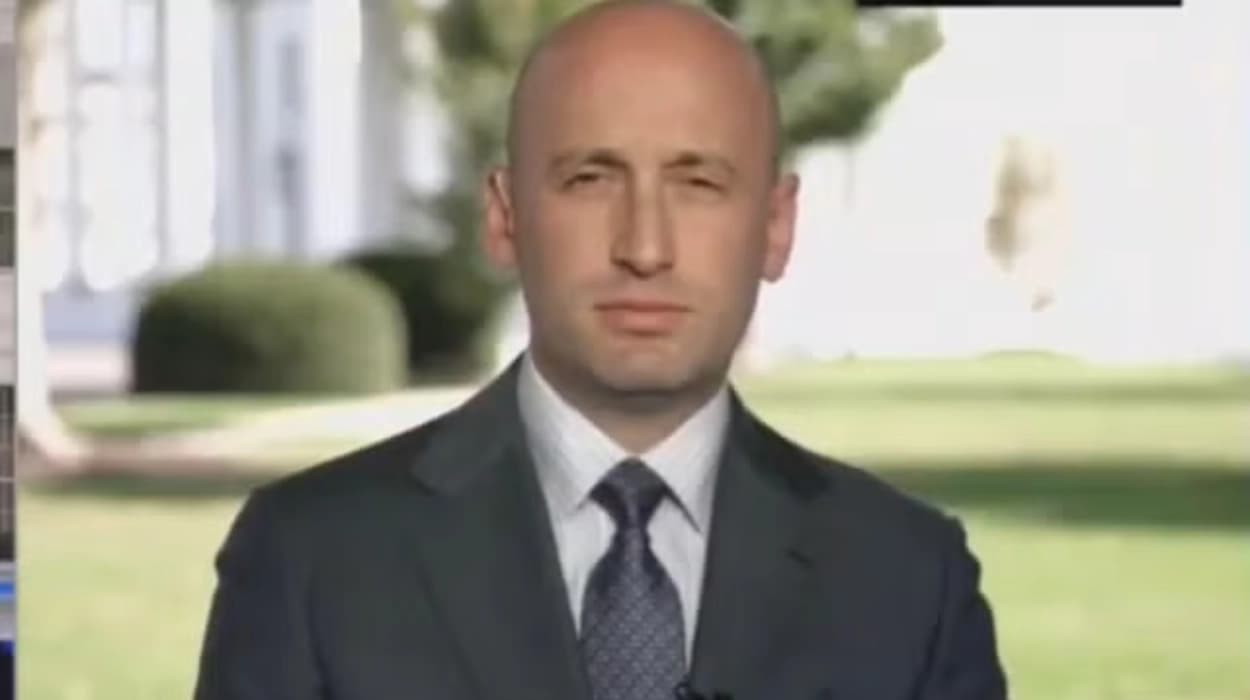
The complex nature of plenary authority was dramatically highlighted in October 2025 during a CNN interview with Donald Trump’s senior adviser Stephen Miller. Miller stated that President Trump has “plenary authority” in decisions such as deploying the National Guard in states like Oregon responding to protests and civil unrest. The moment Miller uttered “plenary authority,” he abruptly stopped speaking, a pause widely interpreted as him realizing the implications of his assertion of unqualified executive power. This incident drew attention because the phrase “plenary authority” without qualifiers implies almost total and unchecked control—an idea fundamentally at odds with the constitutional separation of powers that prohibits such concentration in any one branch.
Miller’s statement encapsulates a broader debate on the nature of presidential power. On one hand, plenary authority is necessary to act decisively in crises like insurrections, natural disasters, or national security threats. The Insurrection Act permits presidents to federalize the National Guard and use military force domestically under defined conditions, reflecting plenary powers within a legal framework. Yet, this authority must be exercised transparently, with accountability, and respect for judicial rulings to prevent executive overreach. Miller’s hesitation exemplified the tensions officials face articulating expansive presidential power while maintaining legitimacy in constitutional democracy. The edited CNN coverage that omitted the full “plenary authority” claim further underscores the sensitivity surrounding such assertions.
Historically, the concept of plenary authority has been linked to controversial and even authoritarian uses of power, raising cautionary concerns. Absolute, unqualified authority—reminiscent of dictatorships—contrasts with U.S. democratic values and constitutional restraints. Contemporary governance involves balancing effective leadership with rule-of-law adherence to protect civil rights and institutional legitimacy. Presidents wield plenary authority within statutory bounds, but key safeguards involving Congress and courts define its limits. The “plenary” descriptor thus indicates broad but not unlimited power, subject to legal and institutional checks ensuring power is not exercised capriciously.
Stephen Miller’s use of the term plenary authority
Stephen Miller, a prominent political adviser known for his influence on immigration and national security policies during Donald Trump’s administration, brought the term "plenary authority" into public debate in October 2025. During a televised interview with CNN, Miller asserted that President Trump had “plenary authority” to make decisions regarding the deployment of the National Guard in states such as Oregon in response to protests and civil unrest. This statement triggered widespread attention and debate because it suggested an assertion of absolute presidential power without apparent checks. Miller abruptly stopped mid-sentence, which many interpreted as his realization of the potential implications of claiming fully unchecked authority, perhaps reflecting the delicacy of constitutional authority discussions.
Miller’s reference to plenary authority spotlighted the tension between emergency executive actions and the constitutional framework designed to share power among branches of government. Critics argued that such a claim contradicted the principle of separation of powers, which prohibits unilateral executive decisions without legislative or judicial oversight. Supporters contended that plenary authority over certain national security matters is a necessary tool for the executive branch to maintain order and prompt responses during crises. Miller, as a senior adviser, represented a strong voice advocating expansive executive power, particularly in immigration enforcement and security policies. His framing of plenary authority reflects ideological perspectives that prioritize decisive government action while underscoring ongoing debates about constitutional limits in American governance.
Stephen Miller’s net worth and financial profile
Stephen Miller’s net worth as of 2025 is estimated to be around $1 million, a figure based largely on his several years of public service and political advisory roles. His career has primarily centered on government employment, serving in senior positions in the Trump administration including as senior adviser to the president on immigration and domestic policy. While public figures’ net worth estimates can vary, Miller’s financial portfolio is understood to reflect earnings from government salaries, occasional speaking engagements, book deals, and related consultancy or media appearances. Unlike some high-profile politicians or private sector figures, Miller’s wealth accumulation is relatively modest due to the nature of his career within public service.
Financial disclosures and reports indicate Miller has invested prudently, and his lifestyle incorporates residence in the Washington, D.C. area with a focus on privacy. Observers note that his income sources reflect steady, government-based compensation rather than large entrepreneurial or investment-derived wealth. Miller’s net worth underscores the career trajectory of many political aides who gain influence and public profiles without accumulating the substantial financial assets associated with elected office or corporate leadership. Despite a controversial public persona shaped by his political work, Miller’s financial standing remains aligned with professional civil service norms.
The broader implications of plenary authority and Miller’s legacy
The invocation of plenary authority by figures like Stephen Miller encapsulates broader challenges inherent in modern democratic governance—balancing effective, decisive executive power against institutional checks designed to prevent tyranny. Plenary authority symbolizes the tension between the need for rapid response capabilities in national security and governance and the foundational principles of accountability, rule of law, and separation of powers. Miller’s reference and subsequent hesitation in public discourse have sparked extensive discussion about the limits of presidential power under the U.S. Constitution.
Miller’s legacy as a senior adviser and political strategist includes shaping aggressive immigration reform agendas and advocating for robust executive authority on security matters. His role in public debates about plenary authority highlights the ongoing ideological divides about executive power across the American political spectrum. Legal scholars caution that the unchecked expansion of such authority risks eroding democratic norms, while proponents argue it is essential for preserving national security and effective governance in crisis scenarios.
Plenary authority designates full and unqualified power to act within specific legal bounds, a concept that carries profound constitutional significance. Stephen Miller’s articulation of the term in 2025 brings to the fore critical debates regarding executive power limits, constitutional checks, and the appropriate use of government authority. While Miller’s net worth illustrates the financial profile of a career political adviser, his influence in political discourse reflects enduring conflicts over the balance of power in the U.S. system—an issue likely to persist in American political life.