
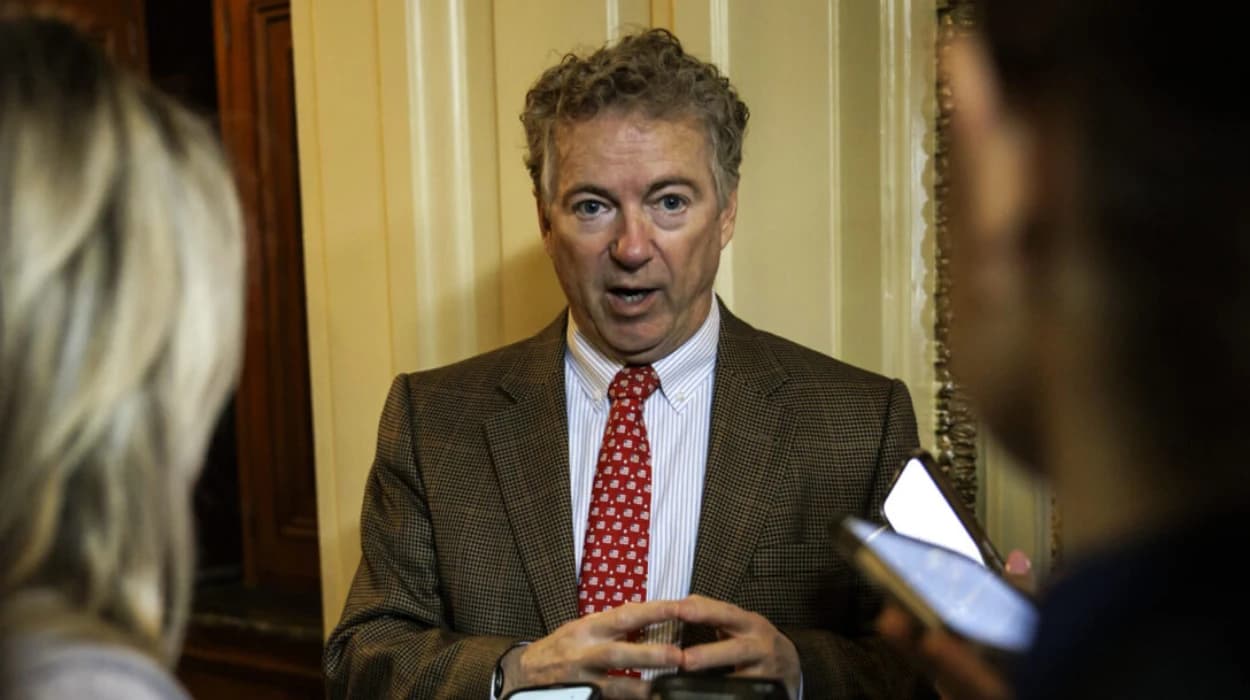
Rand Paul, the United States Senator from Kentucky, has emerged as a prominent libertarian voice in American politics. Renowned for his constitutional conservatism and advocacy for individual liberties, Paul has made a significant impact since his election to the Senate in 2010. His unique blend of libertarian principles with mainstream Republican policies has positioned him as a distinct figure within the GOP.
Early Life and Background
Randal Howard Paul was born on January 7, 1963, in Pittsburgh, Pennsylvania. Raised in Lake Jackson, Texas, he is the son of Ron Paul, a former congressman and three-time presidential candidate known for his libertarian views. Educated at Baylor University and the Duke University School of Medicine, Rand Paul pursued a career as an ophthalmologist before entering politics. His medical career included founding the Southern Kentucky Lions Eye Clinic, providing affordable eye care to underprivileged communities. This humanitarian effort showcases his dedication to service beyond politics.
Political Career and Rise to Prominence
Paul announced his candidacy for the U.S. Senate in 2009 and was elected in 2010, representing Kentucky. His tenure has been marked by a steadfast commitment to libertarian ideals, including limited government, fiscal conservatism, and protection of civil liberties. A member of several key Senate committees, including Homeland Security and Small Business, Paul has used his platform to challenge federal overreach and advocate for transparency.
Paul's political activism began early, influenced by his father’s campaigns and his own involvement in tax reform groups such as Kentucky Taxpayers United. His grassroots approach resonated with voters eager for reform and limited government, traits central to the Tea Party movement with which he is affiliated.
Libertarian Voice in the Senate
Rand Paul’s legislative efforts reflect his libertarian philosophy. He is well-known for his filibuster against the nomination of CIA Director John Brennan, focusing on concerns about drone strikes on American soil without due process. He also filed a lawsuit challenging the National Security Agency’s mass phone metadata collection, emphasizing privacy rights and Fourth Amendment protections.
Paul has consistently championed criminal justice reform, advocating for restoration of voting rights for nonviolent offenders and reductions in mandatory minimum sentences. He spearheaded efforts to create Economic Freedom Zones aimed at encouraging development in areas with high unemployment.
Policy Positions and Public Stance
As a constitutional conservative, Paul promotes individual liberty, free-market economics, and a non-interventionist foreign policy. He advocates for reducing federal spending, reforming taxation including support for a flat tax and limiting government regulations that stifle innovation.
On social issues, Paul blends conservative and libertarian views, opposing abortion but emphasizing states’ rights and personal freedom. He supports protecting Second Amendment rights and has called for reform in areas such as surveillance and privacy.
Paul has maintained a critical stance toward extensive U.S. military engagements abroad, advocating for a more restrained foreign policy, which diverges from mainstream party positions at times but aligns with libertarian ideals.
Campaign and Elections
Rand Paul ran for the Republican nomination in the 2016 presidential election. Positioned as a principled libertarian alternative, his campaign highlighted themes of civil liberties, economic freedom, and constitutional governance. Though his candidacy garnered attention, particularly among younger voters and libertarian circles, it ultimately did not lead to the nomination.
In Kentucky, Paul has been successful in his Senate bids, winning re-election campaigns in 2016 and 2022. His continued electoral success evidences his appeal to Kentucky’s blend of conservative and libertarian-leaning voters.
Legislative Influence and Legacy
While none of Rand Paul’s bills have passed overwhelmingly due to being a member of the minority party for much of his tenure, his influence lies in shaping national conversation and pushing forward libertarian issues. His persistent filibusters, public speeches, and legislative proposals have brought critical attention to concerns over government surveillance, civil liberties, and fiscal responsibility.
Paul’s role in forming the Senate Tea Party Caucus helped consolidate conservative libertarian activism, setting the stage for future movements advocating limited government and individual freedom.
Rand Paul’s political career embodies the voice of libertarianism within contemporary American governance. From his medical background to his Senate advocacy, Paul champions principles centered on personal freedom, limited government, and constitutional fidelity. His impact extends beyond legislative achievements, influencing political discourse on privacy, economic policy, and the role of government. As a distinct figure within the Republican Party, Rand Paul continues to be a key advocate for libertarian ideals in Kentucky and across the nation.