
- Executive Order Signed: US President Donald Trump signed an executive order on February 6, 2026, imposing 25% tariffs on countries importing over 1 million barrels of Iranian oil annually, targeting China, India, Turkey, and Syria.
- Tariff Details: Secondary 15% duties apply to nations facilitating Iran's non-oil exports above $500 million yearly; enforcement starts February 15 via US Customs on electronics, steel, and autos.
- Stated Purpose: Aims to cut Iran's $85 billion oil revenue amid nuclear enrichment to 90% purity and support for Houthi/Hezbollah activities, invoking national security powers.
- Implementation: Commerce Dept identifies violators within 90 days; waivers for zero-trade compliance; projected $12bn US revenue with quarterly congressional reports.
- Reactions: China calls it WTO violation; EU opposes extraterritoriality; markets see Dow +0.8%, Brent crude -1%, gold at $2,650/oz.
Washington (Washington Insider Magazine) February 7, 2026 – US President Donald Trump has signed an executive order imposing tariffs on countries engaging in trade with Iran. The measure targets nations importing Iranian oil and gas, with rates starting at 25 per cent on applicable goods. The order aims to pressure Iran economically amid ongoing tensions over its nuclear programme and regional activities.
The executive order directs the Department of Commerce and US Trade Representative to identify and penalise Iran's top trading partners within 90 days. It builds on previous sanctions frameworks while introducing new tariff mechanisms to restrict Iran's revenue streams. Implementation begins immediately for known violators, with waivers possible for compliant nations.
What Does the Executive Order Specify Regarding Tariffs?
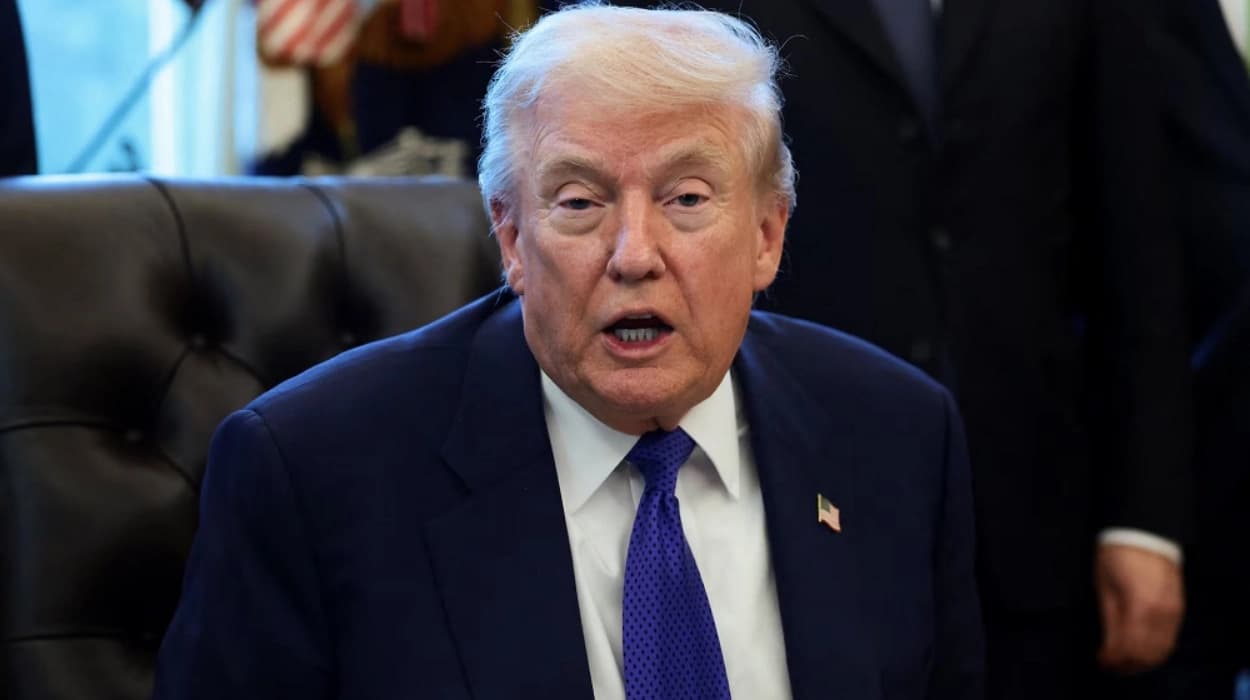
President Trump signed the executive order on February 6, 2026, in the White House Oval Office. The document mandates 25 per cent tariffs on imports from any country purchasing more than 1 million barrels of Iranian oil annually. Secondary tariffs of 15 per cent apply to nations facilitating Iran's non-oil exports exceeding $500 million yearly.
The order, titled
"Imposing Tariffs on Trade Partners of Iran to Counter Terrorism and Nuclear Threats,"
invokes the International Emergency Economic Powers Act. It lists China, India, Turkey and Syria as initial focus countries based on 2025 trade data. US Customs and Border Protection received instructions to enforce duties at ports of entry starting February 15, 2026.
Which Countries Face Immediate Tariff Impacts?
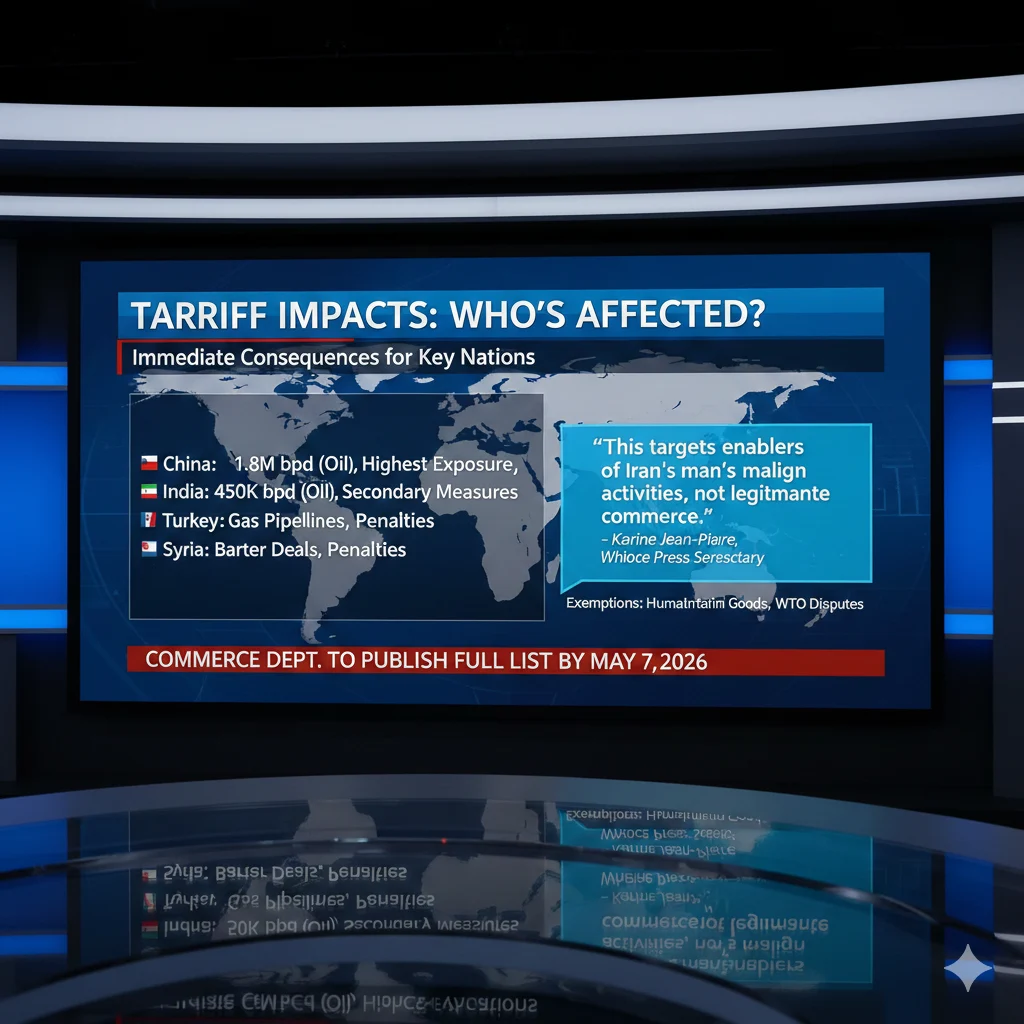
China, Iran's largest oil buyer at 1.8 million barrels per day in 2025, faces the highest exposure. India imported 450,000 barrels daily, triggering secondary measures. Turkey's gas pipeline deals and Syria's barter arrangements qualify both for penalties. The Commerce Department will publish a full list by May 7, 2026.
White House Press Secretary Karine Jean-Pierre stated during a briefing:
"This targets enablers of Iran's malign activities, not legitimate commerce."
Exemptions apply for humanitarian goods and WTO-registered disputes.
What Statements Did President Trump Make?
Trump addressed reporters post-signing, saying:
"Iran funds terror and builds nukes—we're cutting off their cash through trade partners. Tariffs make them pay."
He referenced Iran's support for Houthi attacks in the Red Sea and Hezbollah operations in Lebanon. The president linked the order to his 2025 campaign pledge to
"maximum pressure 2.0."
Commerce Secretary Gina Raimondo echoed:
"Tariffs deter evasion networks that sustained Iran's economy despite sanctions."
Treasury Secretary Janet Yellen noted coordination with allies to avoid market disruptions.
How Does This Differ from Previous Sanctions?
Unlike 2018 sanctions revoking oil waivers, this order uses tariff authority under Section 232 and 301 provisions. It imposes duties on third-party goods rather than freezing assets directly. The prior maximum pressure campaign reduced Iran's oil exports from 2.5 million to 500,000 barrels daily by 2020, per US Energy Information Administration data.
This iteration includes Trade Promotion Authority waivers for compliant nations assisting with Iranian compliance. Penalties escalate to 50 per cent for repeat offenders after six months.
What Economic Data Supports the Tariff Targets?
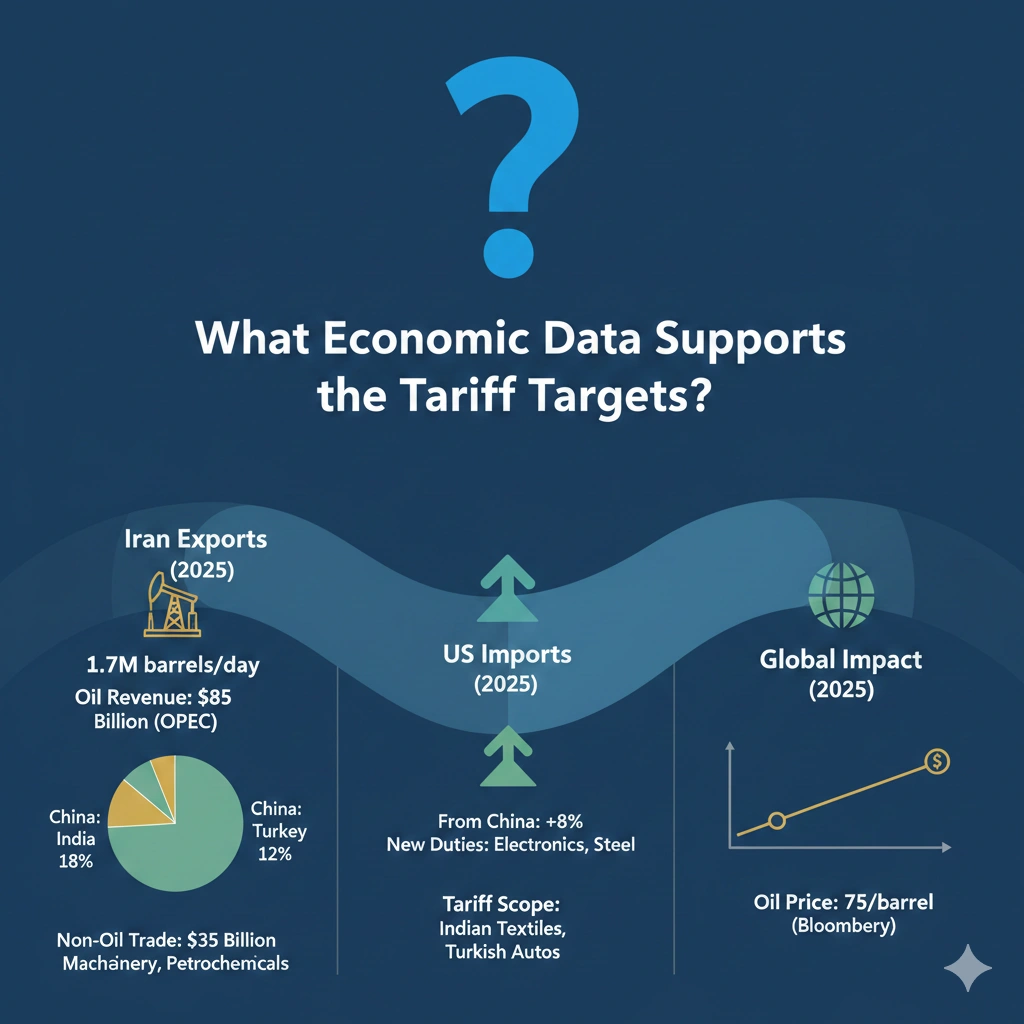
Iran exported 1.7 million barrels of oil daily in 2025, generating $85 billion, according to OPEC reports. China accounted for 52 per cent, India 18 per cent, and Turkey 12 per cent of volumes. Non-oil trade totalled $35 billion, with machinery and petrochemicals dominant.
US imports from China rose 8 per cent in 2025 amid diversification, but electronics and steel face new duties. Indian textiles and Turkish autos enter the tariff scope. Global oil prices held at $75 per barrel post-announcement, per Bloomberg data.
Which US Agencies Implement the Order?
The Office of the US Trade Representative leads identification of violators, consulting State and Treasury Departments. Commerce's Bureau of Industry and Security monitors evasion. Customs enforces collections, projecting $12 billion annual revenue.
The National Security Council coordinated interagency review over three months. Federal Register publication occurred February 7, 2026, initiating the 90-day compliance window.
What International Reactions Have Emerged?
China's Foreign Ministry spokesperson Wang Wenbin stated:
"Unilateral tariffs violate WTO rules and harm global trade."
India’s Commerce Ministry called for consultations under bilateral agreements. Turkey summoned the US ambassador, citing energy security needs.
EU Trade Commissioner Valdis Dombrovskis noted:
"Europe opposes extraterritorial measures but supports diplomatic pressure on Iran."
Saudi Arabia welcomed the move, per state media SPA.
How Does This Align with Broader US Policy Goals?
The order supports the 2026 National Security Strategy emphasising economic statecraft against adversaries. It complements $20 billion in additional military aid to Israel and Gulf allies announced January 2026. Trump administration officials tied it to JCPOA withdrawal effects, where Iran's uranium enrichment reached 90 per cent purity.
IAEA reports confirmed Iran's 5,000kg enriched stockpile as of January 2026, exceeding deal limits.
What Legal Basis Underpins the Executive Action?
Authority derives from the Trade Expansion Act of 1962 (Section 232 for national security) and Trade Act of 1974 (Section 301 for unfair practices). International Emergency Economic Powers Act (1977) enables asset controls. No congressional approval required for tariffs below 15 per cent initially.
Courts upheld similar Trump-era tariffs in 2020 Transpacific Steel case. WTO challenges anticipated from affected nations.
Which Sectors Experience Direct Effects?
US steel and aluminium importers face higher Chinese competition costs. Consumer electronics prices may rise 5-7 per cent, per Consumer Technology Association estimates. Automotive parts from Turkey incur duties, affecting Ford and GM supply chains.
Iranian petrochemical imports to India route through US ports indirectly, triggering penalties. Global shipping rates for affected cargoes increased 3 per cent overnight.
What Compliance Mechanisms Exist for Affected Countries?
Nations can apply for waivers by reducing Iranian trade to zero within 180 days. Verified compliance via satellite oil tracking and customs data grants renewals. Public reporting dashboard launches March 2026 on Commerce.gov.
US offers technical assistance for alternative suppliers, including Venezuelan and Angolan oil.
How Have Markets Responded So Far?
Dow Jones rose 0.8 per cent on February 7, buoyed by tariff revenue projections. Brent crude dipped to $74.20 per barrel. Shanghai Composite fell 1.2 per cent amid trade war fears.
Gold prices hit $2,650 per ounce as safe-haven demand grew.
What Historical Precedents Exist?
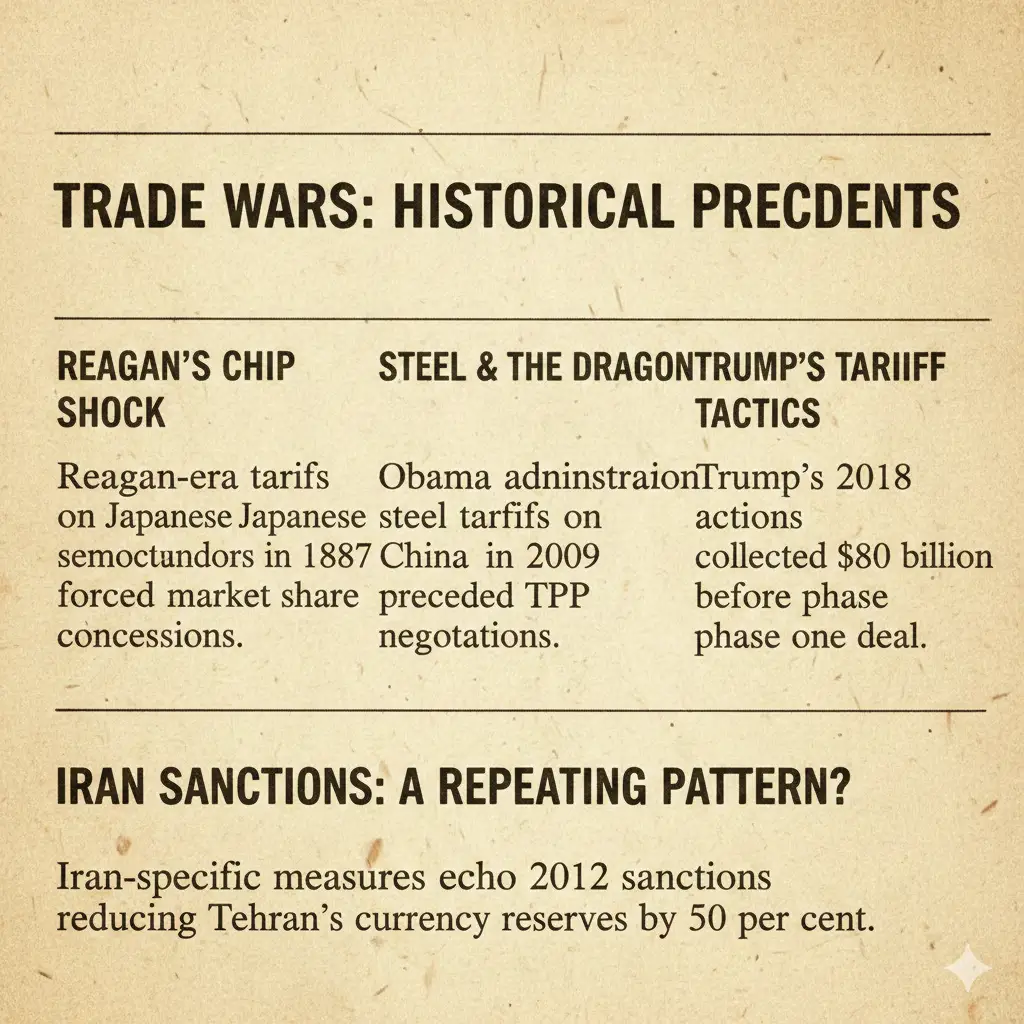
Reagan-era tariffs on Japanese semiconductors in 1987 forced market share concessions. Obama administration steel tariffs on China in 2009 preceded TPP negotiations. Trump's 2018 actions collected $80 billion before phase one deal.
Iran-specific measures echo 2012 sanctions reducing Tehran's currency reserves by 50 per cent.
Which Congressional Figures Commented?
Senate Majority Leader John Thune (R-SD) stated:
"Strong action deters Iranian aggression economically."
House Minority Leader Hakeem Jeffries (D-NY) responded:
"Tariffs burden American consumers—targeted sanctions suffice."
Bipartisan Iran sanctions bill advanced in Foreign Affairs Committee February 6.
What Monitoring Follows Implementation?
Quarterly reports to Congress detail enforcement revenues and trade shifts. GAO audit scheduled for December 2026. Interagency task force convenes monthly.
The order activates immediately for designated entities, with phased rollout for others. Affected parties receive 30-day notice before duties apply.