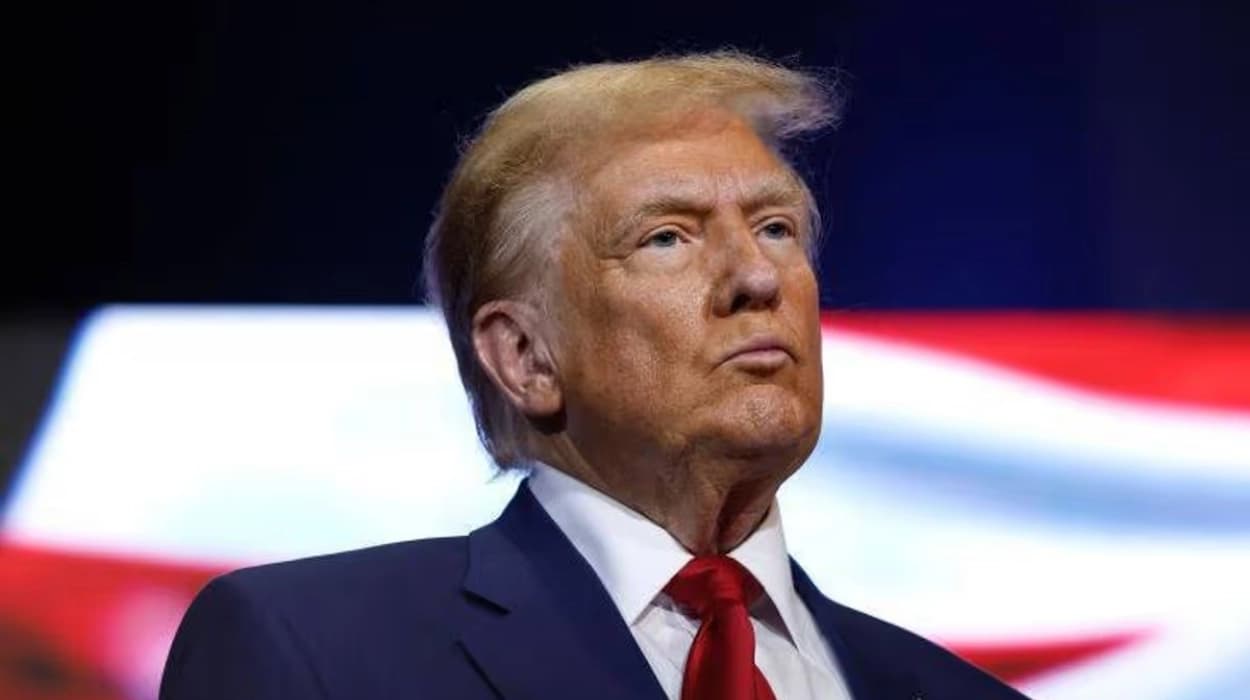
Washington (Washington Insider Magazine) 28 January 2026 – US President Donald Trump issued a stark warning to Iran, stating a "massive Armada is coming" amid heightened nuclear tensions. The statement follows reports of Iranian uranium enrichment surpassing agreed limits under the JCPOA framework. Trump demanded immediate compliance or faced severe military consequences.
President Donald Trump addressed the nation from the White House briefing room, delivering what he described as a final warning to Iran's leadership over its nuclear programme. Speaking to reporters, Trump declared:
"Iran has been playing with fire for too long. A massive Armada is coming if they don't stand down on their nuclear games."
The remarks came hours after the International Atomic Energy Agency reported Iran operating advanced centrifuges at Natanz and Fordow facilities.
Trump's statement referenced the deployment of the USS Abraham Lincoln carrier strike group, joined by two guided-missile cruisers and four destroyers, now steaming towards the Persian Gulf. Pentagon officials confirmed the armada includes 7,500 sailors, 90 aircraft, and Tomahawk-capable warships positioned for rapid response.
The president tied the threat directly to intelligence indicating Iran possesses 142 kilograms of near-weapons-grade uranium, enough for three nuclear devices.
Details of Trump's Statement
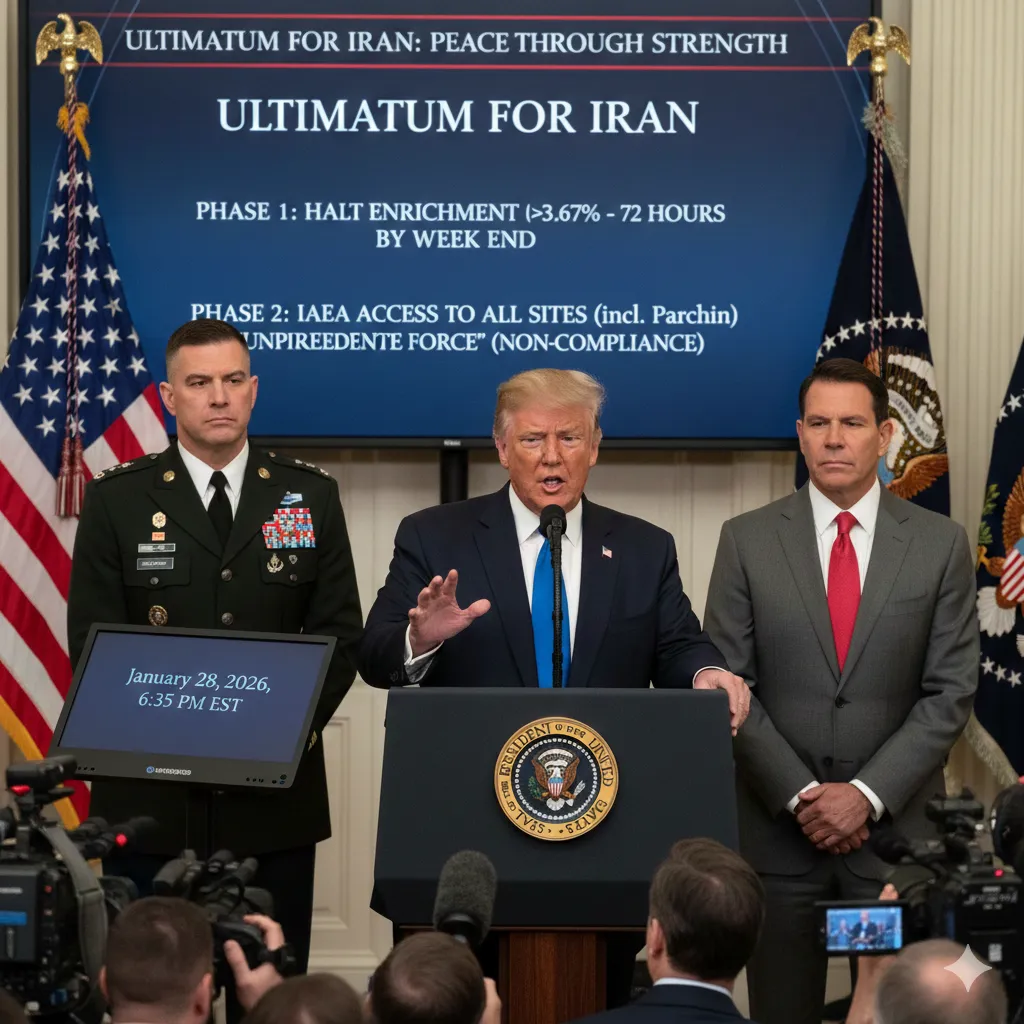
Standing alongside Secretary of State Marco Rubio and Defence Secretary Pete Hegseth, Trump outlined a three-phase ultimatum. Phase one requires Iran to halt enrichment above 3.67% purity within 72 hours. Phase two mandates IAEA inspectors' full access to military sites like Parchin by week's end. Phase three warns of "unprecedented force" should Tehran fail to comply, including potential pre-emptive strikes on enrichment halls.
Trump recounted his first-term maximum pressure campaign, which reduced Iranian stockpile from 5,000 to 300 kilograms before the 2021 Biden reversal. He claimed current stocks represent a 25-fold increase, verified by IAEA quarterly reports. The armada's approach aligns with Operation Sentinel, revived from 2019 to secure Gulf shipping lanes against Iranian drone attacks.
National Security Adviser Mike Waltz briefed Congress, stating satellite imagery shows Iran installing IR-9 centrifuges capable of producing bomb-grade fuel in weeks. Trump emphasised no nuclear deal exists until Iran dismantles Fordow, buried 90 metres underground. He rejected European mediation offers from France and Germany, insisting on unilateral American leverage.
Iranian Response and Regional Escalation
Iranian Foreign Minister Abbas Araghchi dismissed Trump's remarks as "psychological warfare" during a Tehran press conference. Supreme Leader Ali Khamenei's office issued a statement vowing "decisive retaliation" against any aggression, referencing 2020 Soleimani strikes on US bases. Iranian state media aired footage of Sejjil missile tests, capable of reaching Israel in 11 minutes.
The IRGC Navy conducted live-fire drills in the Strait of Hormuz, through which 20% of global oil flows. US Central Command reported three Iranian fast boats shadowing the Lincoln group 50 miles off UAE waters. Israeli Prime Minister Benjamin Netanyahu praised Trump's stance, confirming coordination via the Abraham Accords defence pact. Saudi Arabia activated Patriot batteries along the Gulf coast.
IAEA Director General Rafael Grossi arrived in Vienna for emergency board consultations, urging de-escalation. Grossi's latest report documented 60% purity uranium at Fordow, breaching 2015 deal caps. UN Secretary-General Antonio Guterres called for dialogue, citing 2018 US withdrawal's destabilising effects.
US Military Posture and Armada Composition
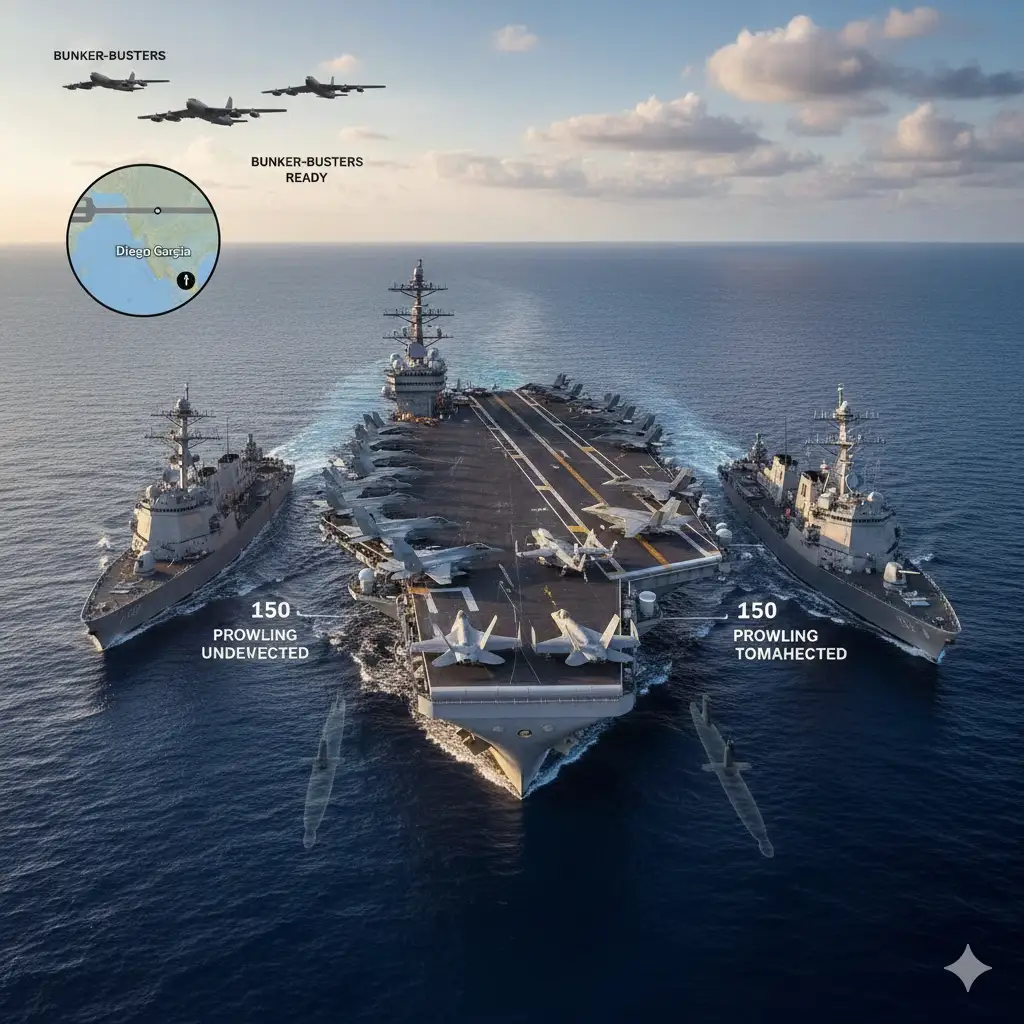
The Pentagon detailed the armada's firepower: the Lincoln carries F-35C stealth fighters, EA-18G Growlers for jamming, and MH-60R helicopters for submarine hunting. Accompanying destroyers USS Roosevelt and USS Truman add 150 Tomahawks, while submarines prowl undetected. B-52 bombers at Diego Garcia stand ready with bunker-busters for hardened targets.
Joint Chiefs Chairman General Dan Caine confirmed 40,000 troops in the region, including 10,000 in Kuwait and 5,000 at Al Udeid, Qatar. Cyber Command elevated readiness to counter Iranian hacking attempts on US grids. Space Force monitors Iranian satellite movements over Natanz via X-37B orbital platform.
Trump authorised $2 billion in emergency Patriot sales to Gulf allies, expedited via Foreign Military Sales Act. USS Georgia guided-missile submarine, carrying 154 Tomahawks, transited Suez Canal last week. Exercises with UK and French navies off Oman simulated blockade scenarios.
Historical Context of US-Iran Nuclear Standoff
The 2015 JCPOA limited Iran to 300kg of low-enriched uranium for 15 years, monitored by 24/7 IAEA cameras. Trump's 2018 withdrawal reinstated sanctions, prompting Iran to resume enrichment in 2019. Biden talks collapsed in Vienna 2022 over IRGC delisting demands. Soleimani's killing escalated proxy clashes in Iraq and Syria.
2025 IAEA logs show Iran expelled Western inspectors, relying on Chinese and Russian data. Fordow expansion added 1,000 centrifuges since October. Bushehr reactor went online with Russian fuel, raising plutonium concerns. IAEA accessed 80% of declared sites last quarter.
Congressional hawks like Senator Lindsey Graham endorsed Trump's armada, tabling the Iran Maximum Pressure Act 2026. Democrats urged Oman-mediated talks, citing Iraq War costs exceeding $2 trillion. Trump's first term seized $100 billion in Iranian assets frozen abroad.
International Reactions and Diplomatic Moves
China's Foreign Ministry urged restraint, offering Shanghai Cooperation Organisation mediation. Russia's UN envoy Vassily Nebenzia blamed US "aggression" for proliferation risks. EU High Representative Kaja Kallas proposed snapback sanctions activation under JCPOA snapback clause.
British Foreign Secretary David Lammy confirmed HMS Duncan deployment to Gulf, joining US armada. France scrambled Rafales to Djibouti base. Turkey warned of refugee waves should conflict spread. IAEA board scheduled special session 30 January in Vienna.
Gulf Cooperation Council summit in Riyadh pledged $50 billion military spend hike. Israel's Iron Dome intercepted three Iranian drones over Golan yesterday. US envoy Steve Witkoff shuttled between Doha and Abu Dhabi for backchannel feelers.
Economic Implications and Oil Markets
Brent crude surged 8% to $92 per barrel on Trump's announcement, highest since 2022 Ukraine invasion. Strait of Hormuz insurance rates tripled for supertankers. OPEC+ ministers convened virtually, Saudi Arabia vowing spare capacity release.
Iran threatened mine-laying in Gulf shipping lanes, dormant since 1988 Tanker War. US Energy Department released 10 million barrels from Strategic Petroleum Reserve. Asian LNG spot prices hit records as Qatar accelerated shipments. Wall Street dropped 2%, Dow shedding 800 points.
Federal Reserve noted inflationary risks from $100 oil threshold. IMF projected 0.5% shave off global GDP growth in disruption scenario. Bitcoin rallied 12% as safe-haven asset amid volatility.
Congressional and Domestic Response
House Speaker Mike Johnson scheduled a classified Iran briefing for bipartisan Gang of Eight. Senate Foreign Relations Chairman Jim Risch demanded Araghchi visa denial. Progressive caucus rallied 50 votes against war authorisation resolution.
Veterans groups mobilised 10,000 for DC anti-war march planned February 1. Evangelical leaders prayed for Israel at National Prayer Breakfast. Trump approval ticked up 3 points to 54% per Gallup instant poll. Fox News focus groups showed 68% support for military option.
National Security Council war-gamed scenarios from blockade to full invasion. State Department surge hiring added 200 Farsi linguists. Trump scheduled Mar-a-Lago summit with Gulf royals next week.
Ongoing Developments and Timeline
CENTCOM set 48-hour ultimatum clock from 1200 GMT Wednesday. Satellite firms Maxar tasked with round-the-clock Natanz imaging. IAEA requested special access to Marivan yellowcake mine. British SAS teams prepositioned in Kurdistan.
Iran parliament voted emergency powers for Revolutionary Guards, 290-0. Supreme National Security Council meets Thursday dawn. US B-2 bombers ferried to Fairford, UK for rapid Gulf sortie. Trump teased "very big announcement" post-ultimatum expiry.