
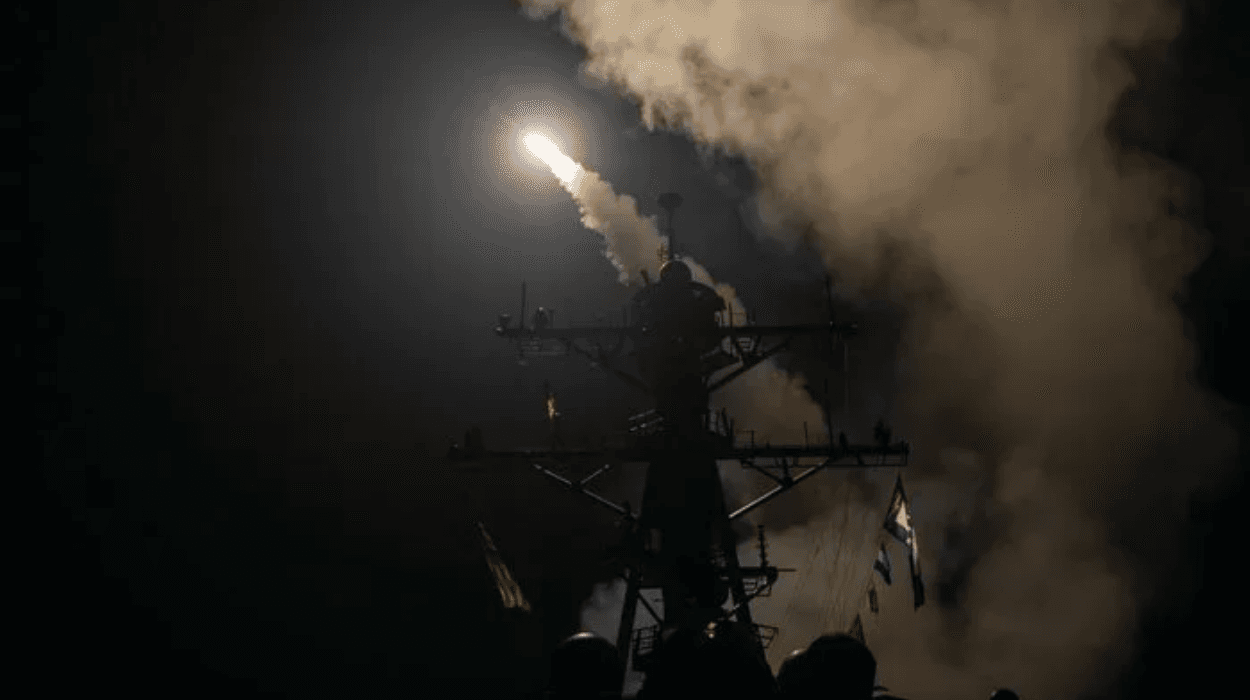
The Pentagon has announced significant upgrades to the Tomahawk missile family, focusing on extended-range capabilities that enhance U.S. naval strike options. These developments, centered on the Block V series, build on decades of proven performance to meet evolving global threats. The enhancements ensure greater precision, survivability, and multi-mission flexibility for surface ships and submarines.
Historical evolution
The Tomahawk Land Attack Missile entered U.S. Navy service in 1983, marking a pivotal shift toward long-range, precision-guided munitions. Initial Block I variants achieved initial operational capability in 1984, with Block II following in 1986 to incorporate nuclear and conventional payloads. By 1993, Block III introduced time-of-flight submunitions and improved unitary warheads, expanding target sets from fixed infrastructure to dispersed forces.
Combat deployment began during Operation Desert Storm in 1991, where 288 Tomahawks struck Iraqi targets, demonstrating over 85% accuracy in early missions. Subsequent operations, including Odyssey Dawn in 2011 and Inherent Resolve from 2014 onward, have seen more than 2,300 launches, achieving success rates above 90%. This track record underscores the missile's reliability across diverse theaters, from desert environments to urban complexes.
Early designs emphasized subsonic speed at 550 miles per hour, low-altitude flight profiles under 100 meters, and modular construction for cost-effective upgrades. Length measures 6.25 meters for encapsulated variants, with a launch weight of 1,588 kilograms and wingspan of 2.67 meters when deployed. These parameters allowed integration with vertical launch systems on Arleigh Burke-class destroyers and Virginia-class submarines.
Core technical specifications
Tomahawk missiles maintain a high-subsonic cruise speed via Williams F107 turbofan engines, providing endurance for ranges exceeding 1,000 miles. Conventional Block IV carries a 450-kilogram warhead, blending blast-fragmentation effects with penetration options. Guidance fuses digital scene matching area correlator for terminal phase accuracy, terrain contour matching for mid-course navigation, and GPS for en-route corrections.
Block IV, operational since 2004, introduced two-way satellite data links for in-flight retargeting to up to 150 coordinates, loiter times of several hours, and battle damage assessment via onboard sensors. Production totals surpass 4,000 units, with unit costs stabilized at approximately $1.8 million through economies of scale. Launch platforms include Mark 41 vertical launch systems, accommodating up to 90 missiles per destroyer.
The missile's sea-skimming profile over water and terrain-hugging over land minimizes radar exposure, with infrared seekers aiding terminal acquisition. Fuel capacity supports non-stop flights of 12-15 hours, while redundant flight controls ensure operation in GPS-denied scenarios. These features position Tomahawk as a cornerstone of standoff precision strike.
Block V configuration overview
The Block V upgrade recertifies existing Block IV inventory, extending service life by 15 years while adding navigation and communications enhancements. Announced contracts value production at hundreds of millions, with Raytheon in Tucson, Arizona, handling integration of new seeker kits and warheads. Deliveries support U.S. Navy, Marine Corps, Army, and select allies through 2029.
Core Block V improves electronic hardening against jamming, enabling reliable operation in contested electromagnetic spectra. Navigation upgrades incorporate anti-spoofing algorithms and multi-constellation satellite support, boosting circular error possible to under 3 meters. Communications suites allow real-time updates from joint command networks, facilitating dynamic mission planning.
Over 3,992 Block IV missiles qualify for conversion, with modernization facilities expanded to meet demand. This lifecycle extension preserves institutional knowledge while incorporating software-defined radios for future-proofing against emerging threats. Block V maintains the 1,600-kilometer range baseline, with optimizations for fuel efficiency extending loiter durations.
Block Va Maritime strike capabilities
Block Va, the Maritime Strike Tomahawk, integrates active radar seekers for anti-surface warfare, targeting moving ships at ranges over 1,000 miles. This variant trades minor range for enhanced sensor suites, including multi-mode radars that detect vessels in high-sea states. Initial fielding occurred on submarines in 2024, with full-rate production accelerating in 2025-2026.
Seekers process synthetic aperture radar imagery for classification, distinguishing combatants from merchant traffic amid clutter. Warhead delivery optimizes for hull penetration, with fuze delays accommodating angled impacts. Integration with Aegis combat systems enables cooperative targeting, where offboard sensors cue missile acquisition.
Deployment expands naval options in peer conflicts, holding adversary carrier groups at risk without exposing launch platforms. Over 35-96 units upgraded in initial lots, scalable to inventory needs pending congressional funding. This capability restores overmatch against modern blue-water navies.
Block Vb multi-effects warhead
Block Vb incorporates the Joint Multiple Effects Warhead System, blending blast, fragmentation, and shaped-charge effects in a single 450-kilogram payload. Designed for hardened targets like bunkers and underground facilities, it penetrates reinforced concrete before detonating. Proximity and impact fuzes adapt to target geometry, maximizing lethality across soft and fortified structures.
Warhead innovations stem from multi-mode liners that fragment into penetrators or expand for area effects, addressing diverse threats from command centers to vehicle convoys. Testing validates performance against 2-meter concrete equivalents, surpassing legacy unitary designs. Production kits retrofit existing airframes, minimizing logistical burdens.
This variant enhances land-attack versatility, supporting rapid response to time-sensitive targets. Fielding aligns with multi-domain operations, where Tomahawk complements hypersonic and ballistic systems for layered fires.
Propulsion and range extensions
Upgraded turbofan engines in Block V deliver 15% greater thrust efficiency, pushing maximum range toward 1,800 miles in lightweight configurations. Optimized inlets reduce drag during sea-skimming, while composite materials lighten airframes without compromising strength. These changes sustain subsonic speeds over intercontinental distances.
Fuel management systems dynamically allocate propellant for loiter or sprint phases, extending on-station time to 18 hours. Exhaust nozzles incorporate thrust vectoring for evasive maneuvers, improving terminal survivability. Reliability exceeds 95% mean time between failures, drawn from operational data.
Longer ranges enable strikes from sanctuary areas, reducing transit vulnerabilities for carriers and submarines. Integration with forward-based allies further extends effective reach, aligning with distributed maritime operations doctrines.
Guidance and sensor fusion
Advanced guidance layers inertial measurement units with ring-laser gyros for drift-free navigation, augmented by star trackers for periodic alignment. AI-driven scene analysis correlates electro-optical imagery against databases, enabling autonomous target discrimination. DSMAC updates occur multiple times en route, refining paths around pop-up defenses.
Block V's software architecture supports over-the-air patches, adapting to new threats mid-mission. Cyber protections include encrypted links and intrusion detection, safeguarding against spoofing. Sensor fusion yields sub-10-meter CEPs in all weather, validated in live-fire exercises.
Real-time battlespace awareness via line-of-sight datelinks allows retargeting against relocatable aims, such as mobile launchers. This closed-loop control elevates Tomahawk from fire-and-forget to persistent overwatch asset.