
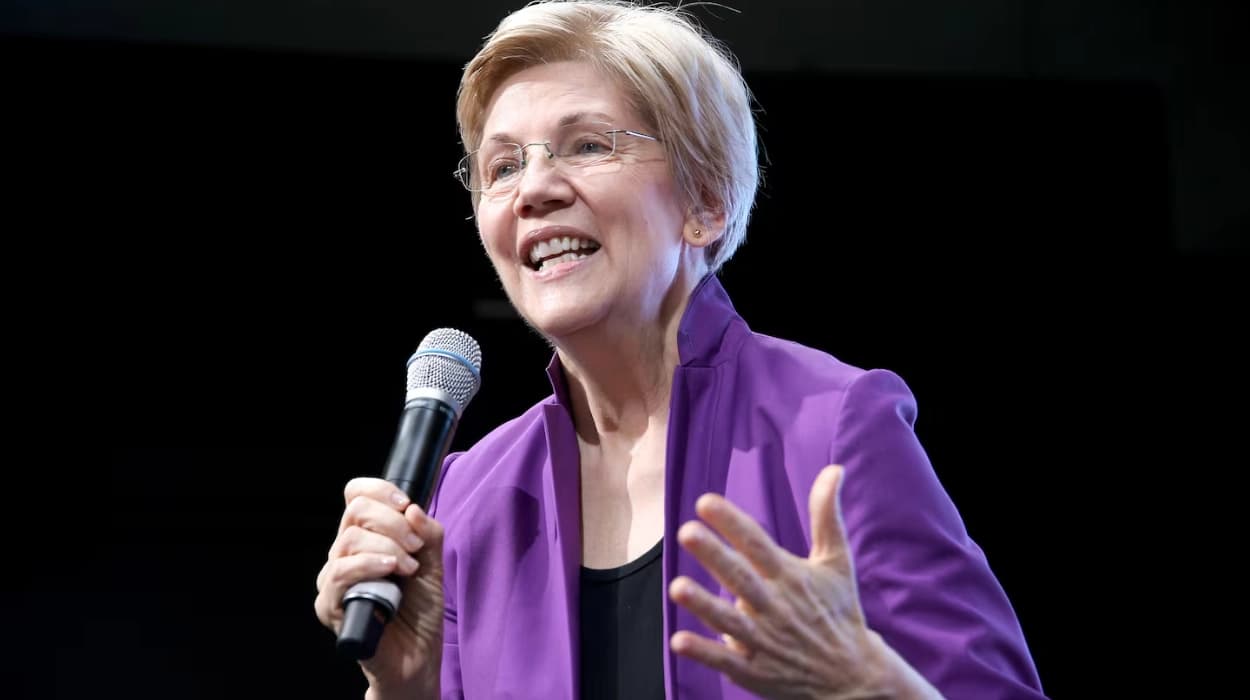
Elizabeth Warren has long embodied the archetype of a Massachusetts progressive leader, rising from academic roots to challenge the status quo in American politics. Her career weaves consumer protection, economic fairness, and bold policy visions into a narrative that resonates across generations. In a nation grappling with widening inequality where the World Bank notes that the top 10% of earners capture over 50% of national income Warren's advocacy offers a blueprint for reform. This article explores her journey, ideas, and lasting impact, revealing why she remains a pivotal figure in progressive politics.
Early Life and Path to Advocacy
Born into a middle class family in Oklahoma, Elizabeth Warren faced financial hardships that shaped her worldview. Her father’s heart attack plunged the household into debt, exposing her to the vulnerabilities of everyday Americans without safety nets. This personal crucible fueled a drive to understand economic systems, leading her to a career in law and academia.
Warren earned degrees from the University of Houston and Rutgers Law School, then taught at institutions like Harvard Law. Specializing in bankruptcy law, she documented how ordinary families fell into debt traps. Her research revealed that medical bills and job loss often triggered filings, with OECD data underscoring that household debt burdens households globally, averaging 75% of disposable income in advanced economies. These findings propelled her from scholar to crusader, authoring books like The Two Income Trap that dissected the erosion of the middle class.
Her Massachusetts connection deepened when she joined Harvard in 1995, immersing herself in the state's intellectual and progressive hubs. Boston's blend of elite universities and working class roots mirrored her own story, positioning her as a bridge between theory and real world struggles.
Pioneering Consumer Financial Protection
Warren's breakthrough came through her relentless push for stronger consumer safeguards. In the wake of the 2008 financial crisis which the IMF attributes to lax oversight and risky lending, costing trillions in lost output she proposed a dedicated agency to shield families from predatory practices. Testifying before Congress, she argued that banks profited from fine print while borrowers suffered, backed by evidence of over 40 million U.S. foreclosures tied to subprime mortgages.
This vision materialized as the Consumer Financial Protection Bureau (CFPB), established under the Dodd Frank Act. As its architect, Warren championed rules curbing hidden fees, abusive credit cards, and discriminatory lending. The agency's work has returned over $16 billion to consumers through enforcement, proving the value of proactive regulation. Critics labeled her anti business, but supporters hailed her as a Massachusetts progressive leader unafraid to confront Wall Street's excesses.
Her tenure advising the Obama administration highlighted tensions with financial lobbies. Refused the CFPB directorship, she pivoted to the Senate race, channeling that energy into broader reform.
Senate Career: Fighting for Economic Justice
Elected to the U.S. Senate from Massachusetts in 2012, Warren quickly established herself as a tenacious voice for accountability. Defeating incumbent Scott Brown in a high stakes contest, she arrived in Washington with a mandate to tackle inequality. The OECD reports that income gaps in the U.S. exceed those in most peer nations, with the bottom 20% earning just 7% of total income fueling her calls for structural change.
Warren grilled bank executives in hearings, famously questioning "too big to fail" bailouts. She co authored the Bank on Students Emergency Loan Refinancing Act, aiming to lower rates for millions burdened by education debt, which UNESCO identifies as a barrier affecting over 40% of graduates worldwide. Her work extended to small businesses, advocating for access to capital amid World Bank findings that SMEs generate 50% of formal jobs yet face credit shortages.
As a Massachusetts progressive leader, she prioritized regional issues like biotech innovation and clean energy, securing funds for infrastructure that bolsters Bay State competitiveness. Her bipartisan moments, such as reforming the Federal Reserve's emergency lending, show pragmatic deal making beneath the fighter's exterior.
Signature Policy Proposals
Warren's legislative agenda centers on reining in corporate power and expanding opportunity. The Accountable Capitalism Act seeks to require large firms to prioritize stakeholders over shareholders, addressing WEF concerns that short termism hampers long term growth. She argues this would curb executive pay excesses where CEOs earn 300 times the average worker, per Economic Policy Institute data while fostering sustainable business.
Her wealth tax proposal targets fortunes over $50 million at 2%, then 3% above $1 billion, projecting trillions for public investments. Drawing from IMF analyses showing that progressive taxation reduces inequality without stifling growth, it funds universal childcare and student debt relief. Critics decry it as punitive, but Warren frames it as restoring balance in an era where the ultra wealthy hold 32% of U.S. wealth, per Federal Reserve stats.
On healthcare, she backs Medicare for All expansions, citing WHO data that out of pocket costs push 100 million into poverty annually worldwide. Environmentally, her Green New Deal elements push clean jobs, aligning with World Bank projections of $2.6 trillion in annual climate costs by mid century if unchecked.
These ideas position her as a visionary Massachusetts progressive leader, influencing debates even when bills stall.
Influence on the Progressive Movement
Warren's reach extends beyond Massachusetts, galvanizing a new generation of activists. Her 2020 presidential run amplified ultraprogressive priorities, from breaking up tech monopolies to anti corruption measures. Though she suspended her campaign, polls showed her swaying voters on policy depth, with 70% approval for her economic plans among Democrats.
She mentored figures like Alexandria Ocasio Cortez, fostering a network that pressures the Democratic Party leftward. Books like This Fight Is Our Fight and her podcast demystify policy, making complex issues accessible. In Massachusetts, her endorsement sways primaries, reinforcing the state's progressive mantle from universal healthcare precedents to minimum wage hikes.
Globally, her model resonates where inequality festers; the IMF notes progressive policies have lifted millions via targeted taxes and protections. Warren's data driven style rooted in her professor days equips progressives with ammunition against skepticism.
Challenges and Criticisms
No figure escapes scrutiny, and Warren faces charges of overreach. Detractors argue her regulations stifle innovation, pointing to CFPB lawsuits from industry groups. Her Native American heritage claims drew backlash, though she released DNA results and apologized, refocusing on policy.
In the Senate, procedural blocks limit wins, with only 20% of her bills passing. Yet this underscores systemic gridlock she seeks to dismantle. As a Massachusetts progressive leader, she's navigated redistricting and GOP attacks, maintaining strong reelection margins above 60%.
Legacy and Enduring Relevance
Warren's imprint endures through institutions like the CFPB and ideas reshaping discourse. In Massachusetts, she champions education and housing affordability, countering OECD warnings that stagnant mobility traps generations. Her fight against corruption via the Anti Corruption and Public Integrity Act targets revolving doors that erode trust.
As economic pressures mount, with World Bank data showing 700 million in extreme poverty amid plenty, Warren's blueprint offers timeless lessons. She proves progressives can blend intellect, grit, and populism, inspiring reforms that prioritize people over profits.
Her story reminds us that change stems from those who see injustice not as inevitable, but fixable ensuring a Massachusetts progressive leader's voice echoes indefinitely.