
- 200+ former DOJ civil rights officials warn.
- Political leaders undermining division's integrity.
- Purges weakening civil rights enforcement.
Earlier this year, political appointees dismissed career supervisors, assigned staff to menial tasks, unilaterally withdrew cases, and made it apparent that the division's primary goal would be upholding Donald Trump's policies. As a result, there was a mass departure of attorneys.
The agency has lost a startling 70% of its attorneys by May 1st of this year. In honor of the civil rights division's 68th anniversary of establishment, the letter was made public on Tuesday.
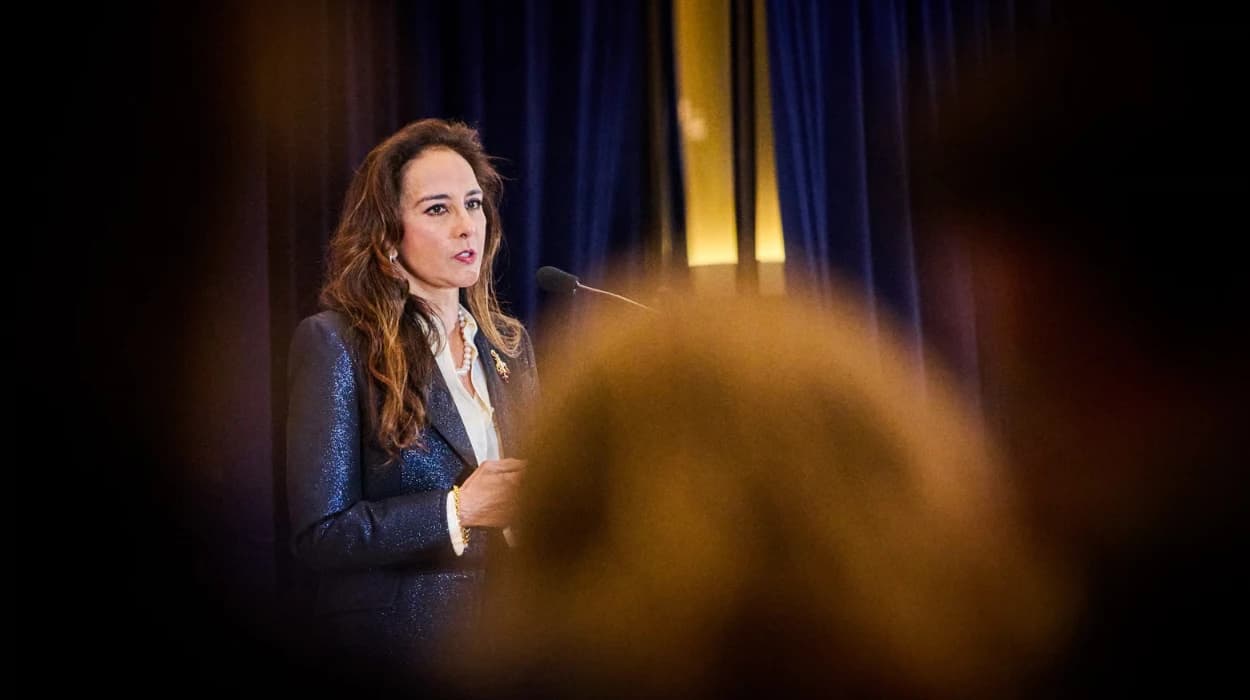
Leading the civil rights division and a Trump friend, Harmeet Dhillon, has applauded the departure of professional staff members, characterizing them as activists who refused to perform the tasks assigned to them.
“That could not be further from the truth. We left because this Administration turned the Division’s core mission upside down, largely abandoning its duty to protect civil rights,”
the letter says.
“Having no use for the expertise of career staff, the Administration launched a coordinated effort to drive us out.”
A request for comment was not immediately answered by the justice department.
The letter continues by outlining the division's abandonment of civil rights enforcement, including the dismissal of significant cases pertaining to voting rights, sexual abuse of children of unaccompanied migrants, and several consent decrees involving police departments nationwide.
According to the letter, Dhillon also urged attorneys to take paid time off and threatened to fire staff if they didn't. Earlier this year, the number of departing employees seemed to surprise Justice Department officials, who advised staff members to think twice before quitting.
Dhillon made it apparent that the civil rights division would not be concentrated on conventional civil rights enforcement in April by sending out new "mission statements" for each of the division's divisions.
For instance, the voting section's goal statement contained no mention of the historic Voting Rights Act and instead stated that identifying voter fraud which is extremely uncommon would be a top priority.
This year, the majority of the section's activity has involved suing states in an effort to obtain their complete voter records. Without consulting experienced attorneys, the department dropped all of the current Voting Rights Act litigation and has not brought any new ones. It made the case for restricting section 2 of the Voting Rights Act earlier this year.
In an effort to compel institutions to pay millions in fines, the administration has also utilized the division to begin antisemitic investigations.
There was also a great deal of concern over the earlier this year decision to remove career managers from their sections. Career managers frequently act as a mediator between the career line attorneys and the political leadership in a section. Eliminating them was perceived as a concerning attempt to allow political meddling in the section's operations.
“America deserves better,”
the letter says.
“The future of the Civil Rights Division is in jeopardy, and with it, the rights it protects. We hope that one day we can return the Division to its righteous work. Until then, we will continue to defend those rights and the Constitution wherever we find ourselves. We call on all Americans to join us. Demand that the Division enforce our civil rights laws and defend the Constitution’s promise of equal justice for all.”
What legal remedies could reverse the reassignments and purges within the Division?
The letter details Attorney General Pam Bondi and Associate AG Harmeet Dhillon's directives reassigning up to 75 of career attorneys to slavish tasks or unconnected presidential precedences, offering buyouts, and encouraging adoptions after paid leave, targeting those involved in previous voting rights, and police misconduct cases.
Critics cite discharges of Biden- period examinations, pullout from Georgia advancing suits, dropped migratory abuse cases, and a pivot toanti-DEI, named fraud, and gun rights focus, professing abandonment of statutory duties under the Voting Rights Act and Fair Housing Act.
Civil courts could entertain suits claiming Fifth Amendment due process violations or First Correction retribution for defended speech, as in recent DEI purge action; precedents like Webster v. Doe limits judicial review of public security places, but non-exempt career attorneys might secure relief via certiorari to the Supreme Court.