
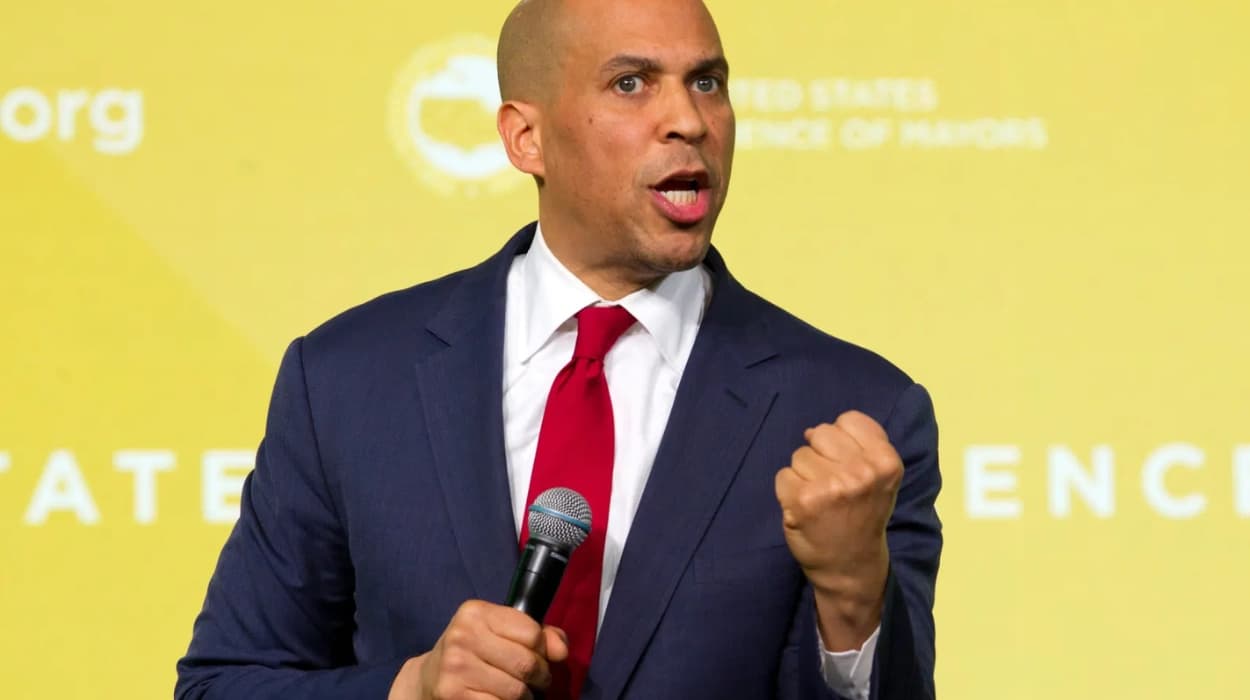
In the landscape of American politics, few figures embody the blend of urban grit, progressive vision, and relentless ambition like Cory Booker. Rising from the streets of Newark, New Jersey, to the U.S. Senate and launching a spirited bid for the White House during the 2020 presidential race, Booker's story captivates as a testament to perseverance amid systemic challenges.
A product of New Jersey's diverse urban fabric, he navigated the complexities of revitalizing post industrial cities while eyeing national leadership. His journey as a senator from the Garden State and 2020 presidential hopeful underscores the power of grassroots activism in scaling to federal influence.
Drawing from the World Bank's insights on urban inequality affecting billions worldwide, Booker's hands on approach in New Jersey offered practical lessons for national policy.
His career highlights the tensions between local governance and national aspirations, offering insights into leadership in divided times. This exploration delves into his path, policies, and enduring impact, drawing on timeless principles of public service.
Early Life and Path to Public Service
Cory Booker's origins in Washington, D.C., shaped a worldview attuned to inequality from the start. Raised by parents who instilled values of education and activism, he attended Stanford University on a football scholarship, later earning a Rhodes Scholarship to study at Oxford and a law degree from Yale. These experiences fueled his commitment to tackling urban decay, a theme that defined his early career.
Upon returning to New Jersey, Booker immersed himself in Newark's struggling communities. The city, long plagued by crime and economic stagnation, became his proving ground. According to the World Bank, urban poverty affects over a billion people globally, trapping families in cycles of limited opportunity challenges Booker confronted head on. He volunteered with local nonprofits, lived in low income housing projects, and even staged a 10 day hunger strike to spotlight youth violence. These acts built his reputation as a hands on leader willing to embody the struggles he aimed to solve.
Booker's entry into politics was dramatic. In 2002, he challenged incumbent Sharpe James for Newark mayor, facing accusations of being an outsider despite his deep local ties. Losing narrowly amid controversy, he persisted, winning in 2006 after a fierce recount. His mayoral tenure transformed Newark, slashing crime rates through community policing and attracting over $100 million in private investments for revitalization.
Transforming Newark as Mayor
As mayor, Booker prioritized pragmatic solutions over ideology. He launched tech driven initiatives like the Newark Bookmobile and a citywide recycling program, earning national acclaim. Under his watch, murder rates dropped significantly the city's homicide tally fell by more than half from peak levels, demonstrating data informed governance.
Economic revival stood central. Booker courted businesses, securing commitments from firms like Panasonic to relocate headquarters, creating thousands of jobs. He championed education reform, partnering with charter schools to boost graduation rates in a district where only about half of students previously finished high school. The OECD notes that early childhood education yields lifelong returns, with each dollar invested generating up to $13 in benefits; Booker's push for universal pre K echoed this, expanding access for underserved families.
Yet challenges persisted. Critics argued his focus on high profile wins glossed over deep seated issues like housing affordability. Still, Booker's innovative use of social media he was among the first politicians to amass a massive Twitter following amplified his message, blending old school door knocking with digital outreach. This period solidified his image as a bridge builder in a fractured urban America.
Leap to the U.S. Senate
In 2013, Booker set his sights higher, running for the Senate seat vacated by the late Frank Lautenberg. His special election victory over Republican Steve Lonegan marked a milestone: as the first Jewish senator from New Jersey since 1926 and one of the body's most diverse voices. Sworn in amid fanfare, he quickly established himself as a legislative force.
Booker's Senate tenure emphasized criminal justice reform, drawing from Newark's scars. He co authored the First Step Act, a bipartisan measure reducing sentences for nonviolent offenders and addressing recidivism. The IMF highlights how incarceration burdens economies, costing nations up to 1% of GDP annually; Booker's efforts aimed to break this cycle through rehabilitation over punishment.
On healthcare, he advocated expanding access, aligning with UNESCO's findings that equitable health systems underpin societal progress. Booker grilled pharmaceutical executives in viral hearings, exposing drug pricing disparities that leave millions vulnerable. Environmentally, he pushed renewable energy incentives, noting the World Economic Forum's warnings on climate risks to global stability.
His rhetorical style fiery speeches invoking faith, unity, and "love as a policy" resonated widely. A vegan and meditator, Booker brought personal authenticity to debates, often sharing stories of personal loss to humanize policy fights.
The 2020 Presidential Campaign Trail
Booker's national ambitions peaked with his announcement for the 2020 Democratic presidential nomination. Launching from Newark's City Hall, he positioned himself as a unifier capable of transcending divides. Campaigning across Iowa diners and New Hampshire town halls, he emphasized "unity tickets" and economic plans targeting marginalized communities.
Policy wise, he unveiled ambitious proposals. His "baby bonds" initiative proposed government funded savings accounts for every newborn, redeemable at adulthood to combat wealth gaps the World Bank reports that inequality hampers growth, with the bottom 40% capturing just 25% of income gains. On climate, his $3 trillion clean energy plan promised jobs in green tech, while criminal justice reforms built on his Senate record.
The trail tested Booker. Early polls showed promise, but he struggled for donor traction against rivals like Joe Biden andElizabethWarren. Viral moments, like hugging a Trump supporter or serenading audiences with song, showcased charisma but couldn't sustain momentum. Dropping out before primaries, he endorsed Biden, later joining the vice presidential search as a shortlisted contender.
The bid underscored Booker's strengths optimism and outreach but exposed hurdles for candidates from smaller states like New Jersey.
Policy Priorities and Legislative Legacy
Beyond campaigns, Booker's influence endures through targeted advocacy. In foreign policy, he critiques endless wars, advocating diplomacy per UN principles that peacekeeping saves lives and resources. Domestically, his marijuana legalization push addresses inequities, as Black Americans face arrest rates four times higher than whites for similar offenses, per consistent federal data.
On housing, inspired by Newark, he sponsors bills for affordable units, countering OECD stats showing housing costs devour 30% of low income budgets in advanced economies. Booker's tech savvy shines in digital privacy efforts, protecting consumers amid data proliferation.
Critics question his corporate ties, past board seats at firms like Starbucks raised "Wall Street Cory" barbs, but defenders cite his results driven record. His veganism and teetotaling lifestyle fuel a narrative of disciplined leadership.
Challenges and Criticisms
No profile is complete without scrutiny. Booker's optimistic tone sometimes draws "Spartacus" mockery a nod to his dramatic Senate filibuster referencing the gladiator film. Detractors argue his reforms overlook structural racism's depths, while supporters praise incremental wins.
In New Jersey, constituents grumble over unfulfilled promises like flood protections amid rising seas. Nationally, his 2020 exit highlighted donor ecosystems favoring frontrunners. Yet, these critiques affirm his relevance in evolving debates.
Personal Life and Public Persona
Booker's life adds depth. A bachelor until marrying actress Rosario Dawson in 2019 (they later parted), he lives modestly in Newark. His faith rooted in Jewish and Christian traditions informs speeches blending scripture with policy.
As a social media pioneer with millions of followers, he humanizes politics through live chats and personal anecdotes. This accessibility, rare among senators, fosters connection in polarized eras.
Cory Booker's arc from Jersey City mayor tackling urban woes to a 2020 White House hopeful mirrors America's aspirations and fractures. His emphasis on unity, reform, and empathy offers a blueprint for leaders navigating inequality and division. Whether advancing Senate bills or mentoring the next generation, Booker remains a vital voice, reminding us that transformative change starts locally but scales nationally.