
Summary
- Trump’s
nominee Kurt Alme for Montana U.S. Attorney confirmation delayed. - Senate
Democrats objected, blocking confirmation of 10 U.S. Attorneys. - Alme
served as Montana U.S. Attorney under the Trump administration previously. - Senate
Democrats claim procedural precedent for blocking confirmations.
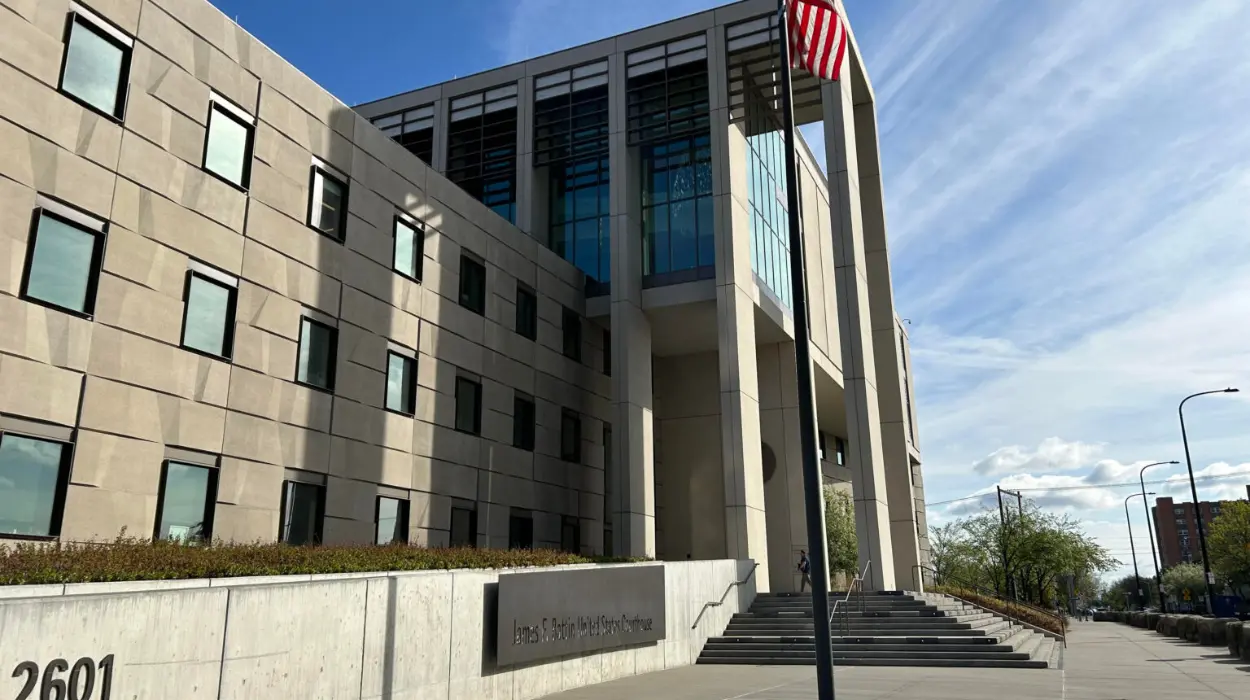
Since his appointment by Attorney General Pam Bondi in
March, Kurt Alme has held the office in an interim capacity.
After being suggested by the U.S. Senator Steve Daines of
Montana, Alme previously held the position of leading federal law enforcement
official in Montana from 2017 to 2020 during the first term of President Donald
Trump. The Senate unanimously approved his initial nomination.
However, Chuck Grassley, R-Iowa, the chair of the
Judiciary Committee, has twice in the past week during Senate hearings asked
for unanimous permission to confirm ten U.S. Attorney candidates by voice vote,
avoiding the need for roll-call votes.
Minority Leader Chuck Schumer, D-N.Y., opposed
on Monday to Grassley’s proposal, while Ranking Committee member Dick Durbin,
D-Illinois, objected last week, citing a precedent set by then-Sen. J.D. Vance,
R-Ohio, during the Biden administration.
A restricted number of nominees for U.S. attorneys were
placed on hold by Vance. In 2023, Vance also declared that he would “grind
it to a halt” by putting a complete hold on all Justice Department
candidates, Durbin stated in a Senate floor statement. Consequently, just 68 of
Biden’s 76 nominations for U.S. attorneys passed the confirmation process.
“I appreciate, Mr. Chairman, that you did not agree with
Senator Vance’s actions back then, and I don’t believe you do now, but we can’t
have one set of rules for Republican presidents and another for Democratic
presidents,”
Durbin said.
Grassley responded with remarks on the floor asking
Democrats to “relent form their partisan obstruction.”
“Debate and disagreement about policy is to be expected, but
it should never come at the expense of public safety,”
Grassley said.
According to a statement from Grassley’s office, 94% of
President Biden’s nominations for U.S. Attorneys were approved by voice vote,
and the decision “forces the Senate to burn valuable hours of floor
time” to process the nominations instead of using the expedited voice vote
system.
Only two U.S. attorneys have been approved by the Senate
thus far in Trump’s second term: Jason Reding Quiñones for the South District
of Florida and Jeanine Pirro for the District of Columbia, both by roll call
vote. A voice vote on Quiñones’ nominations was also prevented by Durbin.
Daines claimed that banning the nominees was an
“unprecedented move” during a TV interview.
“We’ve got to to actually change the rules,”
Daines said.
“We’re working on that as Republicans so that we can go back to where we used
to be, and that was getting these nominees like U.S. attorneys and other
sub-cabinet level appointees through the U.S. Senate in a timely fashion.”
At the beginning of the Republican’s first term as governor,
Alme served as the state budget director for Governor Greg Gianforte following
his initial tenure as U.S. Attorney. Less than a year later, he resigned from
the job, citing the stress of travelling from his Billings home to Helena.
The U.S. Attorney’s Office claims that Alme most recently
held the position of Executive Vice President for Planned Giving at the
National Christian Foundation.
How does Senate obstruction impact local law enforcement in
Montana?
Without confirmed U.S. Attorneys, federal districts in
Montana lack permanent leadership. Acting or interim officials typically fill
these roles, which can limit continuity and authority in prosecuting federal
crimes.
Delays in appointments can contribute to slower
investigation and prosecution of violent crime, drug trafficking, and public
corruption cases that require coordination between federal, state, tribal, and
local agencies.
Interim U.S. Attorneys may lack the full mandate or
political backing to implement new priorities, leading to reduced effectiveness
in tackling crime trends or conducting proactive law enforcement strategies.