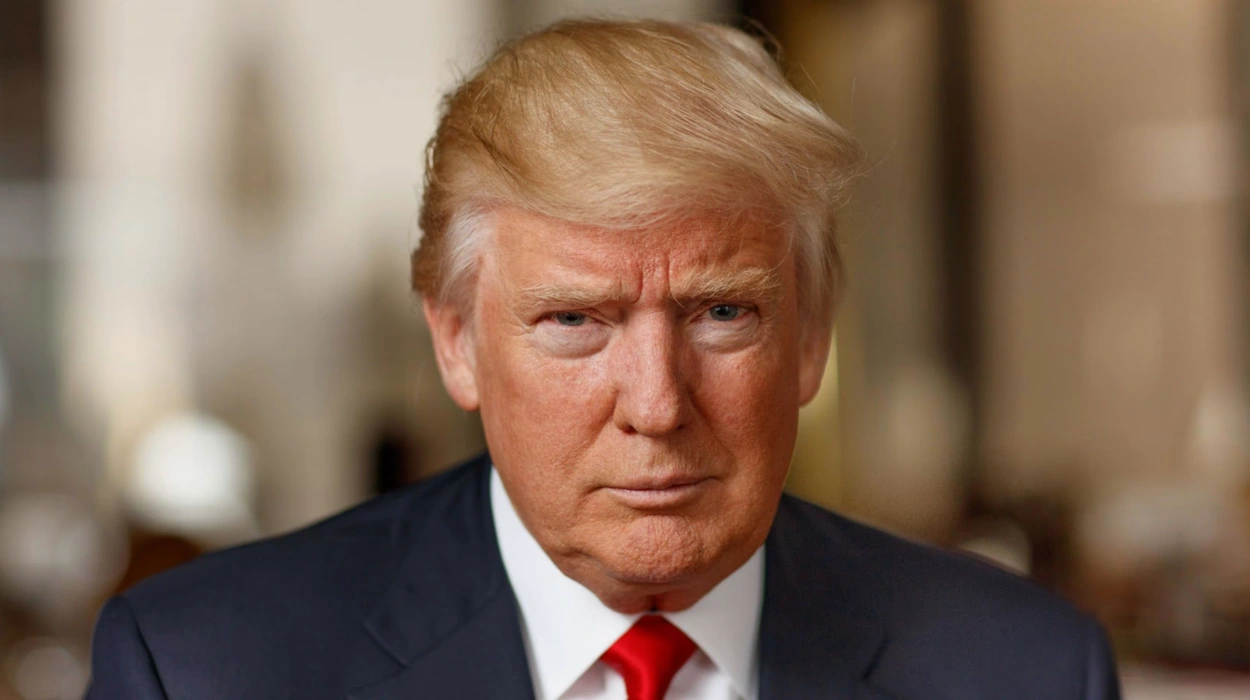

In 2025, former President Donald Trump aggressively pushed
for a mid-decade redistricting plan aimed at reshaping congressional districts
in several key states to favor Republican candidates in the 2026 United States
House of Representatives elections. This strategy, widely described as a
partisan gerrymander, has sparked significant political and public backlash
amid concerns it undermines democratic representation and exacerbates political
polarization.
The mid-decade
redistricting movement
In 2025, the traditional cycle of redistricting occurring
once every ten years following the decennial census was accelerated in several
states, notably Texas, where GOP-led legislators embarked on mid-decade map
revisions. This move marked a significant departure from constitutional norms,
sparking widespread debate about fairness, legality, and partisanship in
American electoral processes.
Texas’s new proposed
congressional map aimed to strategically redistrict to favor Republican
candidates in the 2026 midterm elections. The plan sought to target five
Democratic-held seats in key urban centers like Austin, Dallas, and Houston by
reshaping district boundaries in a manner that dilutes Democratic and minority
voters’ influence.
Immediately after the proposal’s unveiling, the legislation
faced strong opposition in both the Texas House and Senate. The passage through
the legislative chambers was largely party-line, with the GOP securing
majorities amid accusations of partisan gerrymandering and racial
discrimination. Critics argued that the map intentionally fragmented and packed
minority voters into specific districts, a tactic known as racial
gerrymandering violating constitutional protections and the Voting Rights Act.
The map’s design also
fundamentally altered district configurations, paving the way for potential
primary conflicts and reducing Democratic representation in historically
Democratic districts, thereby enhancing GOP electoral prospects.
Trump’s role and
influence
Behind the scenes, Trump has been a driving force pushing
Republican legislators to endorse and expedite these redistricting efforts,
sensing that maintaining or expanding GOP House majorities is critical to
protecting his legislative agenda and shielding himself from potential
congressional investigations. Reports indicate Trump personally monitored
lawmakers’ support and exerted pressure to bring reluctant Republicans into
alignment.
His entreaties
extended across multiple states, with North Carolina, Missouri, Indiana, and
others joining Texas in actively considering or implementing mid-decade
redistricting plans.
Political and legal
ramifications
The congressional maps proposed by states like Texas in 2025
are designed to yield a net gain of approximately five Republican seats in the
U.S. House of Representatives. These maps strategically reshape districts to
consolidate GOP-leaning voters while fragmenting historically Democratic
constituencies, a practice commonly known as gerrymandering. By redrawing
district lines in this way, Republicans aim to maximize their electoral
advantages in key battlegrounds, solidifying control over the House amid tight
partisan competition.
However, these partisan redistricting efforts have sparked
immediate legal challenges. Civil rights organizations and minority voters
argue that the maps violate the Voting Rights Act by diluting the political
power of Black and Hispanic communities. They contend that the redistricting
was racially motivated, resulting in unlawful racial gerrymandering that
undermines constitutionally protected rights to equal representation. The
dispute is further complicated by allegations that state officials, including
Texas Governor Greg Abbott, were aware of and intentionally sought to
manipulate racial demographics for partisan gain.
Federal courts have played a significant role in
adjudicating these controversies. In November 2025, a federal district court in
El Paso issued a preliminary injunction blocking the implementation of the new
Texas congressional map ahead of the 2026 midterm elections. The court
highlighted substantial evidence of racial gerrymandering, ruling that the map
impermissibly diminished the voting influence of minority populations. As a
consequence, the court reinstated the previous 2021 map for upcoming elections,
temporarily preserving a status quo that featured 25 Republican and 12
Democratic districts in Texas.
Backlash and
intra-party tensions
In 2025, President Donald Trump’s aggressive push for
mid-decade redistricting has sparked significant controversy within the
Republican Party, revealing deep fissures and tensions over the direction,
timing, and political risks of the effort. Trump’s initiative targeted key
swing states with the aim of redrawing congressional maps favorably to the GOP,
potentially adding as many as 18 House seats ahead of the 2026 midterm
elections. This bold strategy, however, has not been universally embraced by
Republican lawmakers and state officials, laying bare an ongoing intra-party
debate.
At the forefront of the resistance was Texas Governor Greg
Abbott, among other GOP leaders, who initially voiced reservations about the
redistricting plan’s potential disruption to incumbents and the risk of
alienating moderate voters. Polling suggested that a majority of independent
voters disapproved of the Texas redistricting, raising concerns that aggressive
map changes might provoke a backlash in key demographic segments.
Some state
Republicans privately worried that pushing partisan redistricting too far could
ultimately prove counterproductive, with marginal electoral gains potentially
offset by lost support in the political middle.
Despite these misgivings, Trump’s powerful influence within
the party proved decisive in overcoming dissent. Through intense pressure
campaigns from the White House and aligned outside groups, GOP lawmakers were
urged to demonstrate loyalty by backing the redistricting drive. This effort is
now widely seen as a litmus test for Republican allegiance, forcing members to
weigh their political capital against the demand for party unity.
In several states,
including Texas, reluctant lawmakers aligned with Trump’s call, approving
contentious maps designed to maximize Republican advantage.
Broader national
impact
The momentum inspired by these high-profile efforts has
encouraged other states, including Florida, Maryland, and New York, to
contemplate or enact similar redistricting strategies, reflecting a growing
national strategy to influence House control outside of the
regular decennial cycle. Meanwhile, Democrats have intensified efforts to
oppose and litigate against these moves, seeing them as a threat to fair
representation and democratic norms.
A significant
development
Trump’s push for mid-decade gerrymandering marks a significant
development in U.S. electoral politics, illustrating the use of state
legislative power to engineer partisan advantage aggressively. While these
efforts may bolster Republican prospects in the short term, they raise profound
questions about the future integrity of representative democracy and the
balance of power in Congress. The unfolding legal and political battles will be
critical to determining the ultimate shape and fairness of U.S. House districts
for the coming election cycles.