
Key Points
- Congressional
Republicans and President Donald Trump are advancing the “One Big
Beautiful Bill Act,” which would roll back health coverage for millions of
Americans for the first time in modern U.S. history. - The
Congressional Budget Office (CBO) estimates between 10.9 and 11.8 million
Americans could lose health insurance by 2034 under the proposed
legislation. - The
bill imposes new work requirements and more frequent eligibility checks
for Medicaid recipients, with stricter rules than previous versions. - A
key Medicaid funding mechanism—provider taxes—faces a significant
overhaul, but the Senate parliamentarian ruled core elements violate
chamber rules, complicating passage. - The
bill includes $1.1 trillion in health care cuts, with over $1 trillion
coming from Medicaid alone. - Senate
Republicans added a $25 billion rural hospital stabilization fund to
address concerns over rural health care access. - Sen.
Bernie Sanders (I-Vt.) released a report warning the bill could nearly
double the uninsured rate in some states and disproportionately impact
working-class and low-income Americans. - Public
opinion is largely negative: nearly two-thirds of Americans view the bill
unfavorably, and more than half worry about its impact on their ability to
afford care. - The
bill faces procedural and political hurdles in the Senate after the
parliamentarian’s ruling, with Democrats united in opposition. - If
enhanced ACA premium tax credits expire at the end of 2025, the number of
uninsured could rise to 16 million.
In a historic first, President Donald Trump and a
Republican-controlled Congress are on the verge of enacting legislation that
would significantly increase the number of uninsured Americans, reversing
decades of efforts to expand health coverage. The sweeping “One Big Beautiful
Bill Act” targets Medicaid and the Affordable Care Act (ACA), with nonpartisan
projections showing millions could lose their health insurance if the bill
becomes law.
What Is the “One Big Beautiful Bill Act” and Who Will Lose
Coverage?
As reported by Phil Galewitz of KFF Health News, the “One
Big Beautiful Bill Act” is a budget reconciliation package that advances
several of President Trump’s top priorities, including extending tax cuts that
primarily benefit high-income households. The bill’s most controversial
elements are deep cuts to Medicaid, new work requirements for enrollees, and
changes to the ACA that would reduce federal support for coverage.
According to the Congressional Budget Office (CBO), the
House-passed version would result in 10.9 million Americans losing
health coverage by 2034. The Senate’s version, analyzed by Peter
Sullivan of The Hill, would push that number even higher, to 11.8
million uninsured, as it includes steeper Medicaid cuts and stricter
eligibility rules.
The uninsured would be predominantly low-income
adults under 65 and people of color, with the highest rates in Southern and
Western states that have not expanded Medicaid. The uninsured rate in
non-expansion states was already nearly double that of expansion states in 2023.
How Would Medicaid and the ACA Be Changed?
Medicaid Restrictions and Work Requirements
As detailed by Kathryn Watson of CBS News, the Senate
version of the bill imposes work requirements for certain able-bodied
Medicaid recipients, mandating 80 hours per month of work, volunteering, or
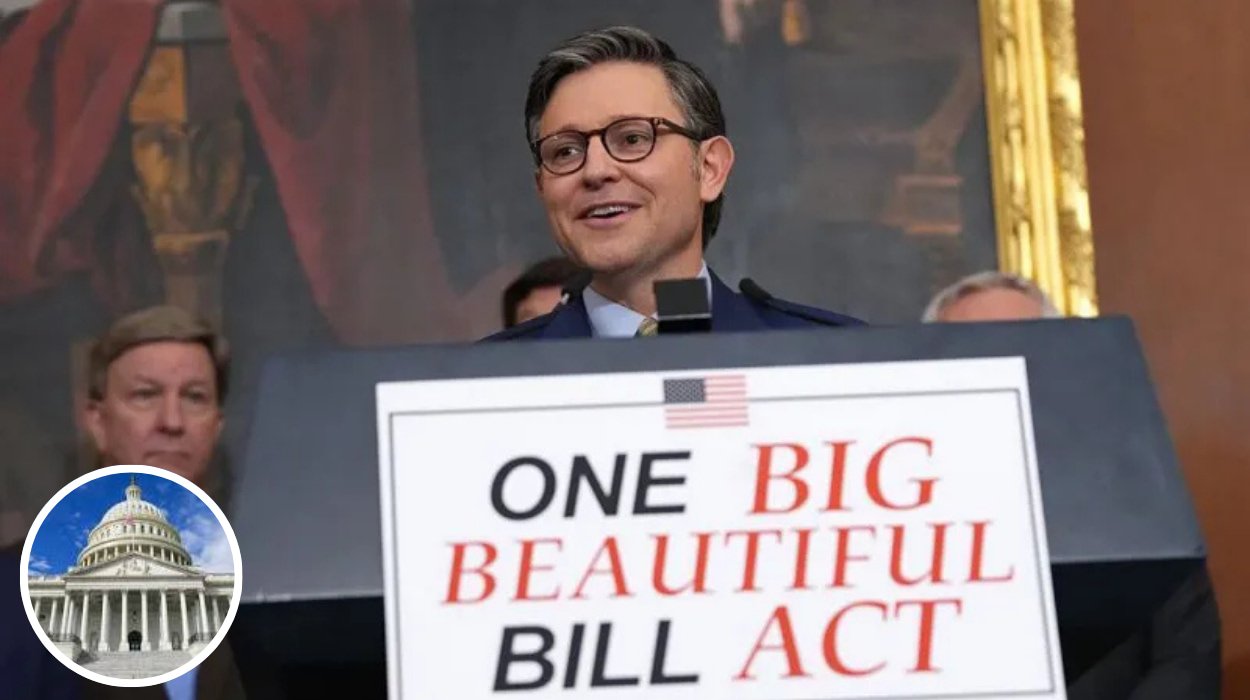
other qualifying activities. House Speaker Mike Johnson defended the
measure to CBS News, calling it “moral,” and stating,
“If you are able to work
and you refuse to do so, you are defrauding the system. You’re cheating the
system.”
The bill also requires more frequent eligibility
checks for Medicaid, making it harder for people to stay enrolled. According
to the CBO, these requirements would save an estimated $325 billion over the
next decade but would also result in millions losing coverage, including many
who already work or cannot work due to disability.
Provider Tax Overhaul and Senate Setback
A central funding mechanism for Medicaid—the provider tax,
which states use to boost their federal Medicaid funding—would be significantly
reduced under the bill. Senate Republicans proposed lowering provider taxes
from 6% to 3.5% by 2032, a move that would save billions but threaten the
financial viability of many hospitals, especially in rural areas. However,
as reported by the Associated Press, the Senate parliamentarian ruled this
provision violates chamber rules, forcing GOP leaders to consider removing or
amending it to move forward.
Affordable Care Act (ACA) Changes and Premium Tax Credits
The bill codifies changes from a recent Trump administration
rule affecting ACA marketplaces and does not extend enhanced premium tax
credits set to expire at the end of 2025. If these credits expire,
out-of-pocket costs for ACA plans will rise sharply, likely causing millions
more to drop coverage. The CBO estimates that the uninsured could reach 16
million if both the bill passes and the tax credits lapse.
What Are the Projected Impacts on Americans and States?
Real-Life Consequences for Patients
Phil Galewitz of KFF Health News and Sarah Jane Tribble of
WGBH both highlight the story of Alton Fry, a 54-year-old self-employed
contractor from rural Georgia, who was diagnosed with prostate cancer but found
ACA plans unaffordable and did not qualify for Medicaid under Georgia’s limited
expansion. Fry’s experience—turning to crowdfunding and forgoing
recommended treatment—illustrates the financial and health risks facing
millions if coverage is reduced.
Jennifer Tolbert, deputy director of KFF’s Program on
Medicaid and the Uninsured, told WGBH, “The effects could be catastrophic,”
warning of increased delays in care, loss of access to doctors and medications,
and worsening health outcomes.
State-by-State Effects and Disproportionate Burden
Sen. Bernie Sanders, in a new report from the Senate Health,
Education, Labor, and Pensions Committee, found that the bill would increase
the uninsured rate in every state and nearly double it in states like Florida,
Louisiana, Massachusetts, and Washington. The report also notes that for
every millionaire household receiving a tax cut, 19 Americans would lose health
insurance.
Why Are Republicans Pushing These Changes?
Fiscal conservatives, such as Michael Cannon of the Cato
Institute, argue that the U.S. spends twice as much per capita on health care
as other wealthy nations and that reforms are needed to control costs. However,
Cannon told KFF Health News that the bill does not address the root causes of
high costs, such as administrative complexity and the tax break for
employer-sponsored insurance.
Republican leaders maintain that work requirements and
spending caps are necessary to ensure the sustainability of Medicaid and reduce
federal deficits, even as the bill extends tax cuts for high earners.
What Are the Political and Procedural Hurdles?
Senate Parliamentarian’s Ruling and Democratic Opposition
As reported by the Associated Press, the Senate
parliamentarian’s ruling against the Medicaid provider tax overhaul is a
significant setback for Republicans, who must now decide whether to amend the
bill or risk losing critical votes in the closely divided Senate. Democrats
are unanimously opposed, arguing the bill would devastate health care for
millions.
Public Opinion and Legislative Outlook
A recent KFF poll found that nearly two-thirds of Americans
view the bill unfavorably, and more than half are concerned about its impact on
their family’s ability to afford care. With the Fourth of July deadline
set by President Trump approaching, the outcome remains uncertain as GOP
leaders scramble to secure enough support.
What Is the Future for U.S. Health Coverage?
Sen. Bernie Sanders warned that the bill would create a
“national health care emergency” and a “death sentence for working-class and
low-income Americans throughout the country,” citing responses from over 750
health care providers nationwide. The CBO and health policy experts agree
that the legislation would mark a historic reversal in U.S. health policy,
increasing the uninsured rate for the first time in the modern era.
The fate of the “One Big Beautiful Bill Act” remains
uncertain as the Senate grapples with procedural challenges and public
backlash. What is clear, based on bipartisan analysis and reporting from KFF
Health News, WGBH, CBS News, The Hill, the Associated Press, and others, is
that the legislation would have far-reaching consequences for millions of
Americans, the health care system, and the nation’s social safety net.