
Summary
- Trump
administration officials informed Congress that Israel had agreed to match
$30 million in funding to the Gaza Humanitarian Fund (GHF). - This
pledge was made amid ongoing humanitarian crises in Gaza as international
aid groups call for a ceasefire and urge adherence to humanitarian laws. - The
disclosure adds complexity to U.S.-Israel relations and U.S. policy
debates surrounding aid and humanitarian support for Gaza. - The
information emerged from confidential sources familiar with the matter,
revealing a behind-the-scenes negotiation not previously public. - The
Trump administration sought Congressional approval and transparency around
the aid funding, balancing U.S. foreign policy interests with humanitarian
concerns. - The
timing coincides with broader international discussions on aid provisions,
Israeli military actions, and peace initiatives in the Middle East.
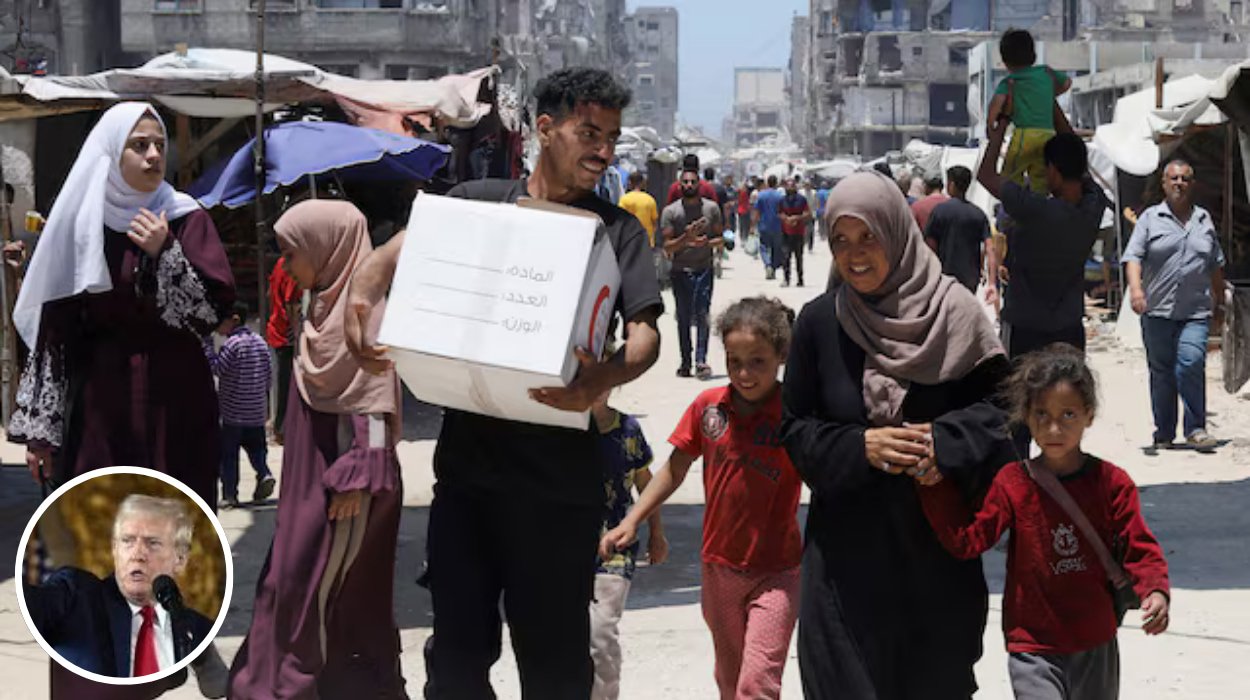
The recent disclosure that Trump administration officials informed Congress of Israel’s agreement to match a $30 million contribution to the Gaza Humanitarian Fund (GHF) highlights a pivotal moment in U.S.-Israel cooperation amid ongoing conflicts in Gaza. This matching pledge represents a rare public acknowledgment of joint efforts to address humanitarian needs in a complex and politically sensitive environment. While the gesture aims to alleviate civilian suffering and facilitate aid delivery, it also underscores the delicate balance the U.S. administration strives to maintain between supporting Israel militarily and responding to international calls for humanitarian relief. The development adds a new layer to understanding U.S. foreign policy priorities and diplomatic maneuvers in the Middle East, even as humanitarian groups continue to urge stronger protections for civilians and ceasefire initiatives.
What Did Trump Officials Tell Congress About Israel’s
Commitment to Gaza Aid?
According to sources with direct knowledge of the
discussions, officials in the Trump administration conveyed to Congressional
leaders that Israel had agreed to match a $30 million contribution to the Gaza
Humanitarian Fund (GHF). This confirmation, previously not revealed publicly,
came as part of a strategic effort by the administration to secure bipartisan
support for humanitarian aid measures in the region amid increasing
international pressure to address mounting crises in Gaza. The agreement from Israel
symbolizes a notable shift, indicating cooperation between the U.S. and Israel
to address humanitarian concerns within Gaza while navigating a complex and
often politically charged environment.
Why Is the Gaza Humanitarian Fund Significant in
U.S.-Israel Relations?
The Gaza Humanitarian Fund plays a critical role in
channeling emergency resources to Palestinian civilians affected by conflict
and blockades. The Trump administration’s disclosure of Israel’s matching
pledge reflects tensions between humanitarian aid imperatives and
political-military strategies in the area. Congressional members expressed
cautious optimism, emphasizing the importance of ensuring aid is effectively
used to reach civilians without inadvertently strengthening militant factions
in Gaza. The announcement also illustrates ongoing U.S. attempts to maintain
Israel’s support and involvement in aid, a delicate balancing act in the
broader diplomatic relationship.
How Have Humanitarian Groups Responded to Aid
Developments?
Humanitarian organizations such as Oxfam, Save the Children,
and Amnesty International have stated urgent concerns in recent weeks about
civilian casualties and the obstruction of aid delivery in Gaza. As reported by
Julia Frankel of Democracy Now!, more than 300 Palestinians were reported
killed recently during Israeli military actions, raising alarms about
violations of international humanitarian law by multiple watchdog entities.
These groups have criticized the Gaza Humanitarian Foundation regarding its
operations and have called for comprehensive ceasefires to facilitate safe
passage for aid workers and resources.
What Is the Context Behind the Aid Talks and Ceasefire
Proposals?
The aid funding discussions come amid heightened tensions
and violence. Hamas indicated it was considering a ceasefire proposal described
by former President Trump as a “final” offer, as reported by Democracy Now!.
Meanwhile, Israeli Prime Minister Benjamin Netanyahu confirmed his upcoming
visit to Washington D.C. for talks with President Trump, signaling ongoing
diplomatic efforts to manage the conflict. Additionally, the Pentagon and the
U.S. State Department have recently approved significant arms sales to Israel,
including a $510 million package for bomb guidance kits, reflecting the
complexity of U.S. involvement balancing military support alongside
humanitarian funding.
What Are the Broader Implications for U.S. Policy and
International Aid?
The revelation that Israel would match the $30 million fund
sets a precedent for cooperative aid efforts between the U.S. and Israel,
potentially paving the way for greater funding commitments. As noted in a
recent NPR report, the Trump administration is under scrutiny for various
foreign policy decisions, ranging from tariff negotiations to responses to
global crises including Ukraine and Gaza. This new information underscores the
administration’s multifaceted approach—continuing military aid while seeking to
mitigate humanitarian fallout through financial contributions.
What Are the Legal and Political Ramifications of This
Disclosure?
Experts note that formally acknowledging Israel’s role in
matching aid funds heightens accountability but also subjects both governments
to intensified political debate domestically and abroad. Media outlets are
closely examining how these funding maneuvers impact future peace negotiations,
U.S. foreign aid budgets, and Congressional oversight responsibilities. The
confidential nature of the original agreements suggests a need for diplomatic
discretion while ensuring aid transparency, a balance that the Trump
administration appears to be navigating cautiously.
How Are International Bodies Reacting to the Situation?
International humanitarian organizations continue to
advocate strongly for a complete and lasting ceasefire in Gaza to prevent
further civilian casualties and ensure effective aid delivery. Reports from PBS
NewsHour and CBS Evening News highlight the dire situation on the ground, with
calls for diplomacy to resolve ongoing hostilities. The U.S. remains a central
actor, both in military aid and in facilitating humanitarian assistance,
shaping how the international community responds and collaborates going forward.
This detailed account incorporates perspectives reported by
multiple news sources to provide a comprehensive overview of the sensitive and
evolving situation involving the Trump administration, Israel, and the Gaza
Humanitarian Fund. The story remains dynamic as diplomatic discussions and
humanitarian efforts continue under challenging circumstances.