
Summary
- The
Trump administration plans to remove nearly 700 unaccompanied Guatemalan
children. - Children
currently in US custody under Health and Human Services supervision. - Repatriation
is described as a trial initiative with Guatemalan government
collaboration. - Action
includes stopping placements with US-based relatives, labeled as
repatriation.
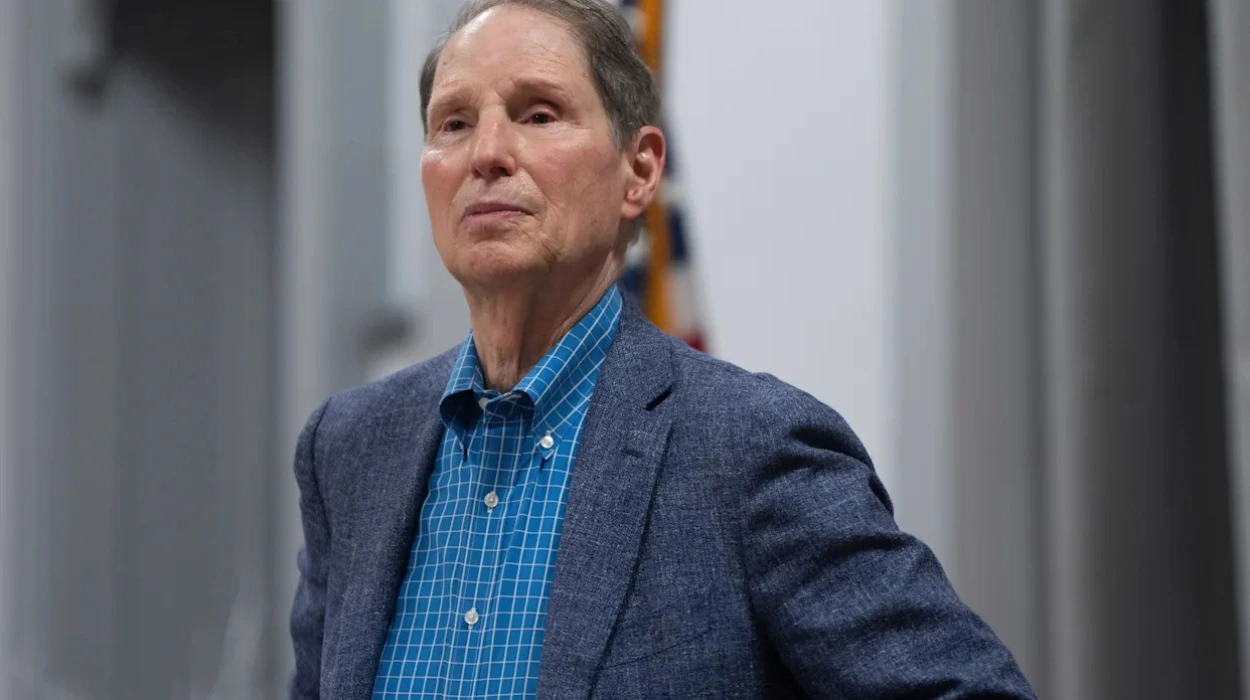
Wyden told Angie Salazar, acting director of the Department
of Health and Human Services office in charge of migrant children who enter the
country alone, that the removals would be against the Office of Refugee
Resettlement’s
“child welfare mandate and this country’s long-established
obligation to these children.”
“Unaccompanied children are some of the most vulnerable children
entrusted to the government’s care,”
the Democratic senator wrote, asking for
the deportation plans to be terminated.
“In many cases, these children and
their families have had to make the unthinkable choice to face danger and
separation in search of safety.”
Wyden’s letter, which included anonymous whistleblowers,
stated that minors who do not have an asylum case pending or who do not have a
parent or legal guardian as a sponsor “will be forcibly removed from the
country.”
The Trump administration’s broad immigration enforcement
initiatives, which include plans to send agents to Chicago for an immigration
crackdown, increase deportations, and remove protections for those who have
been granted permission to live and work in the country, are being carried out
in this way.
Requests for comment on the most recent action, which CNN
first reported, were not immediately answered
by the White House or the Department of Health and Human Services. The
government of Guatemala chose not to respond.
“This move threatens to separate children from their
families, lawyers, and support systems, to thrust them back into the very
conditions they are seeking refuge from, and to disappear vulnerable children
beyond the reach of American law and oversight,” Wyden’s letter says.
One of the most delicate topics in immigration is how to
treat unaccompanied immigrant children because of their young age and the
trauma they frequently endured traveling to the United States. Advocacy
organizations have already filed a lawsuit to request the courts stop the Trump
administration’s new unaccompanied child vetting procedures, claiming that they
are cruel and prolonging family separation.
In July, the head of Guatemala’s immigration agency stated
that 341 unaccompanied youngsters detained in U.S. facilities were to be
repatriated.
“The idea is to bring them back before they reach 18 years
old so that they are not taken to an adult detention center,”
Guatemala
Immigration Institute Director Danilo Rivera said at the time. He said it would
be done at Guatemala’s expense and would be a form of voluntary return.
When agents at the U.S.-Mexico border come across migrant
children traveling without their parents or guardians, they turn them over to
the Office of Refugee Resettlement. Once in the United States, kids frequently
reside in foster care households or government-run shelters until they are able
to be released to a sponsor, who is typically a family member.
They can apply for visas for victims of sexual exploitation,
juvenile immigration status, or asylum.
Activists who assist children in the immigration process
expressed alarm over the prospect of sending so many youngsters back to their
native countries.
“We are outraged by the Trump administration’s renewed
assault on the rights of immigrant children,”
said Lindsay Toczylowski,
president and CEO of Immigrant Defenders Law Center.
“We are not fooled by
their attempt to mask these efforts as mere ‘repatriations.’ This is yet
another calculated attempt to sever what little due process remains in the
immigration system.”
How will the administration decide which nearly 700
Guatemalan children are removed?
Children without a parent or legal guardian designated as
their sponsor in the U.S. or children who do not have active asylum or
immigration cases will be targeted for removal. The administration is focusing
on children currently in the custody of the Office of Refugee Resettlement
(ORR), which oversees unaccompanied migrant children.
Those who have already been placed with family sponsors in
the U.S. may be at lower risk of removal, but the administration has also
instructed a halt to releases to some relatives or guardians if they do not
meet strict criteria.
The plan aims to repatriate children before they turn 18 to
avoid their transfer to adult detention centers.