
Summary
- The
number of missing persons in Kerr County, Texas, has dropped sharply from
over 160 to just three as the search enters its third week. - The
official death toll in Kerr County is 107, including 70 adults and 37
children. - Statewide,
Texas has recorded at least 135 flood-related deaths, mostly along the
Guadalupe River in the Texas Hill Country. - Extensive
search, rescue, and investigative efforts involving over 1,000 personnel
and thousands of volunteers have led to locating nearly all previously
missing persons. - Camp
Mystic, a historic Christian summer camp for girls, was among the hardest
hit, losing at least 27 campers and counselors. - Governor
Greg Abbott has called a special legislative session in Austin to address
flood-related issues, with a hearing planned in Kerr County in late July. - Challenges
remain in identifying victims, dealing with debris and mud, persistent
rain, and uncertainties about tourist numbers during the flood. - Officials
stress the reduction in missing persons is a relief but pledge to continue
search and recovery until all are accounted for.
The number of people listed as missing after the
devastating Texas floods that swept through the Hill Country on July 4 has
plummeted from an initial peak of over 160 to just three, Kerr County officials
confirmed as the massive search and rescue effort enters its third week. The
official death toll has risen to at least 107 in Kerr County, with statewide
fatalities estimated at 135, marking the tragedy as one of the deadliest inland
flooding disasters in U.S. history.
How Did the Number of Missing Persons Drop So Dramatically?
As reported by Stephen Sorace of Fox News, nearly 100
missing individuals have been confirmed safe through extensive coordinated
search efforts and careful investigative work. The decline from the high
of more than 160 was achieved thanks to “countless hours of coordinated search
and rescue operations, careful investigative work, and an unwavering commitment
to bringing clarity and hope to families during an unimaginably difficult
time,” stated Dalton Rice, City Manager of Kerrville, in a message shared on
social media. He added,
“We are profoundly grateful to the more than 1,000
local, state, and federal authorities who have worked tirelessly in the wake of
the devastating flood that struck our community.”
Jonathan Lamb of the Kerrville Police Department described
the detailed process to journalists at Axios, highlighting:
“This process takes
time, but is essential to ensure that every lead is thoroughly followed and
each person is properly accounted for.”
The city of Kerrville clarified
that many individuals on the initial missing list were later verified safe and
removed from the list as investigators reestablished communication or received
new information from friends, family, and out-of-area authorities.
The New York Times underscored how such sharp drops in
missing person counts are not unusual after natural disasters, reflecting both
the confusion of the early aftermath and the painstaking effort necessary to
accurately verify each report. Last week, local authorities and Texas
Governor Greg Abbott urged the public not to assume those listed as missing had
necessarily died, as being unaccounted for often includes those separated from
family or unable to access communication.
What Caused the Catastrophic Texas Flooding?
According to coverage by Scripps News, the Texas Tribune,
and NBC News, the disaster was triggered by record rainfall in the early hours
of July 4, with the Guadalupe River in Kerr County surging a staggering 26 feet
in under two hours. The river ultimately crested at 37.5feet, well above
its flood stage, rapidly inundating riverbanks lined with cabins, camps, and
homes.
ABC News’ Kenton Gewecke noted that much of the Hill
Country’s soil cannot absorb such heavy rainfall, making the area prone to
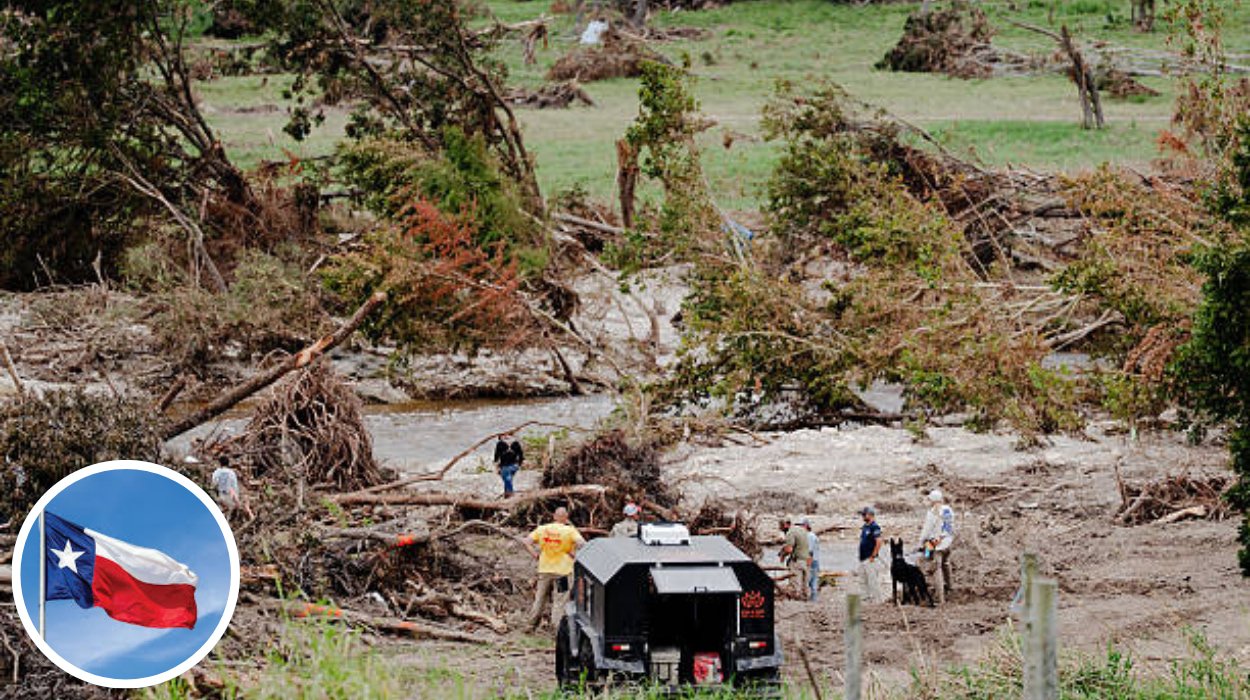
fast-developing, destructive flash floods. Rough terrain, thick mud, and
enormous debris piles have hampered rescue and recovery since the floods began,
reported Jenni Kutz of the Texas Tribune.
What Has the Response Looked Like?
Dalton Rice, as cited by 1News and multiple outlets,
credited the intense mobilization of resources:
“Thanks to their extraordinary
efforts the number of individuals previously listed as missing has dropped from
over 160 to three.”
More than 1,000 personnel, including first responders,
law enforcement, and search and rescue specialists, have been joined by
thousands of volunteers combing the length of the river from its headwaters to
Canyon Lake.
International assistance has also contributed to the
efforts. As reported by FOX 7 Austin and the City of Kerrville, a 16-member
search and rescue team from the Czech Republic, along with their trained rescue
dogs, was dispatched to assist in specialized recovery operations. The
Texas National Guard and the Czech Embassy in Washington facilitated their
deployment, which brought critical expertise and manpower to the disaster zone.
Who Were the Victims, and Where Did the Worst Impact Happen?
The majority of deaths occurred in Kerr County, particularly
at Camp Mystic, a century-old all-girls summer camp that lost at least 27
campers and counselors. Most fatalities in the region included adults and
children swept away as the Guadalupe’s normally tranquil flow turned lethal.
The devastation extended to homes, vehicles, and
infrastructure across Central Texas, but the riverbank camps and tourist sites
along the Hill Country saw the most concentrated loss of life.
What’s the Current Status of Search and Recovery Operations?
As reported by John Bacon of USA Today, efforts to find the
remaining three missing individuals persist, with search and rescue teams
employing a combination of manual sifting through debris, using rescue dogs,
and advanced diving techniques. Dalton Rice reiterated the community’s
commitment to the families still awaiting answers:
“Our thoughts remain with
the families still awaiting news, and we will continue to stand with them as
efforts persist.”
“Many people who were initially classified as missing have
been validated as safe and taken off the list,” authorities told NBC News,
adding that this work was continuous, requiring tireless investigation and
verification. CNN and ABC News explained that the nature of the
terrain—sixty miles of murky river, thick mud, and gigantic debris piles—means
that completely accounting for all missing individuals could take weeks, if not
months.
What Concerns Remain for the Community and Officials?
Media including Deutsche Welle, Scripps News, and the Texas
Tribune have reported rising frustration among residents and visitors about the
effectiveness of the region’s flood warning systems. Many victims and their
families said they received little to no advance notification from the National
Weather Service or local agencies.
As noted by officials and relayed by The Texas Tribune,
tracking the exact number of missing was complicated by the influx of tourists
into the Hill Country on the Fourth of July weekend, as many had not signed
into hotels or campsites and were only later reported missing by friends and
relatives.
Governor Greg Abbott has responded by convening a special
legislative session and calling for a select committee hearing in Kerr County
at the end of July to address systemic issues exposed by the flood, including
emergency preparedness, communication, and infrastructure.
How Are Families and Communities Coping?
Expressions of grief and solidarity have marked community
responses. “Your commitment, professionalism, and compassion have provided
solace and answers to many,” Kerr County Judge Rob Kelly expressed to the teams
involved, as cited by USA Today. The Scripps Howard Fund and other
charitable organizations are working alongside authorities to provide ongoing
aid to victims and affected families.
What Is the Broader Significance of This Disaster?
According to Axios, scientists have warned that extreme
rainfall events such as the one that triggered these floods are likely to
become more frequent and severe due to climate change, highlighting the urgent
need for improved infrastructure and early-warning systems. The July 4,
2025, Texas floods now rank among the deadliest inland flooding events in
United States history.
In summary, authorities emphasize that while the sharp
reduction in the number of missing persons is a source of relief, the search
for those still unaccounted for will not cease until every family has answers.
The recovery from this historic disaster will take months if not years, as
Texas communities mourn, rebuild, and work to ensure that such a tragedy
remains unrepeatable.