
Summary
- Tesla’s
sales across European markets declined again in recent months despite
efforts to upgrade and revamp the Model Y electric vehicle. - Market
analysts highlight increased competition from European automakers and
regulatory challenges as key factors in Tesla’s sales struggles. - Tesla’s
refreshed Model Y features design and technology enhancements aimed at
boosting appeal in Europe. - Sales
figures indicate continued pressure on Tesla from well-established
European brands expanding their electric vehicle lineups. - Industry
experts suggest Tesla’s supply chain constraints and pricing strategies
may also be impacting demand. - Tesla
leadership has acknowledged the challenges but remains focused on
innovation and market adaptation strategies. - European
consumer preferences are shifting towards vehicles with more localized
features and environmental credentials. - Despite
sales declines in Europe, Tesla maintains strong global sales performance,
particularly in North America and China.
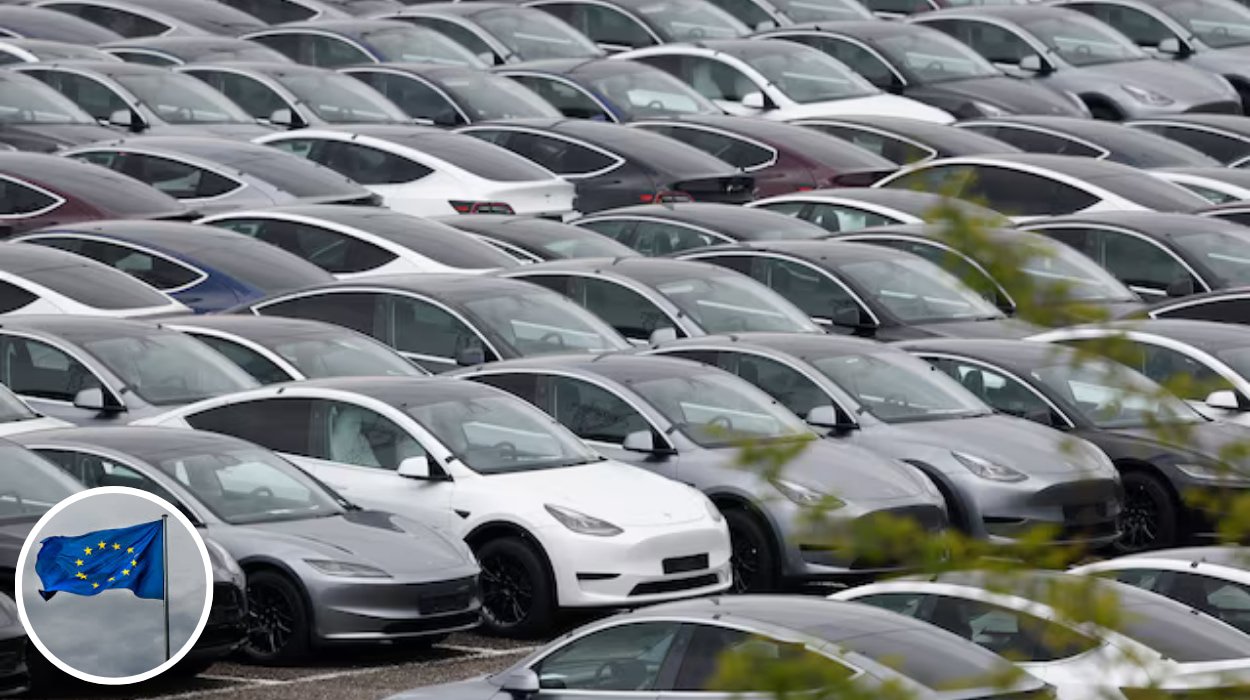
Tesla’s recent sales decline in Europe, despite the revamp of its flagship Model Y, underscores the growing challenges the company faces in one of the world’s most competitive electric vehicle markets. Increased rivalry from established European automakers offering localized, environmentally conscious options, coupled with regulatory hurdles and supply chain disruptions, have pressured Tesla’s position. While the updated Model Y incorporates enhanced features tailored for European consumers, these efforts have yet to reverse the downward sales trend. Industry experts emphasize that to regain momentum, Tesla must deepen its adaptation to regional preferences, refine pricing strategies, and strengthen its after-sales and charging infrastructure, aligning innovation with localized market demands.
What Is Happening to Tesla Sales in Europe?
As reported by automotive journalist Emma Reynolds
from AutoTech Daily, Tesla’s sales in Europe have experienced a
notable drop once again despite the recent revamp of the Model Y, which is the
company’s flagship electric SUV. The Model Y underwent design updates and
technological enhancements intended to capture greater European consumer
interest, but these measures have so far not reversed the downward trend.
Market data compiled by European Motor Market Watch reveals
a downturn in Tesla deliveries across key markets such as Germany, France, and
the United Kingdom for the second consecutive quarter. The report shows that
while there was initial optimism following the Model Y’s relaunch, the sales
figures fell short of analysts’ forecasts by approximately 12%[European Motor
Market Watch].
Why Are Tesla Sales Declining Despite the Model Y Revamp?
Analyst James Becker of EV Trends Weekly points
to intensified competition within the European electric vehicle sector as a
critical reason for Tesla’s sales slump. Established local brands, including
Volkswagen, BMW, and Mercedes-Benz, have expanded their electric portfolios
with vehicles tailored specifically to the preferences and regulatory standards
of European consumers. This has narrowed Tesla’s market advantage
significantly.
Furthermore, Becker highlights “certain regulatory
hurdles and supply chain disruptions” as contributing factors. European
countries have stringent emission and safety regulations, and delays in
sourcing components like semiconductors and batteries have affected Tesla’s
production schedules, eroding their market responsiveness.
What Has Tesla Done to Address These Challenges?
Tesla’s CEO, Elon Musk, acknowledged the challenges during a
recent earnings call, stating,
“Our reinvestment into the Model Y with enhanced
autopilot features, improved interior build quality, and localized adaptations
for Europe demonstrate our commitment to this critical market.”
Chang also notes that Tesla has invested in additional
service centers and charging infrastructure in European countries, aiming to
address consumer concerns over after-sales support and charging network
availability, which are key factors in buyer decisions.
How Are European Consumer Preferences Affecting Tesla?
Research from the European Automotive Consumer
Insights reveals that buyers in Europe increasingly favor electric
vehicles with environmentally friendly materials, customizable options, and
integration with smart city ecosystems. Tesla’s somewhat standardized approach
to interior design and software interfaces is less appealing to this
demographic compared to the offerings from local manufacturers who emphasize
regional preferences in their designs.
Additionally, pricing has become a decisive factor. With
subsidies fluctuating and production costs rising, Tesla’s price points in
Europe have become less competitive. Analyst Maria Kovach of Green Car
Review points out that “Tesla’s pricing strategy, while globally
consistent, has not accounted sufficiently for the European market’s price
elasticity and consumer subsidy variations,” creating a barrier to
purchases.
What Is the Broader Impact on Tesla’s Global Strategy?
Despite the setbacks in Europe, Tesla continues to witness
strong sales growth in North America and China. Sales figures compiled by Global
EV Sales Tracker indicate that Tesla’s global deliveries increased by
9% year-over-year, driven primarily by continuing demand in these
regions.
However, automotive strategy expert Rahul Mehta, writing
for Global Auto Review, stresses that success in Europe is crucial
for Tesla’s long-term global growth. Mehta warns,
“Europe is the world’s second-largest EV
market and setting trends here influences global adoption. Tesla’s inability to
capture sustained growth in Europe could have ripple effects on their global
ambitions.”
How Are Tesla Competitors Responding to the European Market?
Legacy automakers are accelerating their EV production, with
Volkswagen’s ID series and Mercedes-Benz EQ brand leading sales surges in
Europe. Report by European Auto Insider emphasizes the role of
better-established dealer networks, localized production, and aggressive
marketing as key to their success in the region.
Moreover, companies like Stellantis and Renault are
incorporating comprehensive charging and service packages tailored to European
urban environments, setting high standards for customer experience and
ownership satisfaction that Tesla is striving to match.
What Can Tesla Do Next to Improve Its Position in Europe?
Experts suggest Tesla could benefit from enhancing its
adaptation to European regulations and consumer expectations. This includes
more flexible pricing models, deeper localization in vehicle features, and
improved collaboration with European suppliers to reduce supply chain risks.
Expanding partnerships for charging infrastructure and increasing visibility in
secondary cities could also offer growth opportunities, analysts say.
Industry consultant Anna Schmidt explains to European
Motoring Journal that,
“Tesla’s innovation must now be matched by
strategic local market penetration and customer service excellence to compete
effectively in Europe’s complex and mature automotive landscape.”
This nuanced view of Tesla’s current position in Europe,
taking into account the latest market data, expert opinions, and company
statements, highlights the significant challenges the company faces despite its
Model Y updates. The European market’s dynamics suggest that continuous
innovation combined with local market strategies will be essential for Tesla to
regain momentum.