
- Historic
Integration Deal: Syria’s government and Kurdish-led SDF agreed to end a
decade of self-rule in northeast Syria, merging military, administrative,
and security structures into state control following recent clashes and US
policy shifts. - Key
Provisions: Includes Interior Ministry deployment in Hasakah/Qamishli; new
division from 3 SDF brigades plus Kobani brigade under Aleppo command;
merger of self-administration bodies; protections for Kurdish
civil/education rights; IDP returns. - Military
and Security Shift: SDF retains counter-ISIS role and local policing in
Kurdish areas but under Damascus authority; oil fields revert to central
control for national revenues. - Reactions:
US envoy hails “historic milestone”; Turkey welcomes reduced
terror threats; protests in Iraqi Kurdistan show solidarity with Syrian
Kurds; UN notes de-escalation potential. - Background:
Emerged after 2026 offensives post-Assad overthrow; builds on stalled 2025
talks amid troop withdrawals, stabilising multi-ethnic northeast under unified
governance.
Damascus (Washington Insider Magazine) 30 January 2026 –
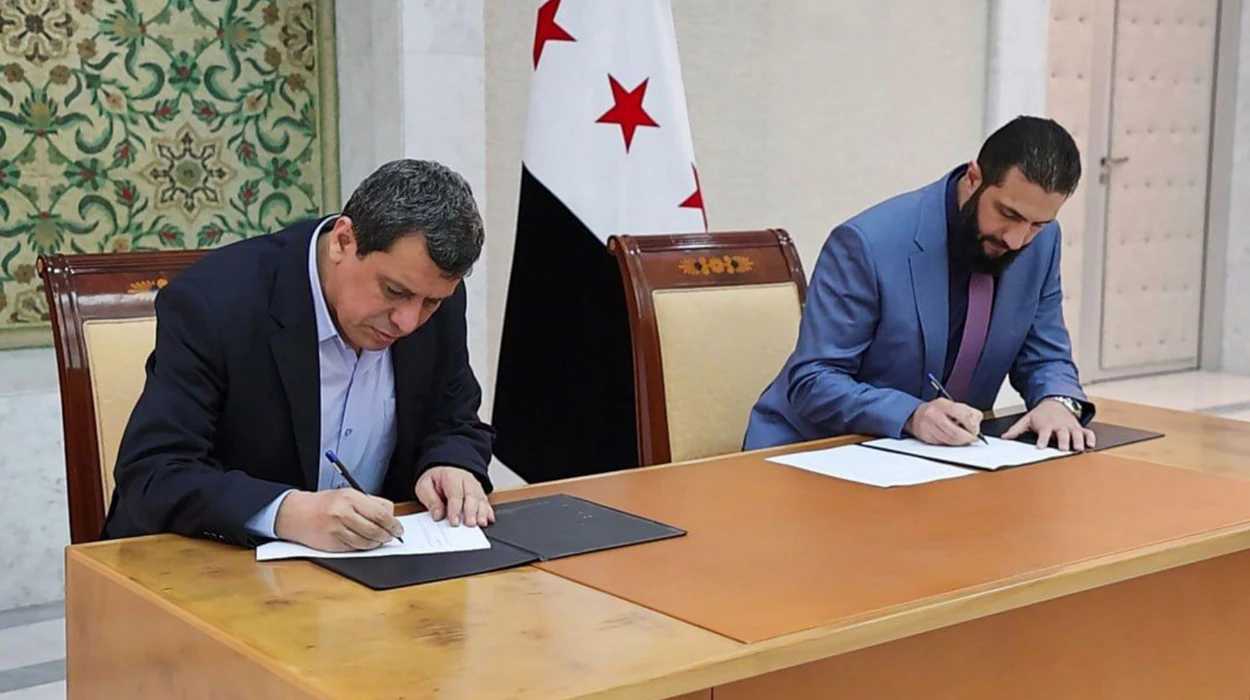
The Syrian government and Kurdish-led Syrian Democratic Forces (SDF) have
reached a comprehensive agreement to integrate military, administrative, and
security structures in northeast Syria. Key provisions include deployment of
Interior Ministry forces in Hasakah and Qamishli, formation of a new military
division from SDF brigades, merger of self-administration institutions,
protections for Kurdish civil and educational rights, and return of internally
displaced persons (IDPs). The deal ends a decade of de facto Kurdish autonomy
following recent government advances and US policy shifts.
The accord, announced on 30 January 2026, follows weeks of
clashes that saw Syrian forces reclaim territory in the northeast. SDF
representatives described it as a step toward national unity and
reconstruction.
Agreement Details and Phased Integration
The deal stipulates immediate deployment of Syrian Interior
Ministry security forces to Hasakah and Qamishli, cities long under SDF
control. SDF units will withdraw from frontline positions, with local security
forces merging into national frameworks.
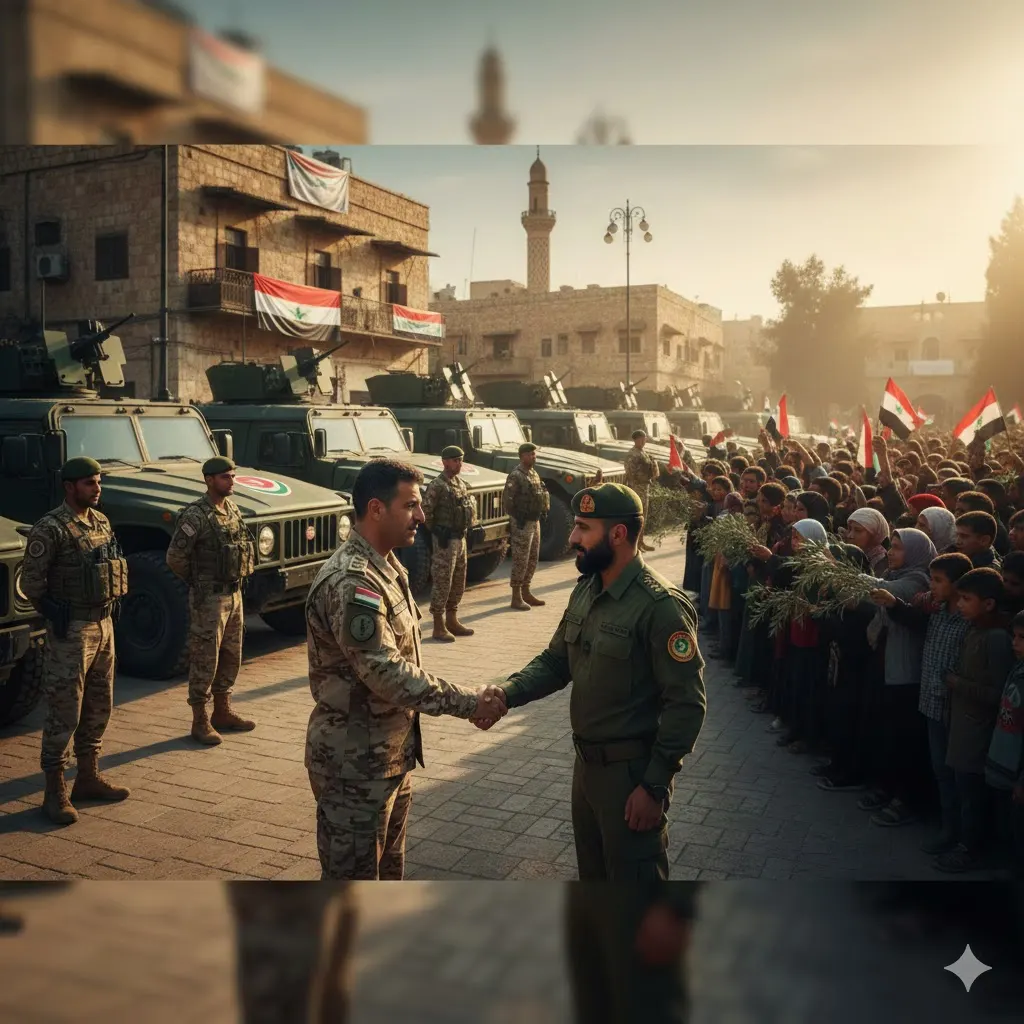
Military integration features prominently, with formation of
a new division comprising three SDF brigades plus one Kobani brigade linked to
an Aleppo division. Administrative institutions of the Autonomous
Administration of North and East Syria (AANES) will merge into state entities,
placing every public institution under Syrian authority. Kurdish units will
continue policing Kurdish-majority areas.
Hassan I. Hassan, a Syria analyst, detailed the specifics in
an X post.
@hxhassan said in X post,
“Damascus & the SDF agree a historic deal:
Interior Ministry deployment in Hasakah/Qamishli, phased military/admin
integration incl. one division made up of 3 SDF brigades plus 1 Kobani brigade
under an Aleppo-linked division, merger of self-admin institutions, protection
of Kurdish civil/education rights, return of IDPs. Essentially every public
institution is under Syrian state authority, with Kurdish units policing
Kurdish areas.”
Damascus & the SDF agree a historic deal: Interior Ministry deployment in Hasakah/Qamishli, phased military/admin integration incl. one division made up of 3 SDF brigades plus 1 Kobani brigade under an Aleppo-linked division, merger of self-admin institutions, protection of… pic.twitter.com/QtrJ3Rv8xs
— Hassan I. Hassan (@hxhassan) January 30, 2026
The agreement also guarantees civil and educational rights
for Kurds, including language instruction, and facilitates IDP returns. Prisons
and oil-gas fields previously managed by SDF transfer to Damascus control.
Implementation begins immediately, overseen by joint committees.
Background to Recent Clashes and Negotiations
Syrian
Government Signs Breakthrough Deal With Kurdish-Led Forces – The New York Times
The pact follows Syrian government offensives in early
January 2026, which captured significant SDF-held areas in Deir ez-Zor,
Hasakah, and Raqqa provinces. Clashes erupted after stalled talks from March
2025, exacerbated by the US withdrawal of direct support for SDF amid the new
administration in Damascus under President Ahmed al-Sharaa, who assumed power
after overthrowing Bashar al-Assad in December 2024.
Prior negotiations, including a 14-point framework, faltered
amid mutual accusations of sabotage. Syrian forces advanced after 6 January
confrontations in Aleppo, prompting SDF commander Mazloum Abdi to agree to a
ceasefire and deeper integration. The US, once SDF’s primary backer against
ISIS, shifted support to Damascus, leaving around 900 troops in advisory roles
at bases like Al-Tanf.
Kurdish autonomy began in 2016 amid the anti-ISIS campaign,
with AANES governing a quarter of Syria, home to multi-ethnic populations
including 10 percent Kurds. Rojava implemented decentralised councils, but
tensions persisted with Damascus, Turkey, and Russia.
Regional and International Reactions
Syrian state media confirmed the deal via an anonymous
official, framing it as unification. SDF statements emphasised cooperation for
reconstruction. US Special Envoy Thomas J. Barrack Jr. hailed it as a “profound
milestone in Syria’s journey to national reconciliation, unity, and enduring
stability” on social media.
Turkey, viewing SDF as a PKK extension, welcomed the reduced
“terrorist safe havens” near its border. President Recep Tayyip
Erdogan addressed the issue positively. Russia, a past mediator, and Iran
expressed support. The UN envoy noted de-escalation potential, while EU foreign
policy chief Josep Borrell stressed human rights.
A recent decree by President al-Sharaa grants Kurds
immediate citizenship and designates Kurdish as an elective national language
in Kurdish areas, aligning with deal protections.
Protests in Solidarity with Syrian Kurds

Killing
of Kurds in northern Syria sparks protests,…
Public response emerged swiftly, particularly in
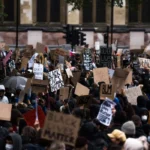
neighbouring Iraqi Kurdistan. Demonstrations continued in solidarity with
Rojava Kurds amid the integration news.
Wladimir van Wilgenburg, a northeast Syria expert, reported
on the unrest in an X post.
@vvanwilgenburg said in X post,
“Protests continue in Iraqi Kurdistan in
solidarity with Rojava/Syrian Kurds”
Protests continue in Iraqi Kurdistan in solidarity with Rojava/Syrian Kurds pic.twitter.com/8HtHdrHAnC
— Wladimir van Wilgenburg (@vvanwilgenburg) January 30, 2026
No major incidents occurred in Syria itself, though Hasakah
and Qamishli residents voiced mixed views on economic benefits versus
centralisation concerns. SDF reported no protests following the announcement.
Economic and Security Provisions
Oil and gas fields in Deir ez-Zor and Hasakah, generating
prior SDF revenues, revert to central control for national allocation. This
aids Syria’s war-torn economy under sanctions. Infrastructure repairs,
including electricity and water, gain access via government services.
Security merges Asayish police into the Interior Ministry.
SDF retains counter-ISIS roles under Syrian command, with US intelligence
continuing via coalition channels. A Kobani brigade formation addresses local
dynamics post-siege.
Joint patrols along the Turkish border incorporate Syrian
troops with SDF units, easing Ankara’s concerns while preserving Kurdish
demographics in areas like Afrin and Manbij.
Implementation Challenges Ahead
Logistics involve
integrating 50,000 SDF fighters, with training, salaries, and amnesty for
rank-and-file excluding senior separatist figures. Displacement camps for
100,000 returnees require coordination.
UN Disengagement Observer Force monitors compliance, with
review clauses for violations. ISIS remnants necessitate ongoing vigilance. The
deal builds on 18-27 January talks, targeting full rollout by late 2026.
This agreement stabilises the northeast post-Assad, though
southern areas like Suwayda and eastern pockets remain outside full control. It
advances Damascus’s centralised vision while incorporating Kurdish elements.