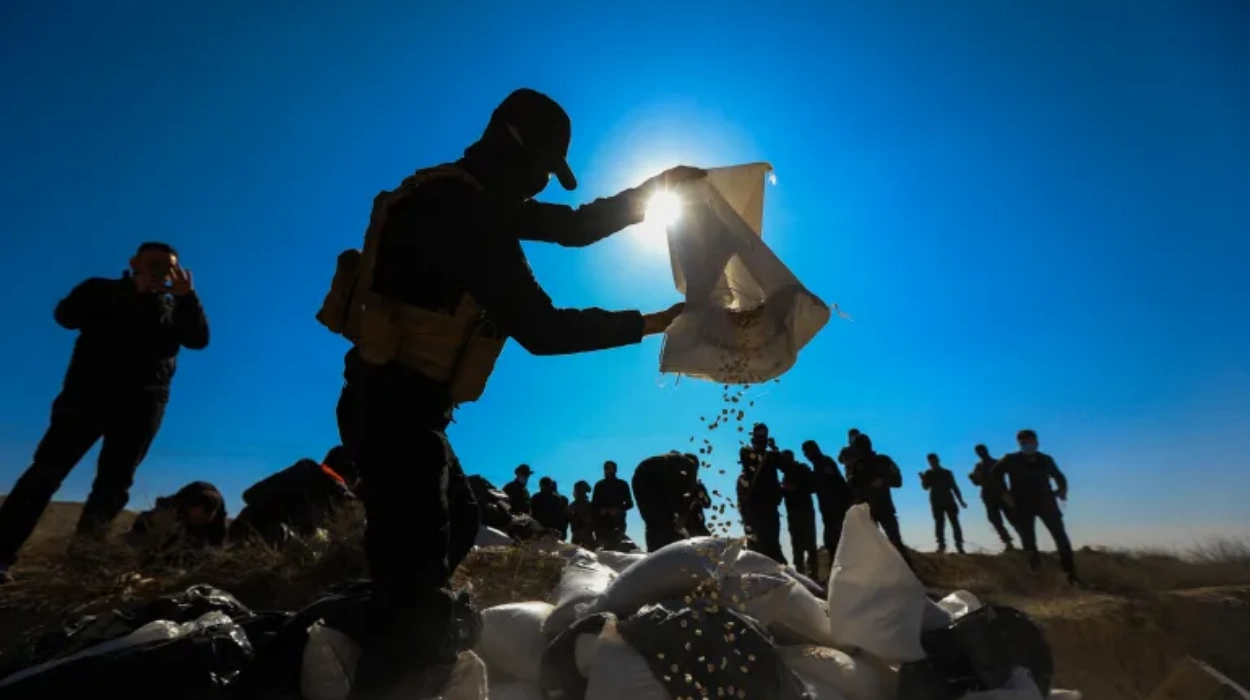

Syria (Washington Insider) – Syria’s Captagon crackdown
under interim President Ahmed al-Sharaa closed 15 labs and 13 storage sites.
Maher al-Assad profited before; Gulf nations remain top buyers despite ongoing
stockpiles.
As Stephen Quillen reported on Al Jazeera News, Syria’s
Captagon industry, once a major source of income under former president Bashar
al-Assad, is now under a strong government crackdown. Authorities closed 15
large laboratories and 13 storage sites used for production and distribution.
The United Nations Office on Drugs and Crime said the crackdown has sharply
changed the Captagon market in the region.
What impact will
Syria’s Captagon crackdown under Ahmed al-Sharaa have on the region?
Officials mentioned that the crackdown is also part of
Syria’s effort to improve its international image. Closing factories and
storage sites cuts off billions in illegal revenue and weakens networks tied to
the former government. Gulf nations that criticised Syria for its role in the
Captagon trade are watching closely.
Western countries that imposed sanctions because of the drug
market will also notice the actions. Experts say the shutdown could change the
balance of the Captagon trade in the Middle East. While the long-term effects
are still unclear, Syria’s new leadership has taken strong measures to control
the industry.
Even though the current Syrian government has cracked down
on Captagon production, large stockpiles of the drug are still circulating
in the region, according to the United Nations Office on Drugs and Crime. The
report also said smaller-scale production likely continues inside Syria and in
neighbouring countries. Gulf nations remain the top consumers.
Officials warn that the crackdown could push some users
toward other synthetic drugs, including methamphetamine, which has become more
common in the region. The changes could affect how drugs are used and
trafficked across the Middle East.
After Bashar al-Assad became the President of Syria, he was
very beneficial to the Captagon trade within Syria. By 2010, Syria accounted
for the largest majority of the world’s Captagon supply, which spread widely
throughout various areas of the Middle East.
The civil war began in 2011, and despite international
sanctions impacting Syria’s economy during that time (2011-2012), the Captagon
trade remained successful due to the support of the Elite Fourth
Division.
The 4th Division was commanded by Maher al-Assad, who
happens to be the brother of Bashar al-Assad. The 4th Division kept shipments
of Captagon protected while they passed via Latakia, one of the major cities
remaining under control of the Syrian government during that time.
Captagon became a major source of revenue generation for the
Syrian government and its affiliated militias by 2015. Purchasers were
concentrated in the Gulf region, particularly Saudi Arabia, the United ArabEmirates, and Lebanon. After the removal of President Bashar al-Assad in 2024,
interim President Ahmed al-Sharaa initiated a campaign against Captagon use in
Syria.