
Summary
- US to
supply Pakistan advanced air-to-air missiles. - Raytheon
contract modified for missile production through 2030. - Pakistan
was included among 30+ allied nations in the missile deal.
The change, which the US Department of War announced on
September 30, includes Pakistan in a significant worldwide missile delivery
program.
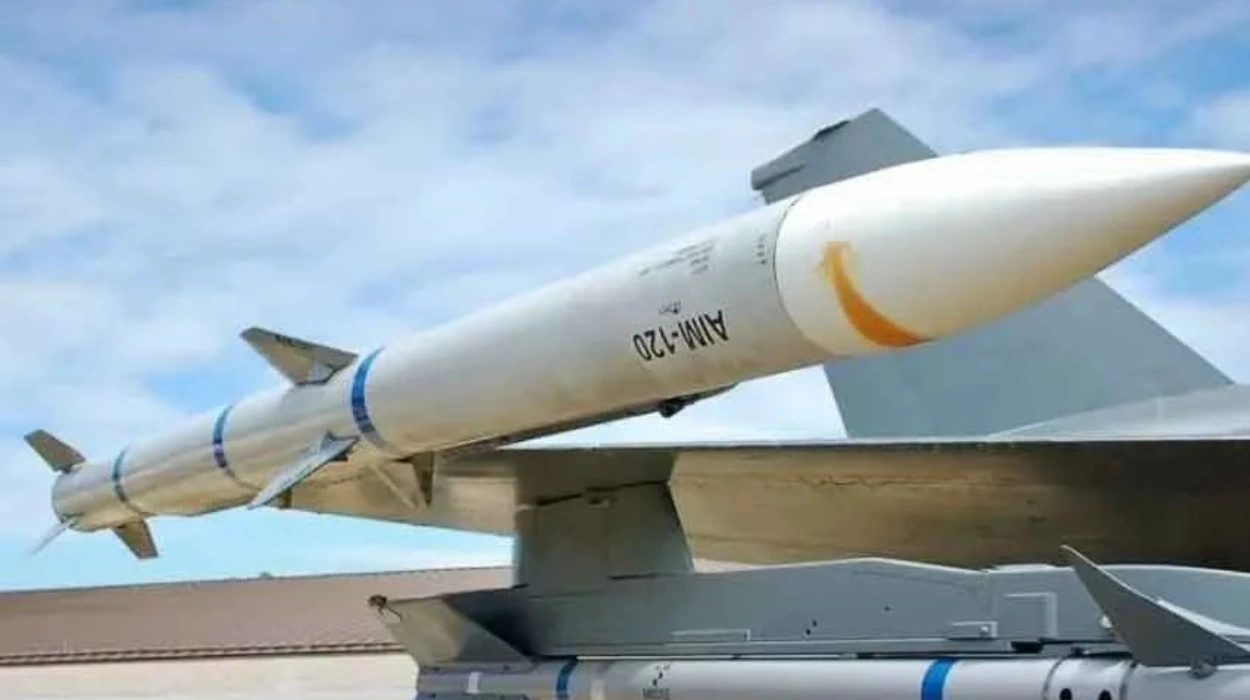
A $41.6 million firm-fixed-price modification to Raytheon’s
current contract for manufacturing enhanced C8 and D3 versions of the Advanced
Medium-Range Air-to-Air Missile (AMRAAM) was granted under the revised
agreement. With completion anticipated by May 2030, the modification raises the
contract’s overall value to $2.5 billion.
The sale of the AMRAAM, a beyond-visual-range weapon
deployed by the Pakistan Air Force’s F-16 Falcon fighter jets, to Pakistan and
30 other nations, including the UK, Germany, Australia, Saudi Arabia, and
Japan, has been authorized.
The inclusion of Pakistan, which was not included in the May
version of the agreement, reflects the strengthening military and economic ties
between the United States and Pakistan.
Bilateral relations have accelerated
in the last year due to new investments and agreements. With an emphasis on
antimony, copper, tungsten, gold, and rare earth elements, the United States
Strategic Minerals (USSM) group pledged $500 million to Pakistan’s vital
minerals industry in September.
In a similar vein, Portugal’s Mota-Engil Group and
Pakistan’s National Logistics Corporation (NLC) inked a Memorandum of
Understanding (MoU) to work together on engineering and infrastructure
projects, and both nations agreed to reduce reciprocal tariffs from 29% to 19%.
Since placing a record order for 700 AMRAAM missiles in
2007, Pakistan has been using the missiles. During the 2019 Operation Swift
Retort, when Pakistan Air Force fighters fought Indian aircraft over Kashmir,
the technique was predominantly utilized.
The new missile supply agreement, which runs until 2030,
highlights a renewed military alliance between Washington and Islamabad as
Pakistan keeps improving its air defense capabilities in the context of deeper
strategic ties with the US.
What US export approvals or conditions accompany the sale?
These military and defense articles need licenses for export
from the U.S. Department of State’s Directorate of Defense Trade Controls
(DDTC) or licenses for Export from the Bureau of Industry and Security (BIS)
under the Export Administration Regulations (EAR), with the specific license
dependent on the missile system’s characteristics and ultimate end-use.
The U.S. government will review and require extensive
end-user certification and verification if Pakistan is identified to be the
end-user and accordingly licensed, which serves to verify the destination and
end-use of the missiles, and to ensure that they do not disburse or divert them
to unauthorized parties or use them in an unauthorized manner.
The sale must also conform to broader U.S. foreign policy
goals such as regional stability and avoiding military escalation.