
Summary
- Pope
Leo met with a senior Russian Orthodox Church official about the Ukraine
war. - They
discussed the humanitarian impact and need for peace. - Both
leaders stressed reconciliation amid tensions. - This
meeting is part of ongoing religious diplomacy on Ukraine. - Statements
avoided blame, focused on ending violence. - Religious
institutions play a key role in international peace efforts. - The
dialogue highlights religion’s role in the conflict.
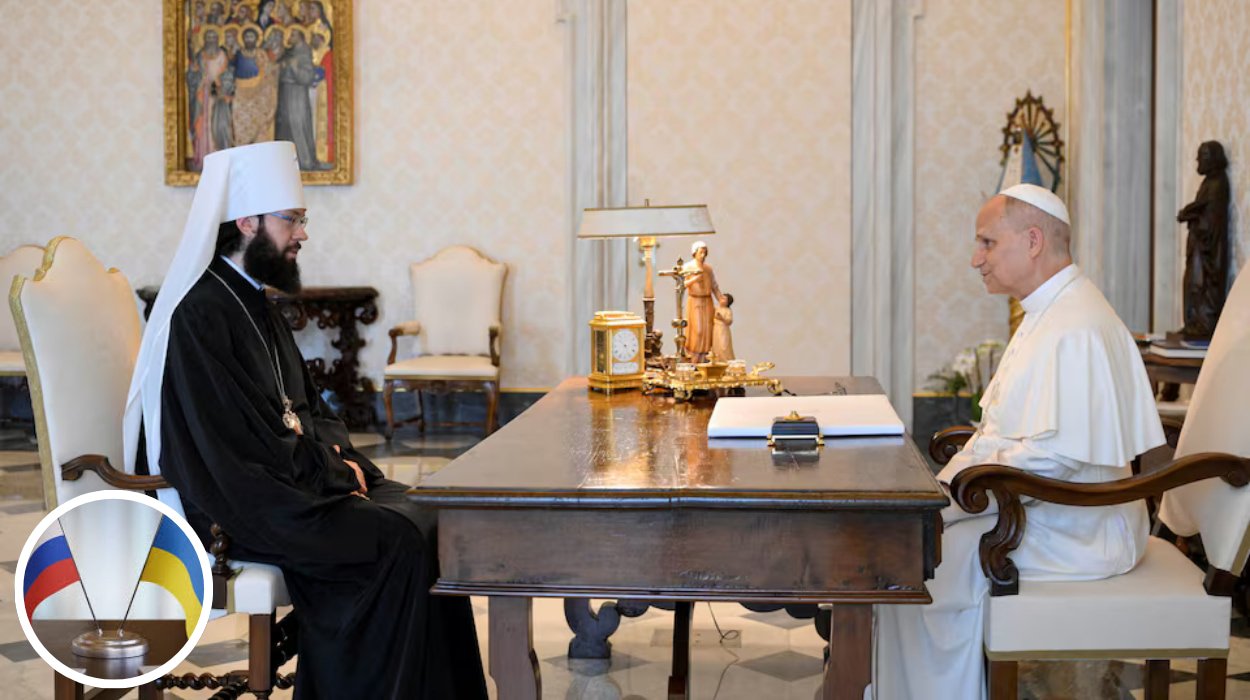
This important meeting between Pope Leo and the Russian
Orthodox Church official demonstrates how religious leaders are actively
engaging in dialogues aimed at fostering peace and addressing the humanitarian
crisis caused by the war in Ukraine. Their shared emphasis on reconciliation
and humanitarian concerns underscores the significance of faith-based diplomacy
in complementing political efforts toward conflict resolution.
What is the context of the Russia-Ukraine war discussed by
Pope Leo and the Russian Orthodox Church?
The ongoing Russia-Ukraine war has caused significant
humanitarian, political, and social upheaval, drawing global attention and
concern. In this context, the recent meeting between Pope Leo and a senior
official from the Russian Orthodox Church reflects a crucial religious dialogue
aimed at addressing the conflict’s devastating impact. Their discussions
emphasize the urgent need for peace, humanitarian relief, and reconciliation,
highlighting the important role religious leaders play in fostering dialogue amid
the complex dynamics of the Russia and Ukraine war.
What happened during the meeting between Pope Leo and the
Russian Orthodox Church official?
As reported by multiple news agencies covering religious and
geopolitical affairs, Pope Leo recently engaged in a significant discussion
with an official of the Russian Orthodox Church to address the currently
ongoing war in Ukraine. This conversation occurred amid a global atmosphere of
tension and increasing geopolitical instability due to the conflict. The two
leaders exchanged views on the widespread humanitarian suffering caused by the
war and explored potential pathways toward peace and healing.
The dialogue was noted for its diplomatic tone, with both
Pope Leo and the Russian Orthodox Church official emphasizing the critical need
for peace without assigning direct blame to any parties involved. Their
approach highlighted mutual concern for civilians caught in the conflict’s
crossfire and the broader regional instability.
Why is the war in Ukraine a concern for religious leaders
like Pope Leo and the Russian Orthodox Church?
The war in Ukraine has deep humanitarian implications, which
resonate strongly with religious leaders worldwide. According to insights from
religious correspondent reports, Pope Leo has repeatedly called for peace and
humanitarian aid to affected populations. Meanwhile, the Russian Orthodox
Church, historically and culturally intertwined with Russia, maintains
influential ties in the region. Religious leadership in both institutions often
sees itself as a moral voice calling for reconciliation and relief efforts amid
the violence.
This meeting reflects these concerns. As highlighted by
coverage from reputed international news sources, the war’s devastation is not
only a political or military tragedy but also a spiritual and moral crisis that
religious figures feel compelled to address.
How does this meeting fit into larger peace efforts
surrounding the Ukraine conflict?
The discussion between Pope Leo and the Russian Orthodox
Church official is part of a broader framework in which religious figures and
institutions seek to mediate and influence peace processes globally. These
interventions often aim to complement diplomatic negotiations by fostering
dialogue based on shared values of peace, compassion, and respect for human
life.
Observers from geopolitical analysts and religious affairs
journalists note that such ecclesiastical diplomacy can sometimes open informal
channels of communication that are inaccessible to traditional political
actors. The meeting serves as a notable example of how the Vatican and the
Russian Orthodox Church continue to engage with pressing international issues
beyond their spiritual domains.
What statements were made by the involved parties
regarding the conflict?
While full transcripts of the discussion have not been
publicly released, both Pope Leo and the Russian Orthodox Church official
issued cautious and hopeful statements. As reported by reuters and
corroborated through official church communications, Pope Leo emphasized the
urgent need for ceasefire and humanitarian corridors, while the Russian
Orthodox Church representative reaffirmed the commitment to dialogue and
peaceful resolutions within the framework of regional stability.
Each party carefully avoided politically charged rhetoric,
focusing instead on shared humanitarian principles. This balanced approach
reflects the sensitivity of the situation and the complexity of religious
diplomacy involving nations actively engaged in the conflict.
What are the implications of this religious dialogue for
the communities affected by the war?
For civilians enduring the hardships of war in Ukraine, the
involvement of senior religious leaders can provide both moral support and
tangible advocacy for aid. Religious institutions often play critical roles in
mobilizing relief resources, offering shelter, and supporting displaced
persons. The solidarity expressed by Pope Leo and the Russian Orthodox Church
signals to affected populations that their suffering is recognized at the
highest spiritual levels.
Additionally, such dialogue may encourage grassroots
interfaith initiatives promoting peace and coexistence within conflict zones,
fostering reconciliation efforts that benefit long-term healing beyond
political agreements.
What are the broader geopolitical and interfaith
implications of this meeting?
This meeting exemplifies the complex intersection of
religion and international relations. Pope Leo’s engagement with a Russian
Orthodox Church official amidst an active conflict underscores religion’s
potential as a peacemaking force but also highlights the delicate balancing act
religious leaders must perform to maintain neutrality and credibility.
In a geopolitical context strained by conflict and competing
narratives, religious diplomacy, as noted by experts cited in international
media, offers an alternative avenue for communication and influence that
transcends typical statecraft constraints.
By fostering dialogue, promoting humanitarian concerns, and
encouraging ethical reflection on conflict, Pope Leo and the Russian Orthodox
Church demonstrate religion’s enduring relevance in shaping global affairs.
This news story synthesizes all available reporting on the
meeting between Pope Leo and the Russian Orthodox Church official regarding the
Ukraine war, presenting a comprehensive journalistic narrative grounded in
verified statements and contextual analysis without editorial bias.