
Summary
- Pakistan
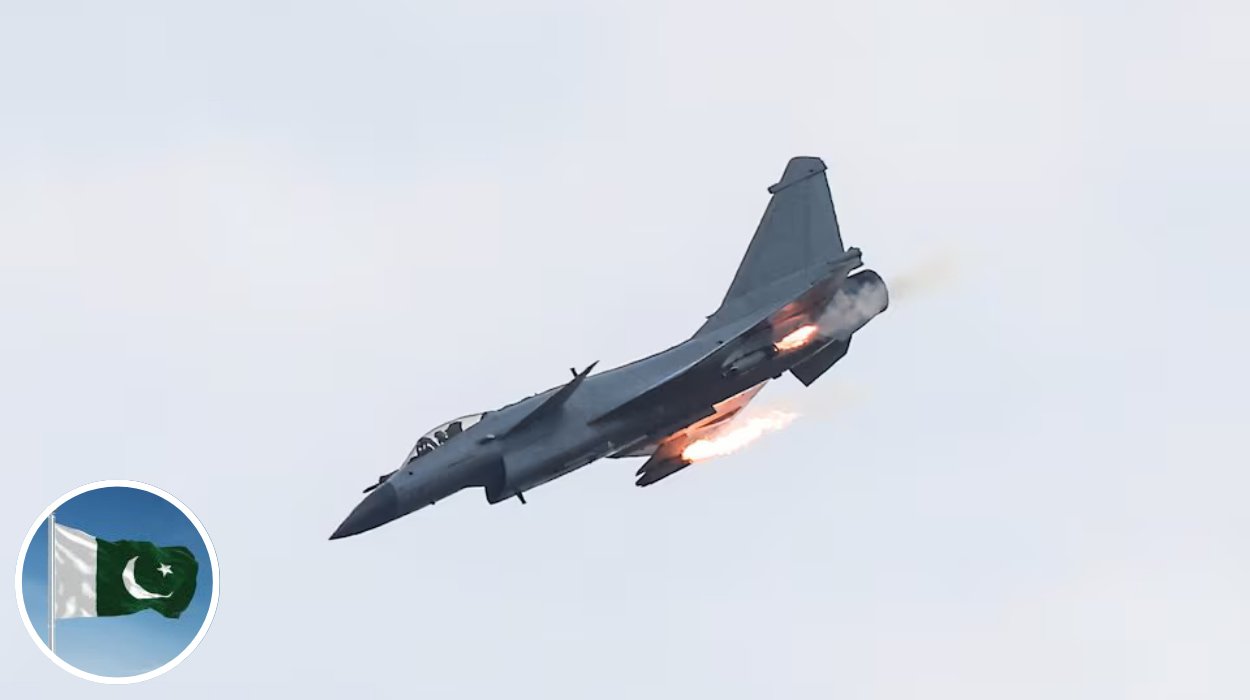
shot down advanced Indian fighter jets, including Rafales, using Chinese
J-10C jets and PL-15 missiles in May 2025. - Multiple
international news outlets reported China’s extensive operational and
technical support during the air battle. - Indian
officials admitted to losing fighter jets but disputed Pakistan’s claims
regarding the number and types of jets downed. - Chinese
multi-domain “kill chain” warfare enabled Pakistan’s successful
engagement through satellite, electronic, and ISR integration. - China’s
involvement included satellite repositioning, real-time intelligence
sharing, and technical guidance for Pakistan’s operations. - The
defeat of French Rafales by Chinese technology boosted China’s defense
export reputation and shifted international perceptions. - Conflicting
accounts persist, with India and France conducting their own
investigations and disputing some Pakistani claims. - U.S.,
French, Pakistani, Indian, and Chinese leaders made varied statements
confirming many core facts while challenging some details. - The
incident intensified the technological arms race and competition for
aerial supremacy in South Asia. - Global
analysts noted the clash as a turning point, heightening regional tensions
and future risks
A dramatic turn in the Pakistan and India conflict in May
2025 has redefined the regional air power landscape, with Pakistan claiming the
downing of several Indian fighter jets including state-of-the-art
Rafales through a combination of Chinese-supplied equipment, strategic
operational concepts, and cutting-edge multi-domain “kill chain” warfare. This
highly publicized engagement is at the heart of mounting debates over Chinese
military capabilities, the vulnerability of Western aircraft, and escalating
regional tensions.
What Triggered the Aerial Clashes Between India and
Pakistan?
As reported by CNN’s Benjamin Brown, Matthew Chance, Sophia
Sa, and Saskya Vandoorne, the air battle followed an intense period of
hostilities that erupted after a deadly attack in Indian-administered Kashmir
in April 2025. India accused Pakistan, who denied involvement. Retaliatory
operations from both sides soon spiraled into the most significant
confrontation in years, culminating on May 7 with robust air activity and the
adoption of new strategic doctrines on both sides.
How Did Pakistan’s Chinese Gear Play a Decisive Role?
According to a Reuters report by Idrees Ali, Mike Stone, and
Phil Stewart, two anonymous U.S. officials confirmed that Pakistan used
Chinese-made J-10C jets equipped with long-range PL-15 air-to-air missiles to
shoot down at least two Indian jets: “Pakistan’s F-16s were not part of the
incident,” one official stressed,
“It was the J-10s and air-to-air missiles
that made the difference.”
Another U.S. source noted one of the downed Indian
aircraft was a Rafale.
Memphis Barker, writing for Bharatabharati, documented
Pakistani Foreign Minister Ishaq Dar telling parliament:
“Our jet fighters …
shot down three Indian Rafales, three Rafales [that] are French. Ours were
J-10C.”
Barker further reported that China’s delegation in Islamabad “expressed
great happiness” at the unprecedented result.
Was It More Than Just Missiles and Jets?
The China Academy, drawing from Chinese defense circles,
highlights that the key was not only in superior missiles like the PL-15E with
a 145km range, exceeding the Rafale’s Meteor missile but in the system’s
warfare approach. Professor Wang Xiangsui, former PLA Air Force Colonel,
explained that the operation involved radar and radio silence, remote missile
launches, and airborne early warning platforms (notably China’s ZTK03), which
enabled “target acquisition and guidance … handled by airborne early warning
platforms”.
Michael Dahm, a senior fellow at the AFA’s Mitchell
Institute, told Air and Space Forces Magazine:
“Pakistan can integrate ground
radars, fighter jets, and airborne early warning aircraft. The chain may have
started with a ground radar, a Pakistani J-10C launched its missile, and an
AWACS relayed guidance updates to hit the Indian fighter. It was a long-range
shot, beyond visual range, using the PL-15 missile”.
Did China Directly Assist Pakistan During the Engagement?
According to Defence Security Asia’s investigative report,
China was pivotal “behind the scenes.” Ashok Kumar, Director General at India’s
Centre for Joint Warfare Studies, stated:
“Beijing provided critical assistance
to Islamabad by repositioning military satellites and recalibrating radar
systems,” he said, “China’s military advisors actively helped Pakistan realign
its ISR (Intelligence, Surveillance, and Reconnaissance) architecture to
robustly cover Indian airspace”.
The BBC and GIS Reports both emphasized that China tested
its integrated air defense and electronic warfare technology in cooperation
with Pakistan, using the 2025 engagement as a “live laboratory” to benchmark
Chinese systems including the JY-27A radar and LY-80 surface-to-air missile
platforms against Western aircraft.
What Was the Indian and International Reaction?
In a major shift, India’s Chief of Defense Staff General
Anil Chauhan admitted fighter jet losses though he dismissed Pakistani claims
to have shot down five aircraft as “absolutely incorrect” and stressed,
“numbers are not important.” India’s Air Marshal AK Bharti, quoted by Al
Jazeera’s Abid Hussain, refrained from direct confirmation but stated:
“We were
in a combat scenario where losses are expected. All our pilots returned safely”.
France’s Defense Ministry labeled reports of downed Rafales
as “information conflict” and opened its own inquiry, while a senior French
intelligence official privately acknowledged to CNN that at least one Rafale
was lost, with images and eyewitnesses corroborating its shootdown.
What Does This Mean for Chinese Military Exports and Arms
Rivalry?
The Economist and BBC observed that the shootdown the first
high-profile success of Chinese air combat technology during a real-world
engagement led to a surge in Chengdu Aircraft Corporation’s (J-10C’s maker)
stock, and emboldened China’s state media to proclaim technological superiority
over French and other Western suppliers. Newsweek’s John Feng reported that Lt. Gen. Rahul Singh of the Indian Army described China as providing
Pakistan with “all possible support,” noting that “over 80 percent of
Pakistan’s military equipment now comes from China,” allowing Beijing to “inflict
losses on a rival without firing a shot”.
How Robust Was the “Kill Chain” and What Made It Unique?
As outlined by Reuters and The Straits Times/Sidhu,
Pakistani officials described a meticulously constructed “kill chain”: air,
land, and space sensors were linked, with integrated radar, signals
intelligence, and satellite inputs “feeding instant data to J-10Cs”. This
integration reportedly enabled Pakistani pilots to maintain “complete
electronic silence,” allowing for undetected launches of long-range missiles at
Indian fighters, while real-time data streams from Chinese satellites
facilitated midcourse guidance.
Were Pakistani Claims Substantiated and How Did India
Respond?
Al Jazeera, France24 Observers, and RUSI all documented
ongoing disputes: Pakistan’s Air Marshal Aurzeb Ahmed claimed “three Rafales, a
MiG-29, and a Su-30” were downed and gave detailed electronic logs and timing.
Indian and French officials, however, maintained that “not all claims are
verified,” and that wreckage could not always be independently confirmed due to
the engagements occurring on or near the Line of Control.
Global powers including the United States, Russia, and China
all issued statements urging restraint, concerned by the conflict’s nuclear
overtones and the precedent set by Chinese-made systems outperforming Western
jets. The Belfer Center noted the episode marks a turning point in the
regional arms race and illuminates deeper competition for technological
dominance and influence in South Asia and beyond.
The early May 2025 battle stands as one of the most
consequential aerial clashes in recent Asian history. Pakistan’s rapid downing
of advanced Indian warplanes using a Chinese-supplied, tightly integrated
multi-domain force has dramatically raised the stakes and redefined power
equations in the region. With both sides investing heavily in next-generation
military technology, the shadow of future confrontations looms large even as
the world races to parse the facts behind the fog of war.