
Summary
- Ontario
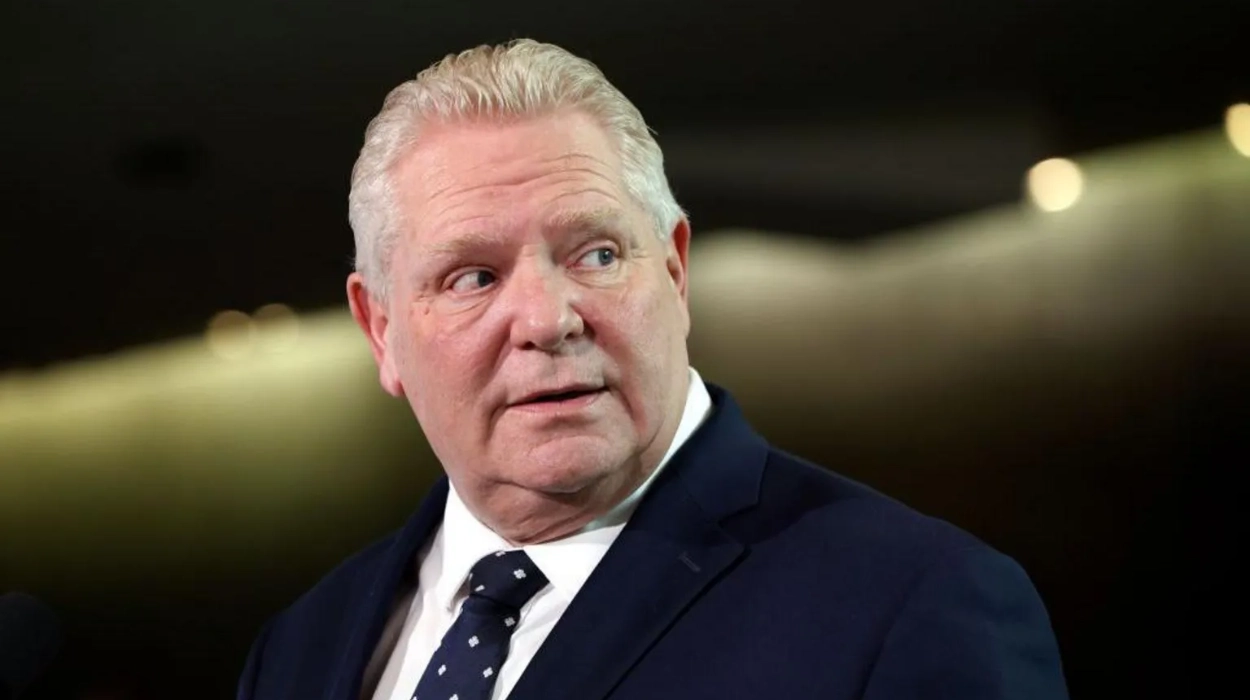
Premier Doug Ford stood firm on anti-tariff Reagan advertisement. - Said
ad achieved its goal of sparking U.S. economic conversation. - Claimed
ad generated over a billion impressions globally.
According to Ford, the TV commercial has received “one
billion views” and has drawn interest from as far away as India and the
United Kingdom.
His remarks on Monday follow President Trump‘s announcement
that he would raise tariffs on Canada by 10% “over and above” current
penalties and the suspension of trade negotiations with Canada because to the
advertisement.
This week, Trump and Prime Minister Mark Carney are both in
Asia for the ASEAN conference, but Trump told reporters he would not be meeting
with Carney “for a long time” and had no plans to do so.
Over the weekend, President Trump posted on Truth Social to
announce the additional 10% tax on Canada. However, it’s unclear if the
increased tax would be imposed generally or to particular industries.
Asked about details on Monday, Trump said:
“I don’t know when it’s going to kick in, and we’ll see, but I don’t
really want to discuss it.”
Although the majority of Canadian goods are excluded under
an existing free trade agreement, the US has put a 35% tariff on them.
Additionally, it has levied tariffs on particular industries, such as 25% on
autos and 50% on steel and aluminum.
Carney informed reporters Monday that the United States and
Canada were exchanging term sheets prior to the conclusion of discussions and
were nearing a trade agreement.
Former US President Ronald Reagan is quoted as arguing that
tariffs “hurt every American” in the Ontario government-sponsored
advertisement. It uses quotes from his 1987 national radio speech about
international trade.
Trump referred to it as “fraudulent” and charged
Canada of attempting to sabotage a forthcoming case before the US Supreme Court
that will determine the legality of the president’s broad tariffs on Canada,
Mexico, China, and dozens of other nations.
Carney emphasized that it is the duty of the federal
government to spearhead trade talks with the US, but he refrained from
criticizing Ford or the advertisement itself.
On Monday, Ford informed reporters that both his chief of
staff and the prime minister had seen the television commercial before its
publication.
Ford referred to the advertisement as “the most
successful in the history of North America” in the Ontario legislature,
claiming it had sparked discussions about Trump’s tariffs both domestically and
internationally.
“President Trump wants to attack our country, but
I’m never going to take a back seat to President Trump,”
Ford said.
A few lawmakers from Canada have expressed their support for
Ford.
On Sunday, Brampton, Ontario, Mayor Patrick Brown told CBC
that he is “glad our premier had the courage to call out the US president
on his inconsistencies.”
Premier David Eby of British Columbia announced that his
province will launch its own anti-tariff advertisements over US lumber duties
the following month.
What legal issues arise from using Reagan’s voice in the ad?
The Ronald Reagan Presidential Foundation and Institute
stated that the Ontario government didn’t seek or gain authorization to use or
edit extracts from Reagan’s 1987 radio address. The foundation contended that
the announcement “misrepresents” Reagan’s address by widely editing
audio and videotape, and they’re reviewing legal options against Ontario.
While the speech itself is part of the public sphere under
the Presidential Record Act (1981), which means authorization to use the
presidential speeches isn’t fairly needed, the foundation claims the
announcement distorts the environment and widely edits the content.
The announcement rearranged portions of Reagan’s speech out
of chronological order and neglected crucial contextual points, similar
as Reagan’s posterior duty of duties on Japanese products, raising enterprises
about misleading representation.