
Summary
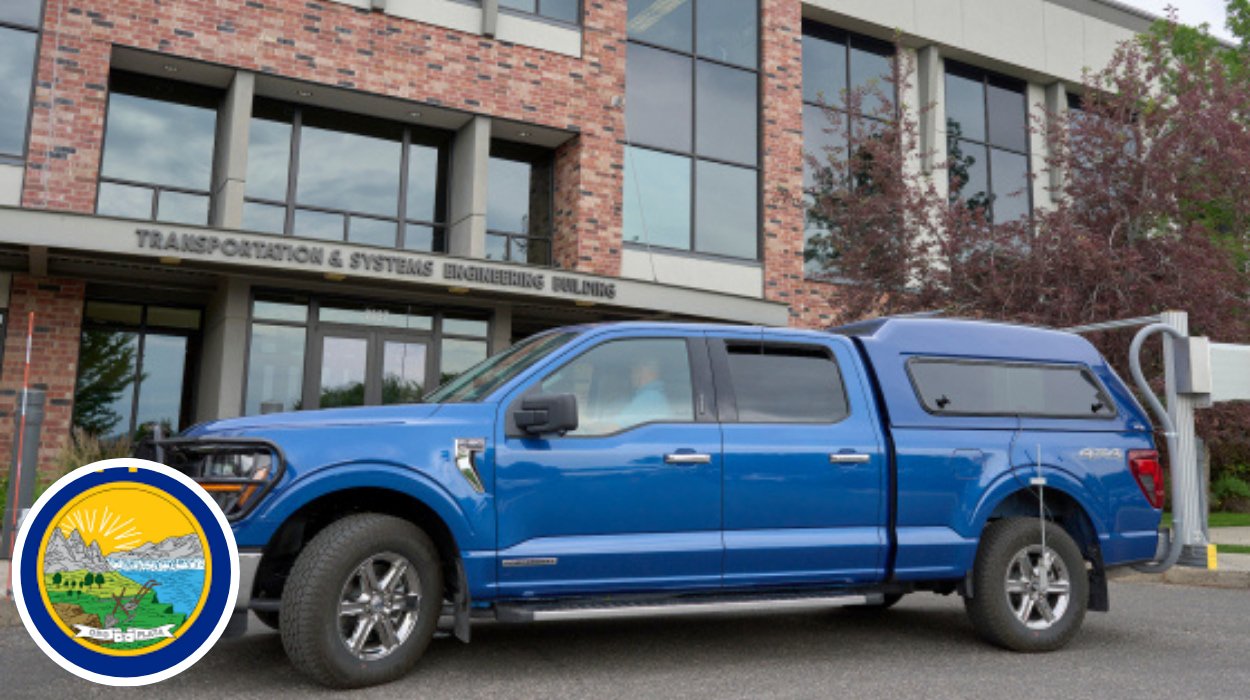
- Montana State University’s ‘3D Truck’ maps road and runway surfaces in 3D to assess safety quickly and accurately.
- The technology helps military deployments by evaluating runway and road conditions in war zones.
- Developed by Dr. Xiaoyue Cathy Liu and her team, the vehicle is in extensive field testing.
- Dr. Jun Wang says the system is being tested for civil and military uses to save lives in dangerous areas.
- This project is part of a national push to improve transportation infrastructure monitoring with data-driven tech.
- Experts believe it will boost national security by ensuring military mobility in emergencies.
- Collaboration is growing between public agencies, the Department of Defense, and state governments on this technology.
In a significant move that
could reshape how the United States military evaluates transport
infrastructure, Montana State University’s research team has developed a
groundbreaking mobile system known as the ‘3D Truck.’ This state-of-the-art
vehicle uses high-resolution cameras and sensors to create accurate maps of
roadway and runway conditions in three dimensions, enabling near real-time
assessments deemed vital for both civilian and military use. As reported by Montana State University’s News Service, Dr.
Jun Wang, the project’s principal investigator, asserted, “Though it is being
tested on public roadways, the technology could save lives if deployed by the
military”. He highlighted that the ‘3D Truck’ is particularly suited to
rapidly assessing the condition of runways and roads, especially in hazardous
environments.
How Does the ‘3D Truck’ Technology Work, and Why Is It
Important for Military Operations?
According to in-depth reporting by Montana State University
News, the ‘3D Truck’ is equipped with an array of sensors, including LiDAR,
high-resolution cameras, and GPS receivers, mounted on a robust vehicle
platform. Dr. Wang confirmed in interviews with both university and external
reporters that this equipment continuously scans the road surface as the
vehicle moves, constructing detailed three-dimensional models.
These models allow engineers to pinpoint hazards such as
potholes, cracks, foreign object debris, or structural weaknesses — all of
which can prove catastrophic during military operations where time and safety
are paramount. The technology also supports “rapid deployment and
real-time decision-making for military logistics in conflict zones,” Dr. Wang
stated, as cited by Yellowstone Times’ reporter, Jennifer Carter.
Additionally, the truck’s data collection system offers the
potential for predictive maintenance, alerting authorities to risks before they
become critical failures.
What Statements Have Been Made by Researchers and Officials?
As reported by University Communications at Montana State,
Dr. Wang reiterated,
“It is a very dangerous situation if you have damaged
roadways or runways in a war zone. This technology can provide precise and
timely information that could help protect personnel and equipment—sometimes
even lives”.
In a related statement provided to Yellowstone Times, Dr.
Wang added that the 3D scanning system’s “ability to assess runways within
hours—not days—could be a game-changer for military operations in remote or
volatile regions”.
How Could the Technology Impact Broader Infrastructure and
National Security?
In an expansive overview, the Montana Department of
Transportation (MDT) underscores that advanced traffic analysis and real-time
infrastructure monitoring are pivotal for both civilian safety and readiness
for emergencies, including natural disasters and national security threats. American
military doctrine requires that highways, runways, and other surface transport
routes remain operational, emphasizing routine and emergency readiness as a
core component of defense strategy.
The Department of Defense, working in tandem with state
agencies such as the MDT, has stated that rapid infrastructure assessment helps
ensure the Strategic Highway Network (STRAHNET) is always prepared for defense
mobilization needs. STRAHNET connects critical military installations
across the nation; any improvement in the ability to quickly and accurately
gauge surface integrity could directly translate to enhanced national security.
What Are the Potential Civilian Applications of the ‘3D
Truck’?
Apart from military interest, the ‘3D Truck’ holds promise
for broader civilian applications. According to the Montana Department of
Transportation’s State Freight Plan, three-dimensional scanning and data-driven
predictive maintenance are increasingly being adopted for state and national
roadway management. Field testing under real-world conditions is a crucial
step toward mainstream adoption.
As highlighted by the MSU College of Engineering, the
breakthrough could serve as a model for other research efforts aimed at
bridging the gap between civil and military applications in infrastructure
technology.
What Future Collaborations and Research Directions Are
Expected?
The collaborative vision extends beyond the military, aiming
to bring together universities, departments of transportation, and federal
agencies such as the Department of Homeland Security. Montana State’s
researchers are inviting partnerships “to refine and test the technology under
different environmental and operational conditions,” Dr. Wang told MSU News.
Continued investment in intelligent transportation systems
(ITS) and integration with federal and state data platforms are themes echoed
in both the Advanced Traffic Analysis Center (ATAC) report and statements from
MDT officials.
What Are the Broader Implications for the U.S. and Its
Allies?
In its review of international practices, Wikipedia’s
summary of ‘road runways’ shows that several countries, including India,
Sweden, and Finland, have already implemented or tested similar dual-use
infrastructure — where highways can double as military airstrips in emergencies. The
U.S. is assessing ways to match or surpass these capabilities with innovations
such as Montana’s 3D Truck.
Experts note that the operational readiness ensured by these
technologies could have a decisive impact in crisis scenarios, offering both
military advantage and resilience for civilian populations.
What Does This Mean for the Public and for Local
Communities?
Beyond its high-profile defense applications, local agencies
and citizens stand to benefit from improved roadway safety and maintenance
efficiency. By identifying problem areas early, public safety is enhanced,
travel disruptions are minimized, and taxpayer costs can be reduced — a view
shared by state officials and echoed by the MDT’s Civil 3D initiative announced
in June 2024.
What Is Next for Montana State’s ‘3D Truck’?
Researchers at Montana State University aim to continue
refining the ‘3D Truck’ technology, expand field deployment, and seek wider
collaboration with state and national agencies. Public demonstrations and
additional trials are planned for the coming months, according to MSU’s recent
communication.
As reported by Montana State University’s news desk and
corroborated by Yellowstone Times and MDT documentation, the ‘3D Truck’ is
positioned not only as a technological milestone for Montana but as a promising
pillar of America’s critical infrastructure defense and modernization strategy.