
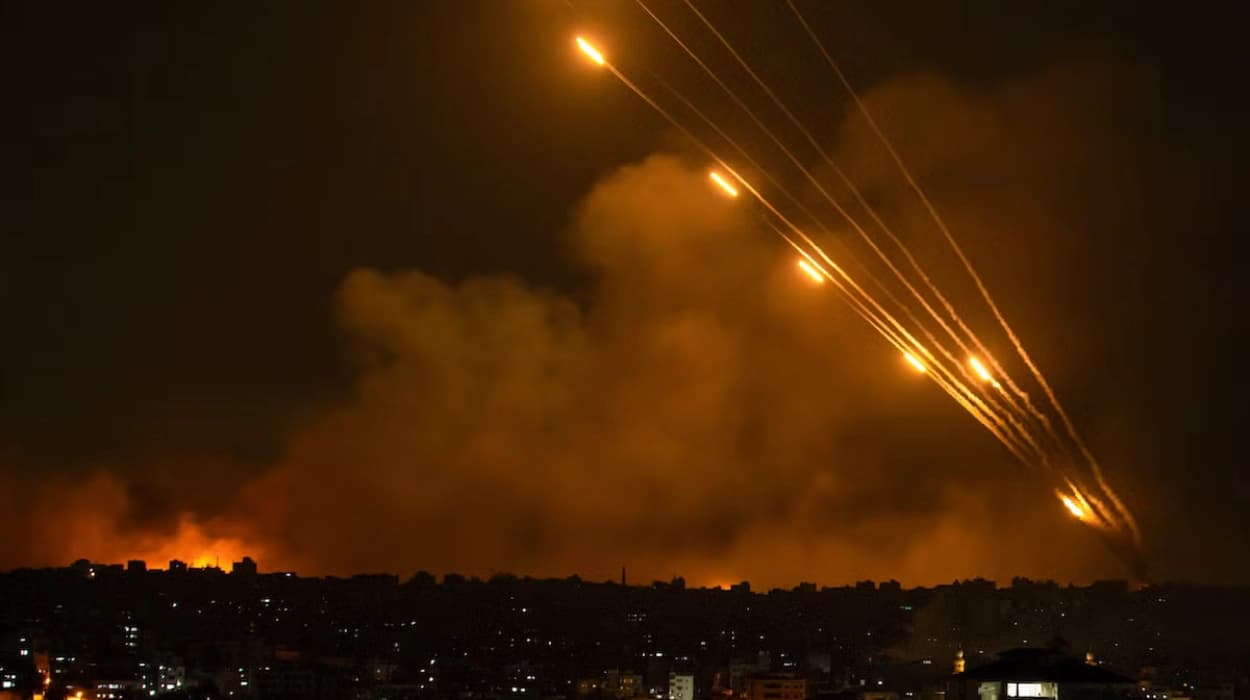
- IDF airstrikes targeted Hamas and PIJ commanders, operatives and infrastructure in Gaza after rocket launches breached ceasefire understandings.
- Gaza health authorities reported 28 killed and multiple injured, including civilians, with strikes hitting residential areas near operational sites.
- Israeli military stated operations aimed to neutralise threats to southern communities; rocket alerts sounded but caused no serious injuries in Israel.
- Hamas and PIJ condemned strikes as aggression, pledged response; humanitarian groups raised civilian casualty and medical access concerns.
- Regional mediators urged restraint; UN called for civilian protection amid strained Gaza services and repeated escalation cycles.
Tel Aviv (Washington Insider Magazine) January 31, 2026 – The Israel Defense Forces (IDF) have carried out a series of airstrikes in the Gaza Strip targeting what the military described as Hamas and Palestinian Islamic Jihad (PIJ) operatives and infrastructure following renewed rocket launches towards Israeli territory. Israeli officials said the strikes were aimed at commanders and operational sites involved in recent attacks and ceasefire violations, while health authorities in Gaza reported multiple fatalities and injuries, including among civilians. Humanitarian agencies reiterated concerns about the impact of repeated escalations on Gaza’s densely populated areas and already strained medical services.
The latest round of strikes came after projectiles were fired from Gaza towards communities in southern Israel, breaching an uneasy ceasefire framework that has periodically reduced hostilities but not produced a long-term political settlement. Israeli military statements said the air force hit command centres, weapons storage facilities and launch sites associated with Hamas and PIJ, alleging those locations were used to plan and execute attacks. Officials in Gaza said residential buildings and areas near civilian infrastructure were also struck, reporting fatalities and damage to homes and public facilities.
IDF Describes Strikes as Response to Ceasefire Violations
The Israeli military said the operation followed a pattern of rocket and mortar launches from Gaza that it characterised as violations of understandings brokered through regional mediators. According to the IDF, alerts sounded in several southern Israeli communities as rockets were fired, with some intercepted by air defence systems and others landing in open areas. There were no immediate reports of serious injuries inside Israel, but authorities opened public shelters and temporarily halted some public transport services in affected districts.
In official briefings, the IDF said its aircraft and drones struck sites it identified as command hubs and operational compounds belonging to Hamas and PIJ, including facilities used to coordinate rocket units and store munitions. Military spokespeople stated that several figures described as field commanders or senior operatives were among those targeted, though names and ranks were not immediately released in full pending internal confirmation and intelligence review.
Israeli officials reiterated that they held Hamas responsible for any attacks emanating from the Gaza Strip, regardless of which faction claimed responsibility. They said the objective of the strikes was to restore what they termed “quiet and security” for residents of southern Israel and to degrade the capabilities of armed groups to conduct further launches.
Gaza Health Officials Report Dozens Killed and Injured
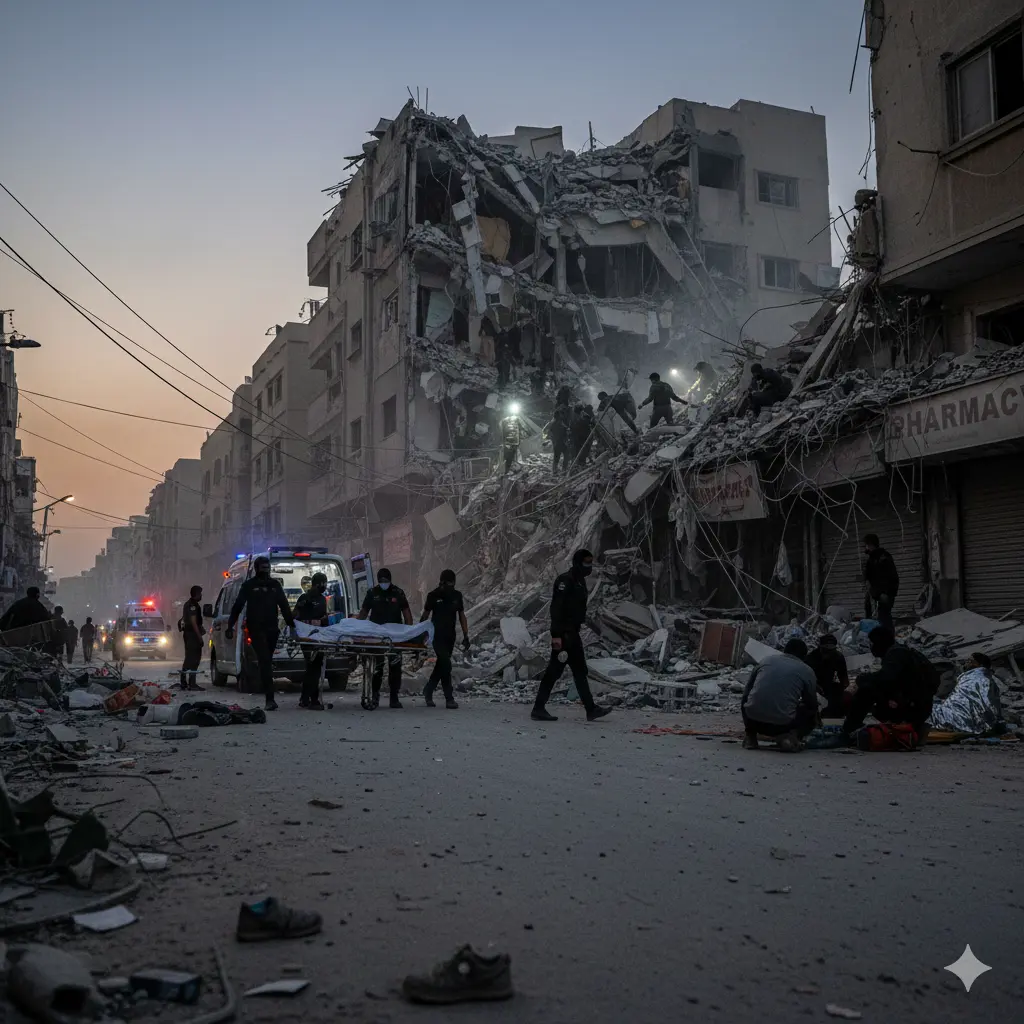
Health authorities in Gaza reported that the wave of strikes resulted in at least 28 fatalities, with additional people wounded, some critically, as emergency teams worked to recover casualties from damaged structures. Hospital officials said the dead and injured included both fighters and civilians, though they did not immediately provide a detailed breakdown or publish an official list of names. Medical staff described treating blast and shrapnel injuries, burns and crush trauma among those brought to major hospitals.
Civil defence crews and local rescue teams said several multistorey buildings were hit or suffered collateral damage, leading to the collapse of apartments and forcing residents to flee. Footage from the scene, carried by regional broadcasters, showed smoke rising from impact sites and ambulances transporting casualties to medical facilities. Municipal authorities reported damage to roads, shops and electricity lines in some neighbourhoods close to the targeted locations.
The strikes added further pressure to Gaza’s health-care system, which has been repeatedly strained by previous rounds of conflict, shortages of medical supplies and limited access to specialised treatment. Humanitarian organisations warned that any prolonged escalation could quickly overwhelm hospitals and clinics, calling for safe access for medical teams and protection of civilian infrastructure under international humanitarian law.
Hamas and PIJ Condemn Strikes and Pledge Response
Hamas officials in Gaza condemned the Israeli operation, describing it as an aggression against the Palestinian people and accusing Israel of deliberately targeting residential areas. Movement spokespeople said some of those killed were members of their armed wing but asserted that civilians were also among the victims. They framed the rocket launches as a response to what they characterised as ongoing Israeli policies and actions in the occupied Palestinian territories.
Palestinian Islamic Jihad issued its own statements denouncing the strikes and warning that further attacks could provoke a broader confrontation. Representatives of the group said their fighters would continue to operate and that Israel bore full responsibility for any escalation. Neither Hamas nor PIJ initially provided detailed accounts of the identities or roles of their members reported killed, beyond acknowledging that some were combatants.
Both groups rejected Israeli claims that the targets were exclusively military and accused Israel of using the pretext of ceasefire breaches to carry out what they described as punitive strikes affecting densely populated civilian areas. They reiterated calls for regional and international actors to pressure Israel to halt the operation and lift long-standing movement and access restrictions on Gaza.
Regional and International Reactions to Renewed Escalation
Neighbouring states and international actors expressed concern over the renewed hostilities and urged all sides to exercise restraint. Regional mediators, including Egypt and Qatar, engaged in contacts aimed at restoring calm and reaffirming existing ceasefire understandings. Diplomatic sources said those channels focused on securing an immediate halt to rocket fire from Gaza and a corresponding end to Israeli airstrikes, alongside measures to ease humanitarian conditions.
The United Nations and various humanitarian agencies called for a cessation of violence and emphasised the obligation of all parties to protect civilians. Officials highlighted the vulnerability of Gaza’s population, particularly children, to repeated cycles of conflict and displacement. They also underscored the need for sustained access for fuel, medicine and essential goods to prevent further deterioration of living conditions.

Some international capitals issued statements backing Israel’s right to self-defence against rocket attacks while simultaneously urging proportionality and caution to avoid civilian casualties in Gaza. Others focused on the humanitarian impact and called for renewed diplomatic efforts towards a more durable political arrangement that could address underlying issues driving periodic escalations.
Impact on Civilians in Southern Israel
In towns and communities close to the Gaza border, residents again faced the disruption of sirens, rushes to shelters and temporary closures of schools and public facilities. Local authorities implemented emergency protocols, including limiting large public gatherings and advising residents to remain close to protected spaces during periods of heightened tension. Psychosocial support services, already familiar from previous rounds of conflict, prepared to assist families and children affected by renewed rocket alarms.
Israeli emergency services reported several cases of people treated for minor injuries sustained while running to shelters or for anxiety-related symptoms following siren alerts. Infrastructure damage was limited, with most projectiles either intercepted by missile defence systems or falling in open areas. Agricultural communities near the border reported some damage to fields and property from falling debris.
Officials in southern municipalities repeated calls for long-term solutions that would prevent recurring hostilities, while expressing support for security measures they argued were necessary to deter rocket fire. Residents described the difficulty of returning to normal routines under the constant possibility of renewed alerts, particularly for schools and workplaces that must repeatedly adjust schedules during periods of tension.
Ceasefire Understandings and Cycles of Hostilities
The latest exchange of fire took place against the backdrop of a fragile ceasefire framework that has intermittently reduced hostilities but has not resolved core disputes. Previous rounds of escalation have typically ended with informal understandings brokered by regional mediators, often involving limited easing of some restrictions on Gaza in exchange for commitments to halt rocket launches. These arrangements have tended to be unwritten and vulnerable to breakdown when either side perceives violations or provocations.
Israeli officials have argued that periodic military operations are intended to re-establish deterrence and degrade the capabilities of armed groups in Gaza, particularly their capacity to produce and launch rockets and other projectiles. Palestinian factions have portrayed armed actions as resistance to occupation and blockade, linking them to broader political demands. The absence of a formal, comprehensive ceasefire agreement has left the situation susceptible to rapid escalation following particular incidents.
International observers have noted that each round of fighting carries significant humanitarian and economic costs for Gaza’s population and security and psychological consequences for residents of southern Israel. Reconstruction efforts in Gaza have often been slow and constrained, leaving damaged homes and infrastructure in need of repair when new confrontations erupt.
Humanitarian Concerns and Access Challenges
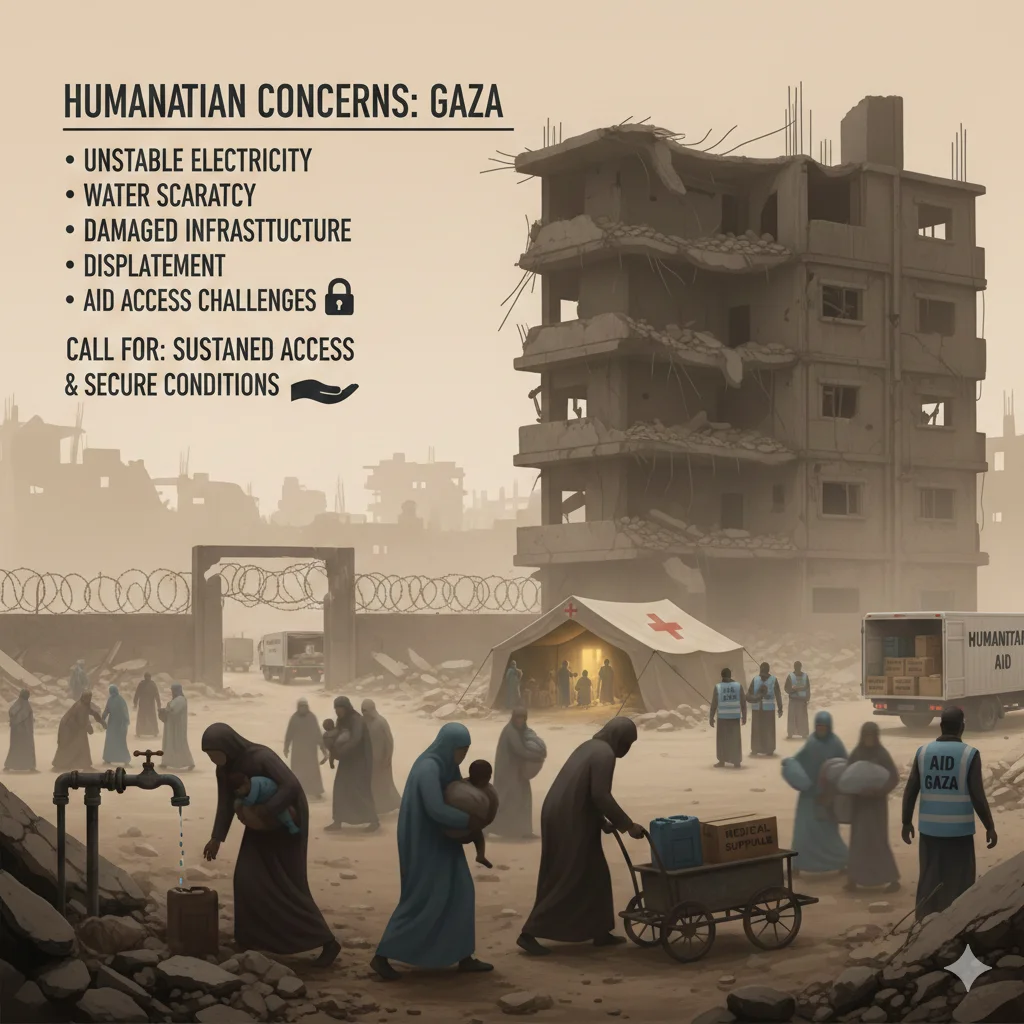
Humanitarian organisations operating in Gaza have highlighted the compounded impact of repeated military operations, movement restrictions and economic constraints on basic services. Electricity supply remains unstable, affecting water pumping, sewage treatment and hospital operations. Damage to housing and civilian infrastructure from strikes can displace families and increase pressure on already crowded living conditions.
Aid agencies have called for predictable and sustained mechanisms to allow the entry of construction materials, medical supplies and other essential goods, subject to verification arrangements designed to prevent diversion for military purposes. They have also emphasised the need for secure conditions for their staff to operate, including clear deconfliction arrangements during any military activity.
Gaza’s health sector, which depends on outside support for specialised treatments and equipment, faces particular strains during escalations. When large numbers of casualties arrive in a short period, hospitals must postpone non-urgent procedures and reallocate resources, while also coping with shortages of medicines and fuel needed to run generators. International health organisations have repeatedly urged protection of medical facilities and staff and expedited approval for medical evacuations where necessary.
Prospects for De-Escalation and Next Steps
Following the latest strikes and rocket launches, diplomatic efforts have focused on restoring a cessation of hostilities similar to previous understandings, with mediators urging both sides to halt offensive actions. Israeli officials have indicated that further military activity will depend on developments on the ground, particularly whether rocket launches continue. Palestinian factions have linked any return to calm to a halt in airstrikes and steps to address conditions inside Gaza.
In the immediate term, attention remains on preventing further loss of life and stabilising the security situation along the Gaza-Israel border. Over the longer run, international actors have continued to highlight the need for political processes capable of addressing the broader conflict and the status of Gaza, but no new comprehensive initiative has yet been announced in the wake of this latest flare-up.