
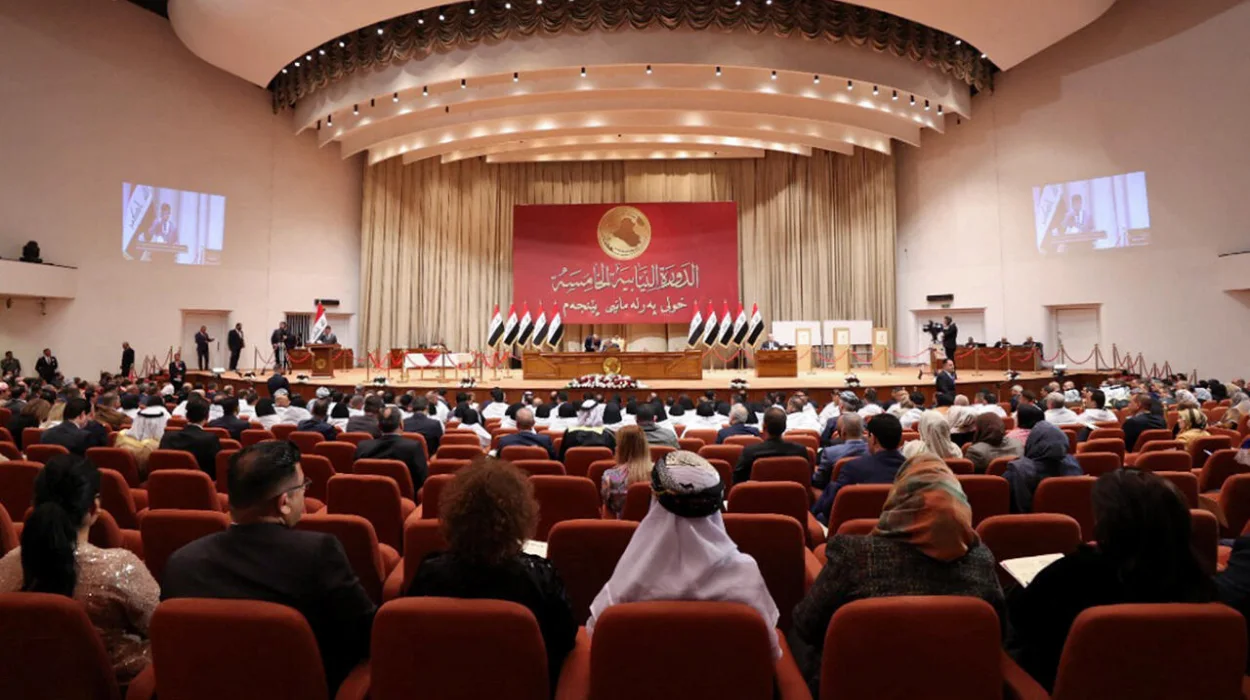

- Parliament Session Postponement: Iraqi parliament delayed its presidential election session due to unresolved political disagreements among major blocs, preventing a decision on Monday.
- Voting Threshold Failure: No candidate secured the required two-thirds majority (220 of 329 votes) across multiple rounds, with the frontrunner receiving 199 votes.
- Key Blocs in Deadlock: Shia Coordination Framework, Kurdish parties (KDP, PUK), and Sunni alliances clashed over nominations and power-sharing under the muhasasa system.
- Presidential Role Impact: The vacancy stalls legislation, budget approvals, and government formation; interim duties held by parliament speaker amid economic pressures.
- Next Steps Anticipated: Consultations scheduled for Tuesday aim for consensus; no new session date set, with international calls for swift resolution.
Baghdad (Washington Insider Megazine) January 27, 2026 – The Iraqi parliament has postponed its session to elect a new president due to ongoing political disagreements among parliamentary blocs. The delay follows failure to secure the required two-thirds majority in previous voting rounds. Lawmakers cited insufficient consensus on candidates as the primary reason for the postponement.
The postponement occurred during a scheduled parliamentary session on Monday, where lawmakers attempted to elect Iraq’s next president. Multiple rounds of voting took place, but no candidate achieved the necessary 220 votes out of 329 parliament members present. The session was adjourned without a decision, marking the latest setback in Iraq’s prolonged presidential election process.
Background on Presidential Election Process
Iraq’s presidential election requires a candidate to obtain a two-thirds majority in the first three rounds of voting. If no candidate secures this threshold, a fourth round proceeds with a simple majority requirement. The current vacancy stems from the resignation of previous President Abdul Latif Rashid in late 2025, prompting parliament to initiate the selection process. Political analysts note that the Coordination Framework, a Shia alliance, holds significant influence but faces opposition from Sunni and Kurdish blocs.
The parliament speaker announced the postponement after consultations with faction leaders. Sources indicate that disagreements centre on candidacy nominations, with Kurdish parties pushing their preferred nominee while Shia and Sunni groups seek broader consensus. No new date for the rescheduled session has been confirmed, though lawmakers expect reconvening within the week.
Key Political Blocs Involved in Deadlock
The Shia Coordination Framework, comprising parties like the State of Law Coalition led by Mohammed Shia al-Sudani, has nominated candidates aligned with their interests. Kurdish factions, including the Kurdistan Democratic Party (KDP) and Patriotic Union of Kurdistan (PUK), demand representation, citing historical precedents where the presidency has been held by Kurds. Sunni blocs, such as the Taqadum Alliance, emphasise balanced power-sharing under Iraq’s muhasasa system.
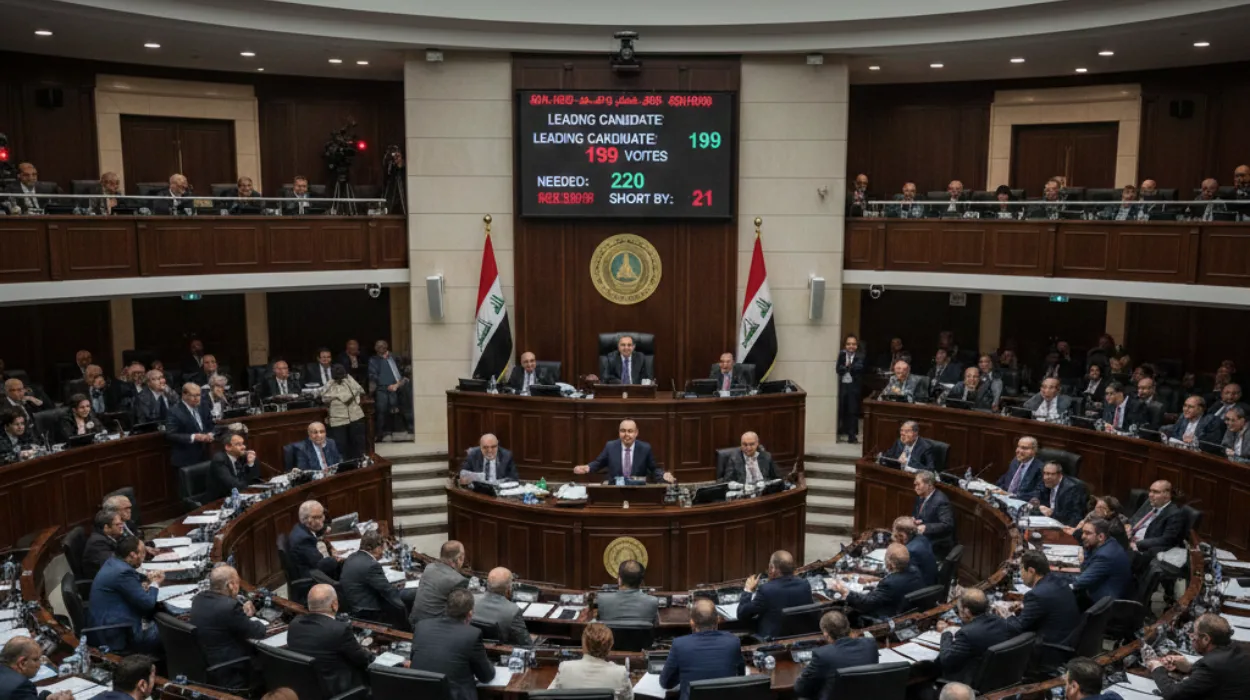
In the most recent voting round, the leading candidate received 199 votes, falling short by 21. Reports from parliament sessions detail heated debates, with lawmakers accusing rival blocs of imposing vetoes. Prime Minister Mohammed Shia al-Sudani urged unity, stating that delays undermine national stability amid economic challenges.
Previous Attempts and Voting Outcomes
Parliament held three preliminary sessions last week, each ending without a quorum or majority. On January 22, voting saw fragmented support, with votes split across seven candidates. The session on January 25 recorded 215 votes for the frontrunner, still below the threshold. Attendance hovered around 300 lawmakers, sufficient for quorum but insufficient for consensus.
Documentation from the sessions reveals abstentions by key bloc members, further complicating proceedings. The Federal Supreme Court oversees the process, ensuring compliance with constitutional requirements. Court rulings from prior elections have invalidated results tainted by irregularities, adding pressure on current deliberations.
Impact on Government Formation
The presidency plays a ceremonial yet pivotal role, including endorsing the prime minister and vetoing legislation. The vacancy has stalled legislative agendas, including budget approvals and oil revenue distribution. International partners, including the United States, have called for swift resolution to bolster Iraq’s governance amid regional tensions.
Iraqi President-designate duties have fallen to the parliament speaker temporarily. This interim arrangement has allowed continuity in foreign affairs but limited domestic initiatives. Economic reports highlight delays in investment laws, exacerbating unemployment and inflation concerns.
Statements from Political Leaders
Mohammed Shia al-Sudani addressed the nation, emphasising dialogue over division.
“Iraq cannot afford prolonged uncertainty; all blocs must prioritise national interest,”
he stated during a televised appearance. Kurdish leader Masoud Barzani reiterated demands for equitable representation, warning against marginalisation.
Sunni parliamentarian Mohammed al-Halbousi, former speaker, criticised the deadlock as “manoeuvring for power.” Opposition voices within the Sadrist Movement, though not in parliament, issued statements supporting reformist candidates. Media outlets reported backchannel negotiations involving religious authorities to mediate disputes.
Regional and International Context
The postponement coincides with broader Middle East developments, including U.S. military deployments and Iranian unrest. Iraq maintains neutrality, balancing ties with Washington and Tehran. The United Nations Assistance Mission for Iraq (UNAMI) monitors the process, advocating inclusive politics. UNAMI head expressed concern over delays, noting risks to democratic institutions.
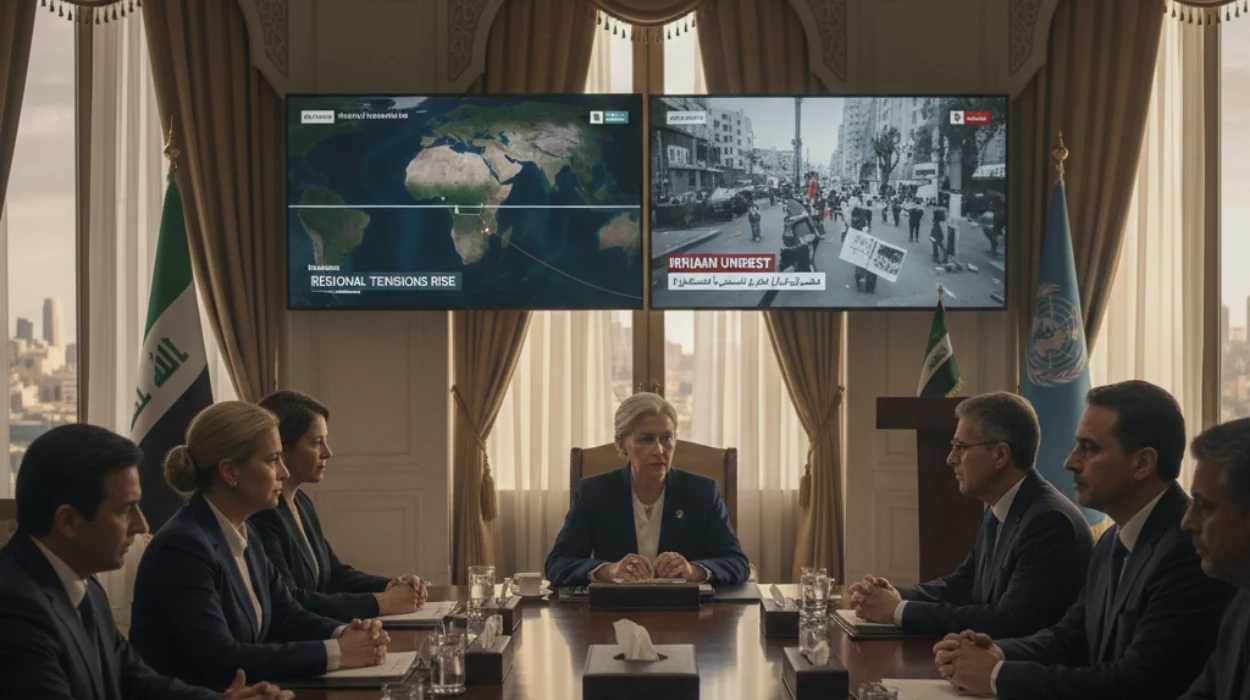
European Union ambassadors met Iraqi officials, stressing constitutional timelines. Gulf states, particularly Saudi Arabia and UAE, voiced support for stability. Regional media coverage links the impasse to post-2021 election dynamics, where Shia-Sunni-Kurdish coalitions reshaped alliances.
Historical Precedents of Election Delays
Iraq’s 2022 presidential election faced similar hurdles, requiring over a year to resolve. Fuad Hussein served as caretaker before Rashid’s election. The 2018 process elevated Barham Salih amid factional strife. These episodes underscore chronic challenges in Iraq’s ethno-sectarian power-sharing framework established post-2003.
Constitutional Article 70 mandates parliament elect the president within specified periods. Extensions require supermajority approval. Legal experts anticipate court intervention if delays persist beyond February. Public sentiment, gauged through social media, demands resolution amid daily protests over services.
Economic Ramifications of Political Stalemate
Postponement exacerbates fiscal pressures, with oil prices fluctuating due to regional volatility. Iraq’s 2026 budget awaits presidential endorsement, delaying infrastructure projects. Unemployment stands at 15 per cent, with youth demographics amplifying unrest risks. Central Bank reports stabilise the dinar, but investor confidence wanes.
International Monetary Fund delegations postponed visits pending clarity. World Bank funding for reconstruction hinges on governance milestones. Local chambers of commerce petitioned parliament, highlighting stalled contracts worth billions.
Public and Media Reactions
Iraqi media outlets provided live coverage, with Alsumaria and Rudaw broadcasting sessions. Public demonstrations occurred outside parliament, calling for transparency. Civil society groups praised voter secrecy but decried bloc intransigence. Independent lawmakers positioned as kingmakers, pledging cross-faction support.
Social platforms buzzed with hashtags urging unity. Influential clerics issued fatwas encouraging compromise. Youth activists organised online petitions, gathering thousands of signatures. Baghdad streets remained calm, secured by federal police.
Next Steps in Electoral Process
Parliament scheduled consultations for Tuesday, aiming to nominate a unified candidate. Sources indicate potential consensus around a compromise figure acceptable to major blocs. Failure could trigger fresh nominations or court challenges. Speaker plans address the nation post-deliberations.
The international community monitors closely, with U.S. Ambassador offering technical assistance. Gulf Cooperation Council envoys visited Baghdad, pledging economic aid upon resolution. Iraq’s political class navigates delicate balances, with stakes high for federal stability.