
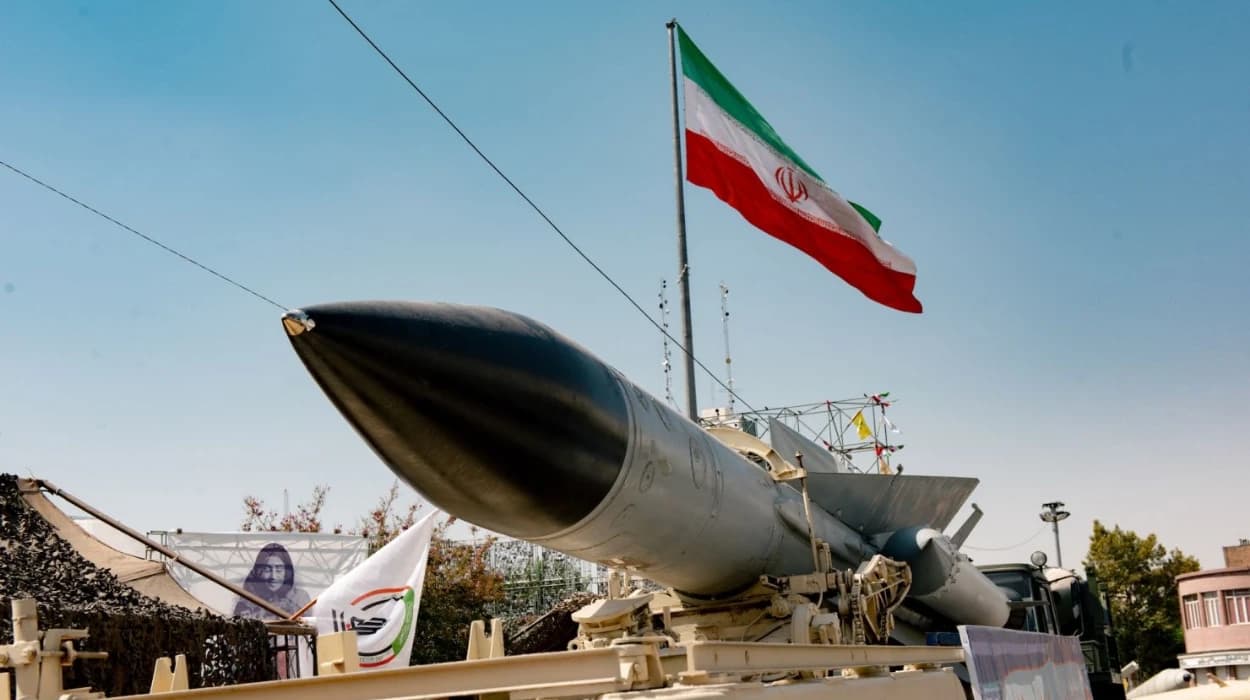
- Weakened Proxy Networks: Iran's "axis of resistance" (Hezbollah, Hamas, Houthis) severely degraded by Israeli/U.S.-backed operations in 2025, limiting proxy retaliation options after October clashes and Operation Rough Rider.
- Nuclear Programme Losses: Key facilities obliterated by strikes, eliminating breakout leverage that previously deterred direct U.S. action and altering Tehran's escalation calculus.
- Trump Strategy Assessment: 2026 National Defense Strategy labels Iran at "weakest point in decades," enabling U.S. troop reductions while relying on Israel/Saudi partnerships for regional deterrence.
- Internal Pressures: 40%+ inflation, 25% youth unemployment, protests and Khamenei succession uncertainties constrain aggressive responses amid economic sanctions.
- Remaining Capabilities: Ballistic missiles, Strait of Hormuz threats and cyber tools persist, but strategy anticipates calibrated Gulf/Israeli-targeted retaliation over past Iraq/Syria patterns.
Tehran (Washington Insider Magazine) January 30, 2026 – Experts and officials indicate Iran's potential response to a direct U.S. military attack could diverge from past patterns due to recent degradation of its proxy networks and nuclear capabilities. Assessments highlight Tehran's weakened "axis of resistance" following Israeli and U.S.-backed operations against Hezbollah, Hamas, and the Houthis. The Trump administration's 2026 National Defense Strategy describes Iran at its "weakest point in decades," enabling reduced U.S. presence while relying on regional partners like Israel. Factors include obliterated nuclear programme, internal economic pressures, and strategic deterrence shifts.
U.S. defence documents and regional analyses point to structural changes in Iran's military posture since the October 2025 escalations and subsequent "Operation Midnight Hammer." Iranian leadership faces constrained options after losses to proxy forces, prompting evaluations of asymmetric retaliation risks versus capitulation signals.
Recent Degradation of Iran's Regional Proxy Network
The U.S. War Department's 2026 National Defense Strategy, published 23 January, states Iran's "axis of resistance"—encompassing Hezbollah, Hamas, and Houthi militants—has been "severely degraded" through Israeli operations supported by American forces. Hezbollah sustained heavy damage during the October 2025 "12-day war" with Israel, while Hamas capabilities diminished post-October 7 attacks. U.S. Operation Rough Rider from March to May 2025 targeted Houthi threats to Red Sea navigation.
Pentagon assessments confirm these actions positioned Tehran at its weakest stance in decades, reducing direct proxy threats to U.S. assets. The strategy notes opportunities to decrease American military footprint by bolstering alliances led by Israel and Saudi Arabia.
Israeli strikes, backed by U.S. logistics, reportedly obliterated key elements of Iran's nuclear programme, employing language consistent with President Trump's public statements.
Trump Administration's Strategic Assessment of Iran Threat
The 34-page strategy, signed by War Secretary Pete Hegseth, prioritises "peace through strength" and demands greater burden-sharing from allies. Iran features prominently as a diminished actor, with the document committing to support Israel's self-defence while deepening Gulf partnerships.

Unlike prior strategies balancing regional ties, the new framework centres Israel as a "model ally" capable of independent defence with limited U.S. aid. It criticises the previous Biden-Harris administration for constraining Israel post-October 7, pledging removal of bureaucratic obstacles to maintain military superiority.
The report links homeland defence to countering Iranian-backed cartels in the Western Hemisphere, invoking Monroe Doctrine parallels.
Historical Context of Previous Iran-U.S. Confrontations
Past Iranian responses to U.S. actions included proxy attacks on bases in Iraq and Syria following the 2020 Soleimani strike. Tehran launched direct missile barrages on Al Asad airbase, causing traumatic brain injuries but no fatalities.
In 2019-2020 tanker incidents and Saudi refinery strikes, Iran employed deniable proxies and cyber operations. Retaliation patterns emphasised calibrated escalation to avoid full war while projecting resolve.
Recent proxy losses limit similar options, with Hezbollah command structures disrupted and Houthi capabilities curtailed by naval interdictions.
Factors Influencing Altered Iranian Response Calculus
Internal pressures compound military setbacks: sanctions exacerbate inflation exceeding 40%, youth unemployment surpasses 25%, and protests persist despite crackdowns. Succession uncertainties surround Supreme Leader Khamenei's health add leadership caution.
Nuclear programme destruction eliminates leverage for breakout capacity, historically deterring direct confrontation. Strategy documents assert this obliteration reshapes Tehran's risk assessment.
U.S. posture signals reduced tolerance for proxy aggression, with explicit commitments to Israeli preemption and Gulf integration via Abraham Accords expansion.
Potential Retaliatory Options Available to Tehran
Remaining capabilities centre on ballistic missiles, naval mines, and cyber intrusions. IRGC Quds Force retains global reach through sleeper cells, though degraded command chains hinder coordination.
Domestic fortification includes air defence upgrades around Natanz and Fordow, per satellite imagery analysis. Strait of Hormuz threats via fast boats and anti-ship missiles persist as asymmetric tools.
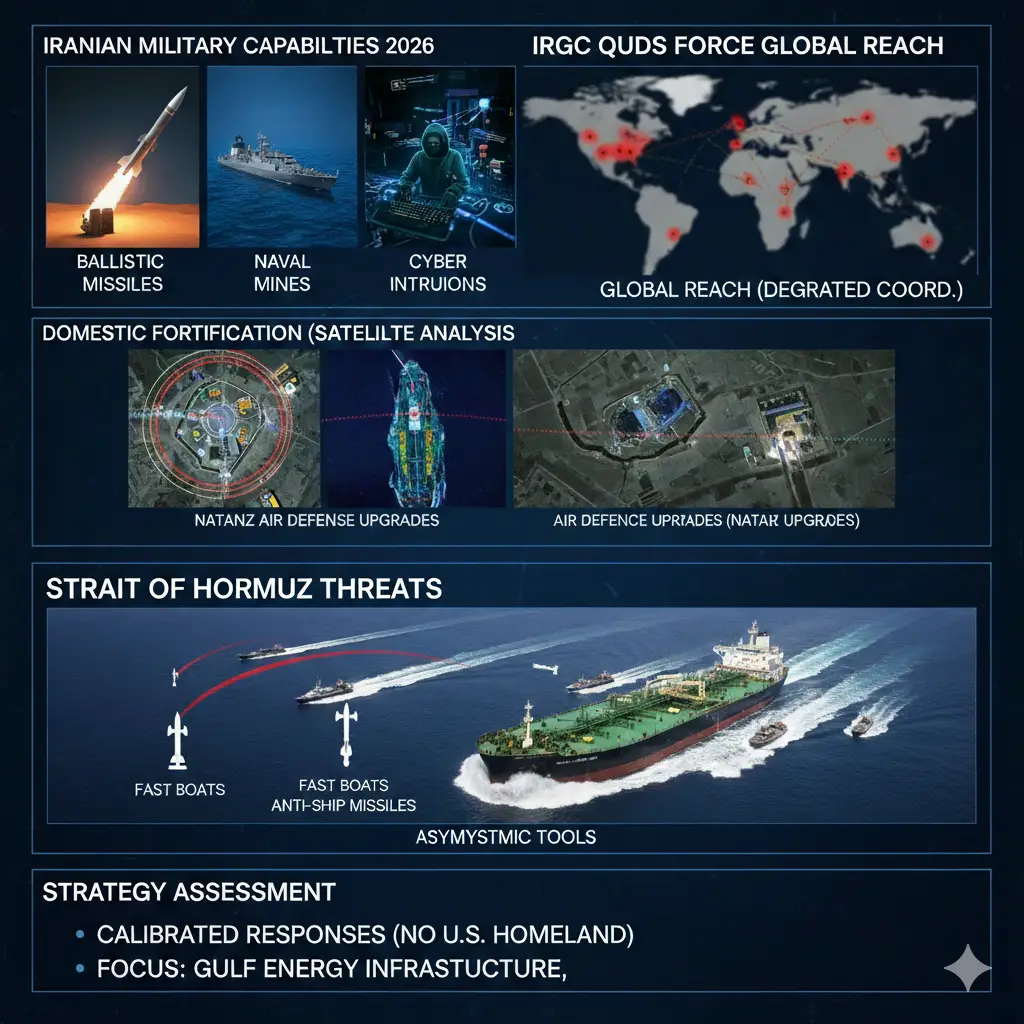
Strategy assessments anticipate calibrated responses avoiding U.S. homeland targets, focusing on Gulf energy infrastructure and Israeli assets.
U.S. and Allied Preparatory Measures
The National Defense Strategy mandates revitalising domestic munitions production and investing in hypersonic defences against Iranian arsenals. Allied burden-sharing targets 5% GDP defence spending, escalating from NATO's 2% benchmark.
Israel receives commitments for Iron Dome resupply, F-35 sustainment, and joint hypersonic research under 2019-2028 memoranda. Gulf partners integrate via trilateral exercises building on Abraham Accords.
Pentagon redirects resources from Europe—deemed "manageable" against Russia—to Indo-Pacific deterrence while maintaining Middle East rapid reaction forces.
Congressional and Bipartisan Perspectives on Iran Policy
Senate Foreign Relations Committee alignments support the strategy's Israel-centric approach, with supplemental aid authorisations post-2025 clashes. House members affirm qualitative military edge certifications for F-35 deliveries.
Appropriations committees oversee $3.3 billion base Foreign Military Financing plus missile defence allocations. Oversight includes end-use monitoring compliance reports.
Regional Ally Reactions to U.S. Strategy Shift
Abraham Accords nations UAE and Bahrain endorse trilateral frameworks enhancing collective deterrence. Saudi Arabia signals normalisation interest contingent on security guarantees.
Egypt and Jordan maintain parallel U.S. aid supporting peace treaty obligations, coordinating border stabilisations.
Global Implications for Deterrence Posture
The framework positions China as primary challenge, shifting from confrontation to strength-based deterrence preventing Indo-Pacific dominance. European allies face explicit burden directives amid Russian "persistent" threats.
Iran's weakened posture facilitates U.S. focus elsewhere, with Israeli strength anchoring regional architecture.