
Summary
- Homeland
Security Secretary Kristi Noem ends the TSA’s ‘Shoes-Off’ policy
nationwide to speed up security screening. - TSA
launches special lanes and discounts for families and military members,
making travel easier for these groups. - New
programs offer discounted or free TSA PreCheck for service members and
families. - TSA
emphasizes a multi-layered security system to maintain safety while easing
restrictions. - The
goal is faster, more seamless airport screening using advanced technology,
cutting wait times dramatically. - REAL
ID enforcement and identity verification remain key security measures at
checkpoints. - Noem
criticizes previous administration’s slow innovation, promising faster
improvements in security procedures. - Airlines
and travelers welcome changes, expecting shorter lines and a smoother
airport experience.
Sweeping changes to TSA protocols were unveiled in July
by Homeland Security Secretary Kristi Noem, promising a future where the
American airport experience is both more pleasant and more efficient. The end
of the ‘Shoes-Off’ screening requirement, new family- and
service-member-friendly lanes, and a possible revision of the liquids
restriction mark what officials and industry insiders see as a new era in the
evolution of air travel security.
What Is the New ‘Shoes-Off’ Policy and Why Was It
Changed?
As widely covered by NBC News and the official TSA
announcement, U.S. travelers are no longer required to remove their shoes while
passing through domestic airport security. This almost two-decade-old rule had
been in place since 2006, primarily as a security measure following thwarted
plots like the attempted shoe bombing by Richard Reid.
Citing high confidence in cutting-edge technological
advancements and multi-layered security, Secretary Noem, as quoted in the
official Department of Homeland Security release, stated,
“Ending the
‘Shoes-Off’ policy is the latest effort DHS is implementing to modernize and
enhance traveler experience across our nation’s airports. We expect this change
will drastically decrease passenger wait times at our TSA checkpoints, leading
to a more pleasant and efficient passenger experience. As always, security remains
our top priority.”
According to ABC News, Noem explained,
“There will be
individuals at times that will be asked to remove their shoes if we think
additional layers of screening are necessary—that may still happen to an
individual. But we’re excited with the fact that we have the technology now,
and the multi-layers of screening in place that we’ve built over the recent
several years, that give us the ability to allow our travelers to keep their
shoes on.”
This policy is effective immediately, covering all
domestic airports equipped with the new technology.
How Will TSA Policies Change for Families and Military
Travelers?
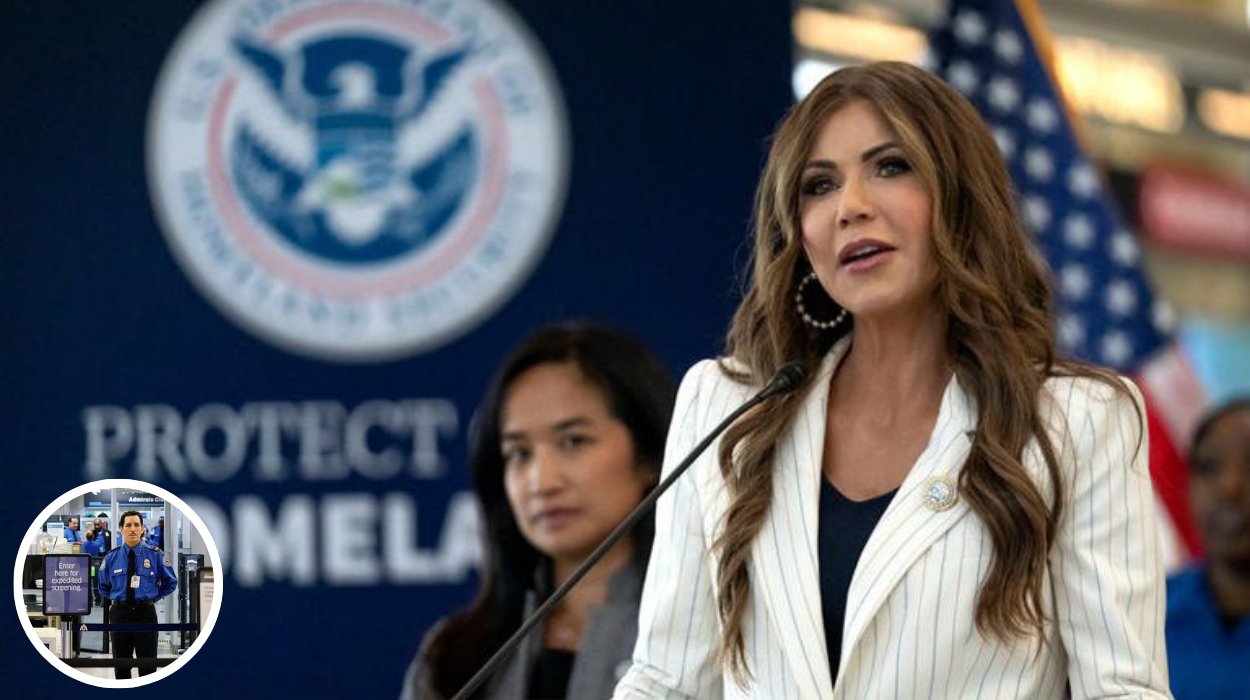
During a press conference at Nashville International
Airport, Secretary Noem revealed that the “Families on the Fly” initiative is
being rolled out alongside the “Honor Lane” program for military families, as
reported by NBC News. Dedicated security lines will now serve families with
young children and military members, easing the navigation through TSA
checkpoints.
NBC’s report cites Noem:
“This means that, when families
arrive at our airports and approach TSA security checkpoints, they will have
lanes specifically designed for families. These expanded areas will acknowledge
the presence of children, ensuring that we can effectively assist them and
their families as they navigate this expedited process with their little ones.”
There is also a $15 discount for TSA PreCheck enrollments
for families, and Gold Star families receive free enrollment. The pilot program
began in Orlando and has already shown promise. “Honor Lane” is now available
at 11 airports and expanding, especially in proximity to military bases. These
moves are part of what Noem calls
“gestures of appreciation … to those who
serve in our military, as well as their families, and to acknowledge their
sacrifices.”
Is the 3.4-Ounce Liquid Rule About to Be Changed?
At the Hill Nation Summit, Secretary Noem made headlines
for hinting that the next major TSA change could target the size limits on
liquids permitted in carry-on baggage. According to CBS News, Noem said,
“The liquids—I’m questioning. So that may be the next big announcement is what
size your liquids need to be. We have put in place in TSA a multilayered
screening process that allows us to change some of how we do security and
screening so it’s still as safe.”
Currently, TSA guidelines cap liquids in hand luggage at
3.4 ounces (100ml) per item, a restriction in place since 2006 after the foiled
transatlantic liquid bomb plot. Noem did not specify when or exactly how the
liquid limit might change, but instructed that,
“It’s not something we will be
disclosing in the next week or two, but we are striving to enhance the travel
experience … while still upholding safety standards.”
Forbes reported expert opinions that, with the spread of
advanced computed tomography (CT) scanners at airport checkpoints, relaxing the
limitations on liquids may soon be technologically feasible without undermining
security.
What Role Does Technology Play in These Changes?
From multiple reports, Secretary Noem credits
technological improvement in screening—especially the rollout of advanced CT
scanners and automated security lanes—with providing what she calls “a
multilayered security system” that allows for more efficient yet robust
treatment of passengers. The Hill quotes Noem’s vision:
“The vision I have
for the future of an airport is that you walk in with your carry-on suitcase,
pass through a scanner, and head straight to your flight. It should take just
one minute.”
Speaking with NewsNation’s Blake Burman, Noem emphasized
that the department is working with various companies to test and deploy these
new technologies:
“TSA is working on the technology that we have available to
us, if we deploy it correctly … so that if you’ve got a carry-on bag, you
should be able just to walk through their screeners, their scanners, and go
right to your flight.”
Initial rollouts are planned for select airports before
national implementation.
What Are the Other Recent TSA Changes Announced by Kristi
Noem?
DHS has unveiled additional updates in quick succession
over the past months, including the “Serve with Honor, Travel with Ease”
program designed specifically for uniformed service members and families,
announced on July 2. This includes perks such as expedited security and
discounts for TSA PreCheck enrollment at select airports. Additionally,
the long-awaited full implementation of REAL ID at airport checkpoints has
reached a compliance rate above 94%, further contributing to streamlined
identity verification processes at security.
What Has Been the Reaction to These Changes?
The airline industry, according to ABC News, welcomed the
new direction. Airlines for America CEO Nicholas E. Calio commented,
“This
policy change will go a long way in facilitating smooth, seamless, and secure
travel for passengers and is welcome news to the millions of people who fly
every day.”
Travelers and frequent flyers have also expressed
optimism that lines and wait times at TSA checkpoints will be significantly
reduced and airport experiences improved thanks to these measures.
What Is Kristi Noem’s Broader Vision for the Future of
Airport Security?
Speaking to The Hill, Secretary Noem explained,
“It has
to make sense. It has to actually do something to make you safer.”
Her public
remarks repeatedly criticized prior approaches, calling them outdated:
“I don’t
think that was questioned under the Biden administration … I kept wondering if
we were doing things just to slow people down, or what it was, but TSA is
working on the technology that we have available to us if we deploy it
correctly.”
Noem’s vision includes a streamlined process where,
“Hopefully, in the future, when you enter an airport, you can simply walk in
with your carry-on, pass through a scanner, and head straight to your
flight—you ought to be able to walk through the scanners and proceed directly
to your flight,”
she told NewsNation.
With the policy changes now taking effect, the Department
of Homeland Security under Kristi Noem is promising a dramatically improved
airport experience one where security does not need to come at the expense of
convenience. While further details of future reforms, especially regarding
liquids in carry-ons, remain to be seen, the message is clear: The
administration is committed to making American air travel safer, swifter, and
less burdensome for millions.