
Key Points
- A
senior Israeli official has called on the US Congress to block the sale of
F-35 fighter jets to Turkey, citing significant security concerns and
potential threats to Israel’s military advantage in the region. - The
official’s comments were reported by Breitbart News and echoed across
several international media outlets, highlighting fears of technology
leaks and Turkey’s growing regional ambitions. - Israeli
Prime Minister Benjamin Netanyahu has reportedly lobbied US Secretary of
State Marco Rubio to prevent the sale, emphasizing Ankara’s influence in
Syria and its stance toward Israel. - The US
Jewish Institute for National Security of America (JINSA) released a
report urging the Trump administration to maintain strict conditions on
any Turkish reentry into the F-35 program, referencing Turkey’s
acquisition of Russian S-400 missile systems as a key obstacle. - Turkish
President Recep Tayyip Erdoğan has renewed efforts to rejoin the F-35
program, engaging in direct talks with US President Donald Trump and
expressing optimism about overcoming diplomatic hurdles. - US
Ambassador to Turkey, Tom Barrack, has suggested that Congress could
approve the F-35 sale, despite Ankara’s exclusion from the program in
2019, intensifying Israeli concerns. - The
debate occurs amid shifting US-Turkey relations, ongoing sanctions, and
Turkey’s pursuit of alternative fighter jets and indigenous military
technology. - Regional
security, Israel’s qualitative military edge, and the risk of sensitive
technology transfer remain central to the controversy.
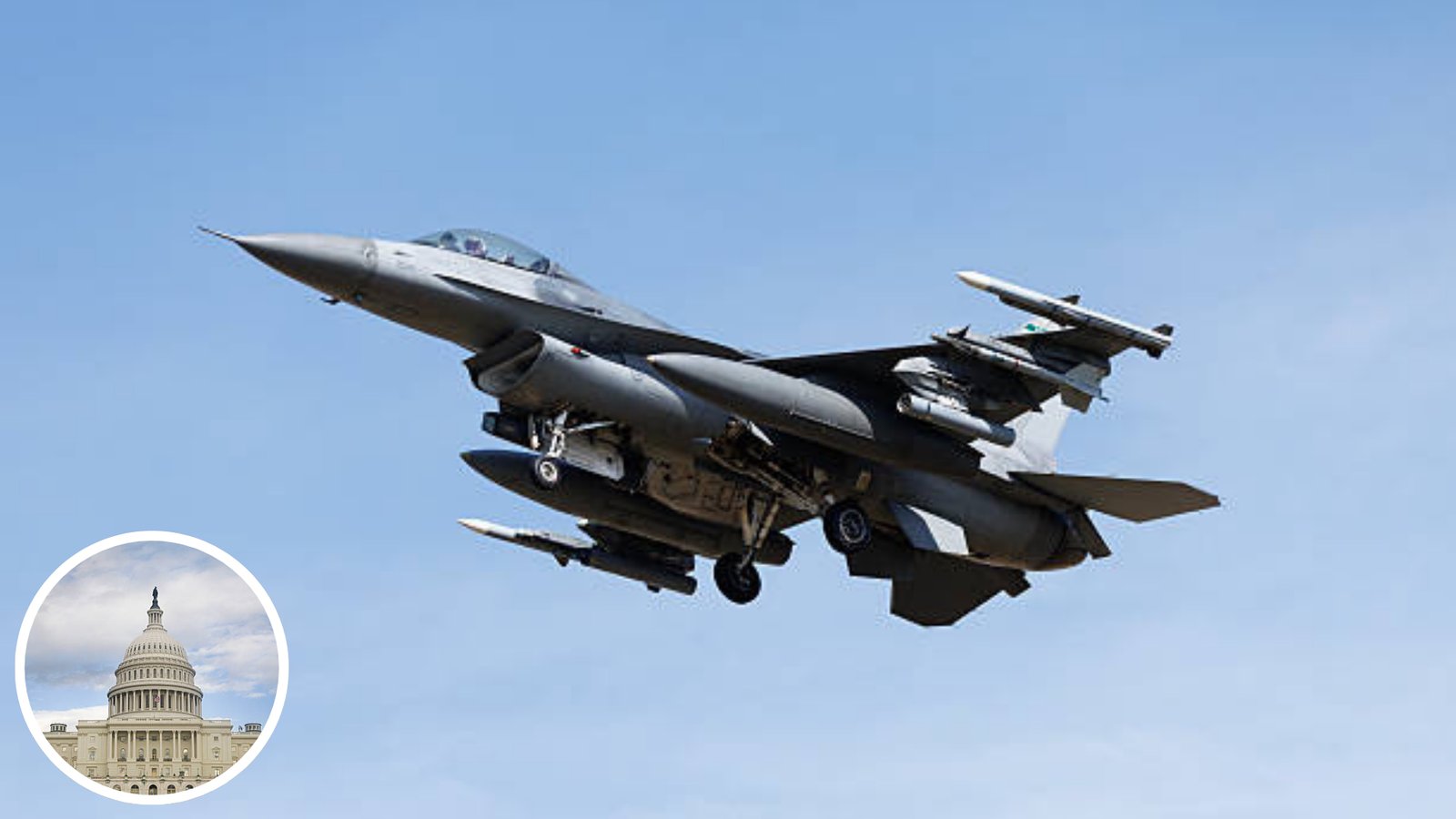
A senior Israeli official has publicly urged the United States Congress to block the sale of advanced F-35 fighter jets to Turkey,
citing deep security concerns and the potential for a shift in the regional
balance of power. The call, first reported by Breitbart News and subsequently
covered by multiple international outlets, has reignited debate over Turkey’s
role in the F-35 program and its broader relationship with the US and Israel.
Why Is Israel Urging the US Congress to Block F-35 Sales to
Turkey?
As reported by Breitbart News, a senior Israeli official
stressed the necessity for Congress to prevent the sale of F-35 Lightning II
jets to Ankara, warning that such a move could enable a “possible offensive
move against Israel”. The official, whose identity was not disclosed,
argued that Turkey’s ambitions to “restore the Ottoman Empire” and exert
control over Jerusalem pose a direct threat to Israeli security interests.
The F-35, known as the “Adir” within the Israeli Air Force,
is regarded as the most advanced fighter aircraft in the Western arsenal and
has played a critical role in Israel’s recent military operations, including
its 12-day conflict with Iran. The official emphasized that the sale of
these jets to Turkey would undermine Israel’s qualitative military edge, a
cornerstone of US-Israeli defense cooperation.
What Are the Specific Security Concerns Cited by Israeli
Officials?
According to a report by Breaking Defense, cited by Israel
Defense, US and Israeli officials are alarmed by the risk of intelligence leaks
should Turkey acquire the F-35. The primary concern centers on the
possibility that sensitive information about the aircraft’s stealth technology
and advanced sensors could be transferred—intentionally or otherwise—to
adversaries such as Russia, China, Iran, or North Korea.
Turkey’s previous purchase of the Russian S-400 missile
defense system in 2019 led to its expulsion from the F-35 program, as the US
feared that operating both systems could compromise the jet’s security features. The
Jewish Institute for National Security of America (JINSA) echoed these concerns
in a recent report, warning that “important components could be stolen” and
that Ankara’s foreign policy has repeatedly diverged from US and Israeli
interests.
How Has Israeli Prime Minister Benjamin Netanyahu Responded?
As reported by Middle East Eye, Israeli Prime Minister
Benjamin Netanyahu has personally lobbied US Secretary of State Marco Rubio to
block the sale of F-35 jets to Turkey. Citing three sources, including two
senior Western officials, Middle East Eye revealed that Netanyahu raised the
issue in multiple calls with Rubio during March and April 2025.
Netanyahu’s lobbying efforts are part of a broader strategy
to counter Turkey’s expanding influence in Syria and to safeguard Israel’s
military superiority in the region. The Prime Minister is expected to
address the F-35 issue directly with President Trump during his upcoming visit
to the White House.
What Is Turkey’s Position on the F-35 Program?
According to the EurAsian Times, Turkish President Recep
Tayyip Erdoğan has not abandoned the country’s bid to rejoin the F-35 program,
despite its expulsion in 2019. Speaking to reporters after the NATO Summit
in The Hague, Erdoğan stated,
“We have not given up on the F-35s. We are
discussing our intention to return to the program with our counterparts.”
Erdoğan expressed optimism following direct talks with
President Trump, indicating that technical discussions between Washington and
Ankara have resumed. “God willing, we will make progress,” Erdoğan was quoted
as saying by his office on June 26, 2025.
Turkey’s renewed push comes as the US has approved the sale
of F-35s to Greece, Ankara’s main rival in the Mediterranean, prompting Turkey
to intensify its efforts to close the capability gap. Turkish Defense
Minister Yaşar Güler has also signaled that the US may be open to delivering
the jets if ongoing diplomatic negotiations are successful.
What Is the US Position on the F-35 Sale to Turkey?
US Ambassador to Turkey, Tom Barrack, suggested in late June
that Congress could approve the F-35 sale, despite Ankara’s exclusion from the
program due to its acquisition of the S-400 system. Speaking to Anadolu
state news agency, Barrack stated that US President Donald Trump and Erdoğan
would instruct their top diplomats to
“figure out the way and end it… My belief
is that by the year-end, we have the possibility of having a solution”.
However, strong opposition remains within both Congress and
the administration. Critics argue that supplying Turkey with F-35 jets could
result in the transfer of classified information regarding the aircraft’s
capabilities—including advanced sensors and stealth technologies—to hostile
nations.
What Are the Main Objections from US and Israeli Think
Tanks?
The Jewish Institute for National Security of America
(JINSA) released a report titled “Flight Risk: Turkey and the F-35,” calling on
the Trump administration to block Turkey’s reentry into the program unless
strict conditions are met. The report highlights Turkey’s acquisition of
the Russian S-400 system and its “authoritarian, pro-Hamas, neo-Ottoman”
leadership as major obstacles.
JINSA’s report also recommends legislative safeguards on
broader US arms sales to Turkey, urging the application of the Arms Export
Control Act to ensure that sales do not compromise Israel’s Qualitative
Military Edge (QME), a legal standard in US defense exports to the Middle East.
How Has Turkey Responded to the Opposition?
Despite the opposition, Turkey has accelerated the
development of its indigenous fifth-generation stealth aircraft, the KAAN,
while continuing to express interest in rejoining the F-35 program. Turkish
firms, including Turkish Aerospace Industries and Kale Aerospace, were
previously integrated into the F-35 supply chain, contributing to airframe
parts, engine components, avionics, and training systems.
Erdoğan has also sought to reset ties with the US,
leveraging the easing of sanctions on Turkey’s defense sector and the prospect
of renewed defense cooperation.
“With my friend Trump taking office, we
have achieved a more open, more constructive and more sincere communication on
these issues,”
Erdoğan stated, emphasizing the importance of overcoming the
CAATSA sanctions process.
What Is the Broader Regional and Strategic Context?
The debate over F-35 sales to Turkey occurs amid shifting
alliances and heightened tensions in the Eastern Mediterranean and Middle East.
As reported by the EurAsian Times, Israel is currently the only operator of the
F-35 in the region, and US-Israeli defense agreements require that American
military equipment supplied to Israel must be “superior in capability” compared
to that sold to its neighbors.
Turkey’s pursuit of alternative fighter jets, such as the
Eurofighter Typhoon, has also faced obstacles, particularly from Germany, which
has taken a tough stance over Ankara’s alleged human rights violations. Meanwhile,
the possibility of a thaw in US-Turkey relations could have significant
implications for the region’s security architecture.
What Are the Next Steps?
As the debate continues, all eyes are on the US Congress,
which holds the power to approve or block the sale of F-35 jets to Turkey. The
coming months will likely see intensified lobbying from both Israeli and
Turkish officials, as well as continued scrutiny from US lawmakers and defense
experts.
The outcome will not only determine the future of Turkey’s
air force modernization but could also reshape the strategic balance in a
region marked by longstanding rivalries and evolving security challenges.