
The Venezuela crisis stands as one of the most profound
economic and humanitarian collapses in modern Latin American history, unfolding
primarily from the mid-2010s onward. Triggered by a combination of internal
policy failures, overreliance on oil, and institutional breakdowns, it led to
hyperinflation exceeding 1 million percent, widespread shortages, and the
exodus of over 7 million people. This evergreen article dissects the
multifaceted causes through historical, economic, political, and social lenses,
drawing on established facts to provide depth without bias.
Historical Foundations
Venezuela’s trajectory toward crisis traces back to its
early 20th-century oil boom. The discovery of massive reserves in the 1920s
transformed the nation into the wealthiest in Latin America by the 1970s, with
per capita income surpassing many European countries. Nationalization of the
oil industry in 1976 created Petróleos de Venezuela S.A. (PDVSA), a state giant
that by the 1990s generated 90 percent of export revenues and nearly half of
government income. This oil dependency fostered a rentier state model, where
easy petrodollars funded public spending without building diversified
industries or robust fiscal institutions.
The 1980s brought the first cracks, as oil prices crashed
and debt ballooned, sparking the “Black Friday” devaluation of 1983
and riots known as El Caracazo in 1989, which killed hundreds. Economic reforms
under President Carlos Andrés Pérez in 1989, advised by the IMF, included
privatization and austerity, but these fueled unrest and eroded public trust.
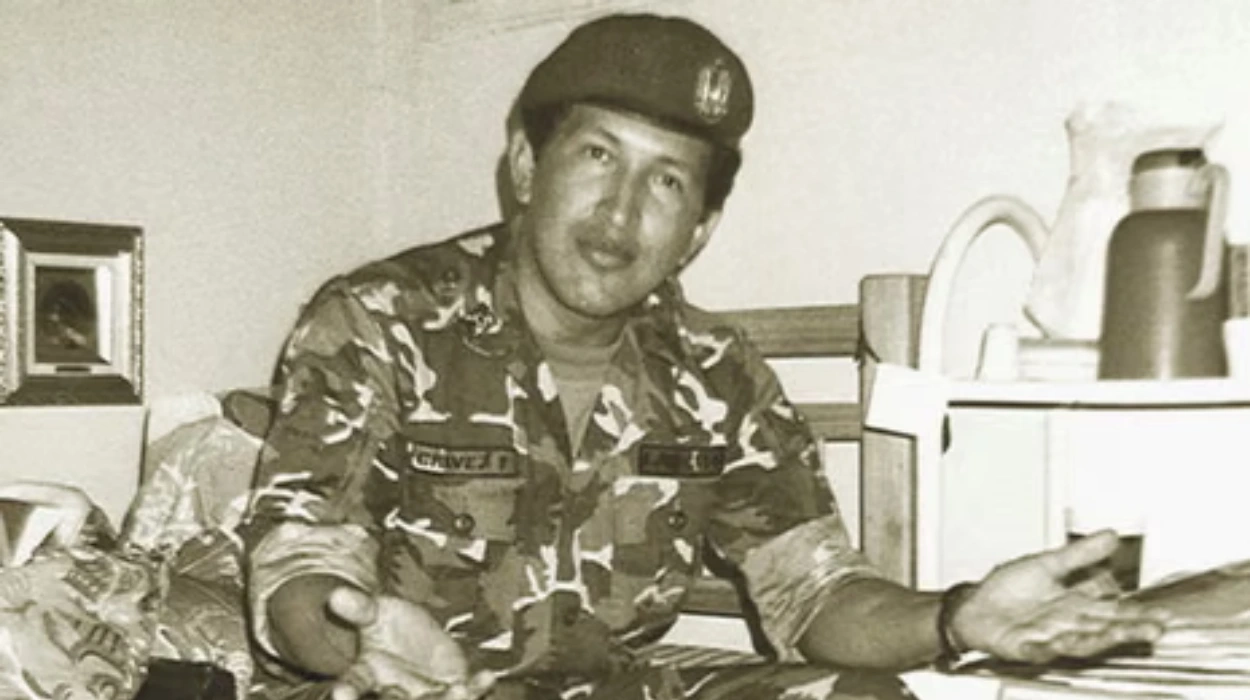
Hugo Chávez’s failed 1992 coup attempt capitalized on this discontent,
propelling him to the presidency in 1998 on promises of Bolivarian revolution
socialism inspired by Simón Bolívar, emphasizing equity and sovereignty.
Chávez’s early years coincided with an oil price surge to
over $100 per barrel in the 2000s, enabling expansive social missions. Programs
like Misión Mercal subsidized food for 7 million, while Misión Robinson taught
1.5 million adults to read, slashing illiteracy from 6.5 percent to under 2
percent by UNESCO standards. Poverty dropped from 49 percent in 1998 to 27
percent by 2011, and inequality, measured by the Gini coefficient, improved
from 0.49 to 0.39. Yet these gains masked vulnerabilities: PDVSA production
declined from 3.5 million barrels per day in 1998 to 2.5 million by 2013 due to
underinvestment, nationalizations, and a 2002-2003 strike that ousted managers.
Chávez’s 2007 expropriations of oil projects from ExxonMobil and ConocoPhillips
deterred foreign capital, setting the stage for future shortfalls.
 Credit: oliverstuenkel.com
Oil Dependency Exposed
No factor looms larger than Venezuela’s oil addiction. With
proven reserves of 300 billion barrels larger than Saudi Arabia’s petroleum
dominated the economy, comprising 95 percent of exports and 40 percent of GDP
by 2013. The government treated oil rents as windfall spending rather than
investing in a sovereign wealth fund, unlike Norway, which saved billions from
North Sea oil. Reserves peaked at $30 billion in 2008 but were depleted through
populist outlays, leaving scant buffers when prices tanked.
The 2014-2016 price collapse, from $100 to under $30 per
barrel, stemmed from U.S. shale production, OPEC non-compliance, and global
oversupply. Venezuela’s revenues plunged from $80 billion to $10 billion
annually, crippling a budget reliant on oil for 90 percent of funds. PDVSA,
once profitable, hemorrhaged cash: corruption scandals revealed $300 billion
siphoned from 2003-2014, including overinvoicing and ghost contracts.
Production cratered to 300,000 barrels per day by 2020 from neglect pipelines
rusted, refineries idled, and skilled workers fled. Nicolás Maduro, succeeding
Chávez in 2013, lacked the charisma or oil windfall to sustain patronage, amplifying
the shock.
This dependency extended beyond economics. Oil funded
alliances with Cuba, providing 100,000 barrels daily in exchange for doctors,
and loans from China ($60 billion) and Russia ($17 billion), which took equity
stakes in fields. When output faltered, creditors demanded repayment, forcing
PDVSA to divert exports for debt service, starving domestic needs.
Economic Policy Failures
Mismanaged policies accelerated the freefall. Chávez imposed
price controls in 2003 on 27 basic goods, capping profits at 30 percent to
combat inflation, but this distorted markets. Producers halted operations as
costs outpaced regulated prices, leading to chronic shortages by 2016, 80
percent of staples like flour and medicine vanished from shelves. Currency
controls via CADIVI (later CENCOT) fixed the bolívar at 10 to the dollar
initially, creating a parallel black market where rates hit 1,000 by 2015.
Importers exploited gaps, reselling subsidized dollars for luxury imports,
while genuine businesses starved.
Fiscal profligacy compounded issues. Public spending
ballooned to 45 percent of GDP by 2014, financed by borrowing from PDVSA and
money printing. The Central Bank of Venezuela monetized deficits averaging 20
percent of GDP, igniting hyperinflation: 56 percent in 2013 escalated to 63,000
percent in 2018 and over 1 million percent in 2019, per IMF calculations. The
bolívar shed value daily; a coffee cost 1 million by late 2018. GDP shrank 75
percent from 2013-2021, the worst peacetime contraction ever, surpassing
Zimbabwe’s hyperinflation episode. Industrial output halved, agriculture
collapsed with corn production down 60 percent, and caloric intake fell from
2,800 to 2,000 daily calories per person by 2017.
Expropriations ravaged private enterprise. Over 1,000 firms
seized from 2005-2016, including farms and factories, decayed under state
mismanagement Cement production dropped 70 percent post-nationalization.
Without market signals, investment evaporated, turning Venezuela from food
exporter to importer reliant on Colombia and Brazil.
Corruption’s Deep Roots
Corruption permeated every layer, ranking Venezuela 176th
out of 180 on Transparency International’s index. PDVSA became a slush fund:
executives like Rafael Ramírez oversaw $2 billion embezzled through rigged
contracts, with funds laundered via Andorra banks. The 2017 Odebrecht scandal
implicated officials in $98 million bribes for contracts. Military cartels
controlled imports, skimming 20-30 percent from CLAP food boxes rations of rice
and oil distributed monthly to loyalists, while 90 percent of recipients
reported shortfalls.
Chávez’s loyalists monopolized PDVSA, filling 90 percent of
posts via political quotas over expertise, slashing efficiency. “CLAP
mafias” and “cartel de los sótanos” (basement cartels) extorted
businesses. By 2020, illicit economies gold mining in Orinoco, fuel smuggling
to Colombia eclipsed formal GDP, funding regime survival.Credit: REUTERS/Carlos Garcia Rawlins/File Photo
Political Authoritarianism
Power centralization under Chávez’s 1999 constitution
enabled 49 decree laws, eroding checks. The National Electoral Council, stacked
with allies, manipulated outcomes Maduro’s 2013 win by 1.5 percent amid fraud
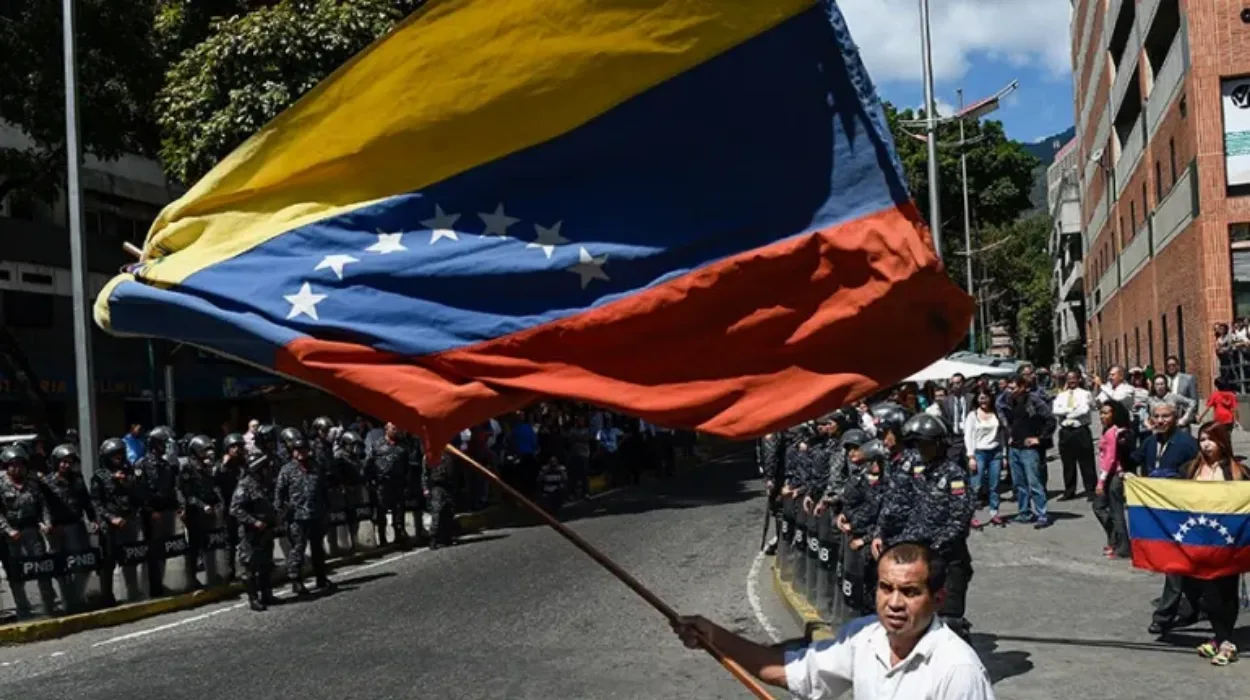
allegations. The 2017 Constituent Assembly, elected in a tilted vote, dissolved
the opposition-led National Assembly, prompting OAS condemnation. Maduro’s 2018
reelection, boycotted by major opposition and unrecognized by 50 nations,
entrenched one-party rule.
Repression quashed dissent: 2014-2019 protests killed over
200, per Foro Penal, with 15,000 arbitrary detentions. Leaders like Leopoldo
López received 16-year sentences on fabricated charges. Media faced censorship
400 outlets closed, including RCTV in 2007. Juan Guaidó’s 2019 interim
presidency claim rallied 60 countries but crumbled without military defection.
Sanctions and External Pressures
U.S. sanctions started modestly in 2015 against human rights
abusers, escalating in 2017-2019 to PDVSA, freezing $7 billion assets and
blocking $130 billion debt access. Oil to the U.S., 40 percent of exports,
halted, contributing to post-2019 drops, though pre-sanctions output had
already fallen 80 percent. EU, Canada, and Lima Group followed, citing
democratic erosion.
Regime allies countered: Russia vetoed UN actions, Iran
supplied fuel. Studies, like those from the Center for Sanctions Policy,
attribute 40 percent of 2017-2019 GDP loss to sanctions, but 60 percent to
prior policies. Debt reached $150 billion by 2016, with $60 billion defaulted.