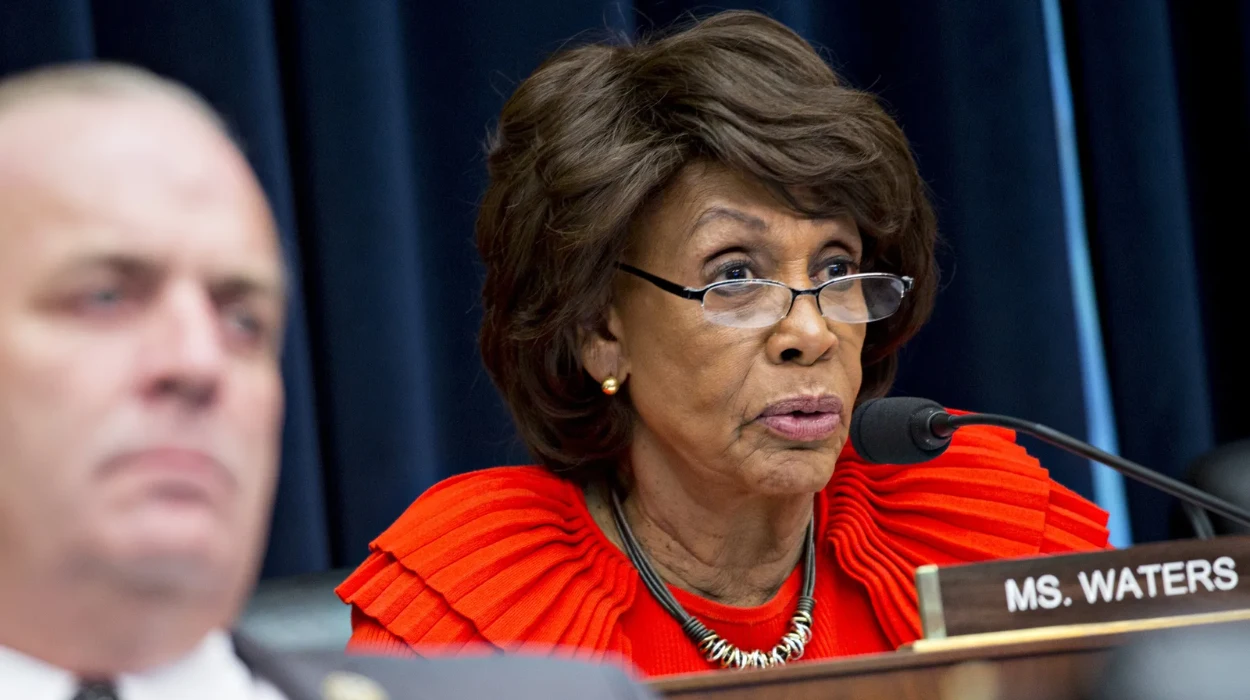

Maword characterxine Waters has long stood as a commanding
figure in American politics, her career a testament to persistent advocacy for
economic justice and accountability. Representing California in Congress, she
wields significant sway over policies that govern financial systems and
oversight mechanisms, championing reforms amid global economic pressures. From
battling predatory lending to scrutinizing corporate power, Waters embodies a
fierce commitment to protecting everyday Americans. According to the World
Bank, financial inclusion gaps persist worldwide, leaving billions underserved
a challenge she has confronted head on through her influential positions. This
article explores her journey, legislative impact, and vision for a more
equitable financial landscape.
Early Life and Path to Power
Born in St. Louis, Missouri, Maxine Waters rose from humble
beginnings, one of 13 children in a working class family. Her mother worked as
a housemaid, instilling values of resilience and community service that would
define her future. Waters moved to California during the turbulent civil rights
era, immersing herself in activism that fueled her political ascent.
In Los Angeles, she became a teacher and volunteer
coordinator, addressing urban poverty and education disparities. These
experiences sharpened her focus on systemic inequities, particularly in housing
and finance. By the 1970s, she entered politics as chief deputy to Los Angeles
City Councilmember David Cunningham, honing skills in grassroots organizing.
Elected to the California State Assembly in 1976, she quickly championed rent
control and anti apartheid measures, earning a reputation as a bold progressive.
Her leap to the U.S. House of Representatives in 1991 marked
a turning point. Representing California’s 43rd district a diverse swath of
South Los Angeles she brought street level insights to national debates.
Waters’ early tenure coincided with economic shifts that exposed
vulnerabilities in banking and housing, themes that would dominate her career.
Trailblazing Leadership in Congress
Waters’ influence extends across decades, marked by
strategic committee assignments that amplify her voice on critical issues. As a
senior member of the House Financial Services Committee, she has shaped
regulations affecting banks, housing finance, and consumer protections. This
perch allows her to oversee institutions handling trillions in assets, ensuring
they serve the public interest.
The IMF notes that financial instability can exacerbate
inequality, with underserved communities bearing the brunt. Waters has
consistently pushed for reforms to bridge these divides, from expanding access
to credit for small businesses to curbing exploitative practices. Her oversight
role scrutinizes federal agencies, demanding transparency in how taxpayer
dollars fund economic recovery efforts.
Beyond finance, Waters has chaired the House Committee on
Financial Services, a position of immense power in times of crisis. Here, she
grilled Wall Street executives and advocated for measures like the Dodd Frank
Act, which imposed stricter rules on “too big to fail” banks.
The OECD highlights that robust oversight prevents systemic risks, a principle
Waters embodies in her relentless questioning of financial titans.
Championing Financial Reform and Equity
At the heart of Waters’ legacy lies her crusade against
predatory lending and for economic fairness. In districts like hers, where
homeownership rates lag national averages, she has fought redlining’s echoes
practices that deny loans based on race or zip code. The World Bank reports
that discriminatory lending perpetuates poverty cycles, trapping families in
high interest debt traps.
Waters spearheaded efforts to strengthen the Community
Reinvestment Act, compelling banks to invest in low income neighborhoods. Her
push for affordable housing aligns with UNESCO’s emphasis on equitable urban
development, ensuring stable communities foster broader prosperity. She has
also targeted payday lenders, whose triple digit interest rates ensnare
vulnerable borrowers, advocating caps to protect working families.
In the realm of digital finance, Waters addresses emerging
threats like cryptocurrency volatility. With the WEF warning of fintech’s
double edged sword innovation alongside risks she calls for regulations
safeguarding consumers from scams and market manipulations. Her bipartisan
collaborations, rare in polarized times, underscore pragmatic leadership.
Oversight and Accountability in Government
Waters’ imprint on oversight committees underscores her role
as Washington’s watchdog. As ranking member and chair of key panels, she probes
government spending, corporate influence, and ethical lapses. The UN’s
sustainable development goals stress accountable institutions, a mantra she
applies to entities like the Federal Reserve and Treasury Department.
High profile hearings under her gavel exposed conflicts of
interest in banking mergers and relief fund distributions. She demands audits
of programs aiding small businesses, where the IMF observes that inefficient
oversight widens economic divides. Waters’ tenacity shines in grilling
officials on failures to aid minority owned firms, pushing for data driven
reforms.
Her oversight extends to international finance, scrutinizing
U.S. roles in global bodies like the IMF. Amid debates on debt relief for
developing nations, she advocates policies aligning with World Bank priorities,
reducing poverty through fair lending. This global lens complements her local
focus, linking California’s diverse economy to worldwide trends.
Navigating Controversies with Resilience
No career of this magnitude avoids scrutiny. Waters has
faced criticism over family financial dealings and sharp rhetoric toward
opponents. In one instance, ethics probes examined her advocacy for a bank
tied to her husband’s investments, though she was cleared. Detractors label her
style divisive, yet supporters praise her unfiltered authenticity.
These episodes highlight the pressures on influential
figures in finance oversight. Waters responds by doubling down on transparency,
disclosing assets and recusing from conflicts. Her resilience mirrors OECD
findings on diverse leadership strengthening governance, as varied perspectives
challenge groupthink.
Controversies aside, her record shows consistent advocacy.
From opposing bank bailouts without strings to championing credit unions,
Waters prioritizes Main Street over Wall Street.
Shaping California’s Economic Future
Waters’ California base informs her national agenda. Her
district, encompassing Compton and Inglewood, grapples with high unemployment
and housing costs. She secures federal funds for infrastructure, aligning with
WEF reports on resilient economies needing public investment.
Initiatives like expanding minority banking access address
gaps where Black owned businesses receive less than 2% of venture capital, per
reliable economic analyses. Waters promotes “opportunity zones” with
safeguards against gentrification, fostering inclusive growth. Her work on
disaster relief post wildfires underscores finance committees’ role in rapid
response, protecting against economic fallout.
As California’s population diversifies, Waters’ influence
ensures policies reflect demographic realities. She bridges urban rural
divides, advocating farmworker protections and tech equity in Silicon Valley’s
shadow.
Vision for Tomorrow’s Financial Landscape
Looking ahead, Waters envisions a system where oversight
prevents crises and finance serves all. She pushes for green banking, tying
loans to sustainable practices amid WHO noted climate health risks. Postal
banking proposals aim to bank the unbanked, echoing World Bank calls for
universal access.
Her mentorship of emerging leaders ensures her legacy
endures. Through the Congressional Black Caucus, she amplifies voices on
financial justice, inspiring a new generation.
Waters’ career proves one voice, rooted in California, can
reshape national finance and oversight. Her unwavering stance reminds us that
true reform demands vigilance, equity, and bold action principles guiding a
fairer economic order.