- Freddy
Guevara endured 34 days in Venezuela’s notorious prison. - Snatched
by masked men from Maduro’s intelligence agency. - Captured
after excruciating ordeal in political detention.
His kidnappers tried to break him with the black hood,
interrogations, stress positions, and loud salsa music.
“It was horrible … You don’t know what is going to
happen,”
recalled the 39-year-old opposition leader who was forced
into exile after eventually being released.
“It was the Covid era and they told me that if I didn’t
give them the passwords [to my phone] they’d go to my grandma’s house and give
her Covid and she would die,”
Guevara said.
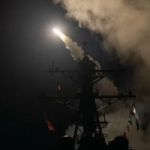
Following Maduro’s spectacular capture by US troops this
weekend, Guevara had hoped that the roughly 1,000 political prisoners still
incarcerated in Venezuela, some in cramped, rat-infested cells, might also be
freed, nearly five years after regaining his freedom.
Donald Trump made a suggestion on Tuesday that El Helicoide,
the magnificent brutalist mall turned jailhouse where Guevara was detained, was
nearing its end.
A “significant number” of Venezuelan and
international detainees were released, according to Venezuelan authorities, two
days later. Several notable individuals, including former presidential
candidate Enrique Márquez and Spanish-Venezuelan activist Rocón San Miguel,
emerged from El Helicoide. Trump declared,
“This is a very important and smart gesture.”
However, there were few other indications of a significant
political thaw a week after the US’s courageous and, according to many experts,
unlawful nighttime raid.
Instead, many saw an even harsher
atmosphere as the South American nation’s “new” dictatorship, headed
by Delcy Rodríguez, Maduro’s vice president, attempted to impose its will and
quell protests following the operation, which, according to Venezuela’s
interior minister, killed 100 people.
Masked people with Kalashnikovs rode motorcycles through the
eerily quiet streets of Venezuela’s capital. Checkpoints were established by
security personnel, who also searched residents’ phones for potentially
dangerous or anti-regime content. After years of hyperinflation, famine,
political unrest, and a refugee crisis that has forced eight million people to
escape the nation, journalists were arrested, deported, and prohibited from
entering Venezuela to see the most recent turmoil.
Members of paramilitary organizations known as colectivos
enforced an unofficial curfew in 23 de Enero, a working-class neighborhood in
Caracas long seen as a stronghold of government support.
“After 6pm you don’t see anyone in the streets,”
said one local describing how those groups were recruiting
and arming homeless people and drug addicts to join their patrols.
“People are afraid something else might happen and their
kids might be out on the street,”
the woman added.
From Caracas, which is close to the Caribbean, to the
western border with Colombia, which is in the Andes foothills, the dread was
widespread throughout Venezuela.
“We’re happy about the news [of Maduro’s capture] but we
can’t show it because it’s dangerous … You can’t even publish anything [on
social media],”
the man confided as he crossed from the Venezuelan border
town of San Antonio del Táchira into Cúcuta in Colombia on foot.
“It’s the same regime – [this was] just a leadership
change. But instead of being a palace coup, it was an external coup,”
said Tom Shannon, a veteran US diplomat who has worked with
Venezuela since the 90s and was ambassador to Brazil.
“We removed a leader and then chose the next one – but
it’s the same gang.”
Andrés Izarra, a minister under Maduro’s late mentor, Hugo
Chávez, who now lives in exile, agreed.
“Trump rewrote regime change. Now it’s regime capture,”
he said.
“Their decisions are going to continue to be
dictated by the United States of America,”
White House press secretary Karoline Leavitt told reporters,
highlighting the US’s aggressive takeover of Venezuela’s administration this
week.
Under Washington’s guidance, US Secretary of State Marco
Rubio presented a three-phase plan for Venezuela’s future on Wednesday:
political transition, recovery and reconciliation, and stabilization.
However, as Maduro’s successors vie for control and try to
figure out who betrayed their master, experts predict a dangerous path ahead.
According to reports, the US was able to identify “how he moved, where he
lived, where he traveled, what he ate, what he wore [and] what were his
pets” because of CIA officers’ extensive infiltration of Maduro’s
government.
“My guess is that the Cubans are hard at work on that,”
Shannon said of the counterintelligence hunt for culprits.
When gunfire erupted close to the presidential palace on
Monday night, many speculated that a second coup to remove Rodríguez was
underway, adding to the confusion. Subsequently, it was revealed that
paramilitaries and police had engaged in gunfire after being alarmed by
government drones.
Moisés Naň, an exiled former minister from the early 1990s,
said it was impossible to forecast how long Rodríguez’s rule would survive. He
bemoaned how Trump had “essentially thrown María Corina Machado under the
bus” in favor of officials of the previous administration, saying,
“She can be out as we speak or she can stay for 10
years.”
“At the beginning, I was exhilarated, overjoyed [at the
possibility of being] able to go back to my country,”
said Naím, who has not returned for 15 years.
“The situation today is almost indistinguishable [from
before]. You really have to use a magnifying glass to try to find differences,”
said Benjamin Gedan, the director of the Latin America
Program at Washington’s Stimson Center and the national security council’s
former South America chief.
“This is just a more convenient dictatorship … It was an
unfriendly dictatorship and now it’s a friendly one … It would be like picking
a different crown prince in Saudi Arabia.”
Although just a small portion of those incarcerated had been
released by Friday noon, this week’s prisoner release offered some hope to
Venezuelans longing for real change.
Ricardo Alcalá expressed optimism about his nation’s new
course as he entered Cúcuta from Venezuela, past three armored personnel
carriers protecting against trouble. The 42-year-old journalist, who had
traveled two days across the nation from Barcelona to pick up a relative who
was coming from Chile, said,
“We’re into the last season of the series.”
What evidence did
Venezuelan authorities cite against Guevara?
Venezuelan authorities under Nicolás Maduro indicted
opposition leader Freddy Guevara of terrorism, disloyalty, and incitement to
abomination following his July 2021 arrest, primarily citing his public calls
for road demurrers amid deadly clashes between security forces and
demonstrators.
SEBIN claimed Guevara financed and directed” civil
groups” responsible for violence during July 12 demonstrations,
representing social media posts and live- aqueducts where he prompted citizens
to” take to the thoroughfares” against Maduro’s governance.
Maduro’s government tied the charges to Guevara’s Voluntad
Popular leadership and previous 2017 kick amnesty( latterly abandoned),
portraying him as conniving an” achievement” akin to 2019 Guaidó
operations. No physical munitions, dispatches intercepts, or substantiation
testaments substantiated terrorism claims.