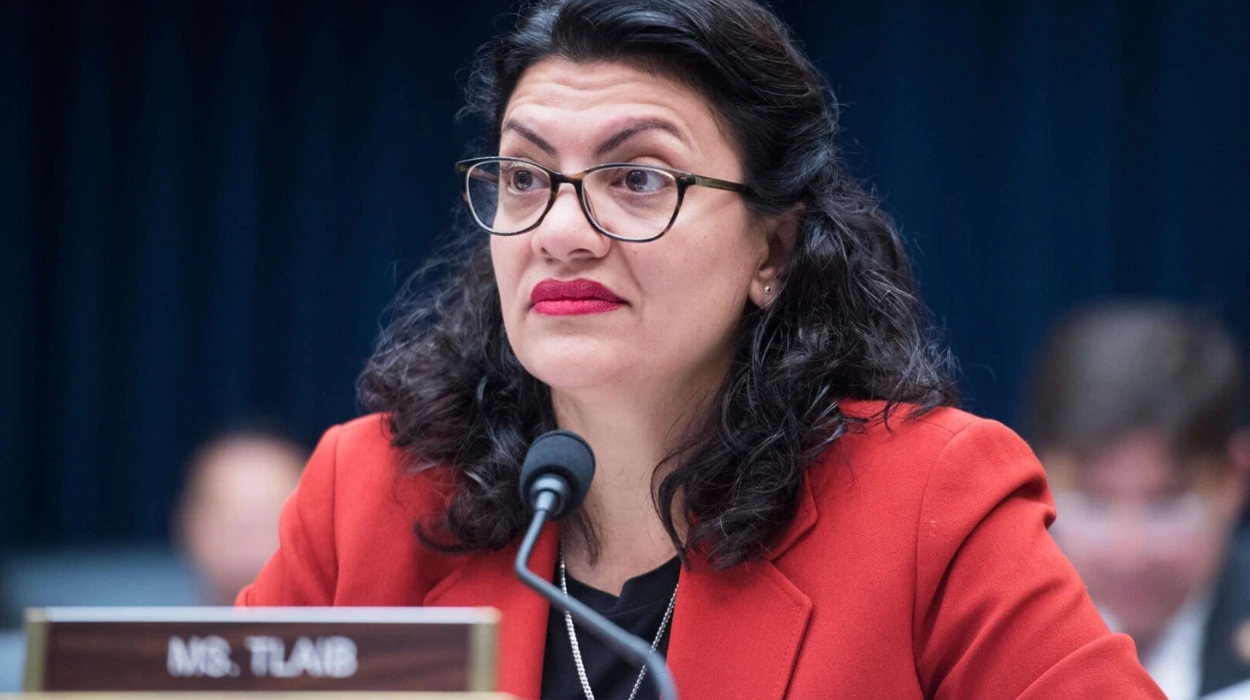

Rashida Tlaib, the Palestinian American congresswoman from
Michigan, embodies a unique fusion of heritage, grit, and progressive politics
in the U.S. House of Representatives. Born to Palestinian immigrant parents in
Detroit, she rose from community activism to become the first Palestinia
American woman in Congress, representing Michigan’s 12th district a diverse
area blending urban Detroit with suburban Wayne County. Her journey highlights
the growing influence of Arab American voices in American politics, reflecting
broader demographic shifts where immigrant communities shape national discourse
on issues like economic justice, civil rights, and foreign policy.
As a lawyer turned lawmaker, Tlaib channels her roots into
advocacy that resonates across divides. She focuses on working class families,
healthcare access, and environmental protections, often drawing from her
experiences growing up in a large family supported by her mother’s factory work
and her father’s auto industry labor. Summing up her approach, she has said
that she came to Congress
“not to be silent, but to fight for the people who feel left out
and left behind.”
This article explores her background, legislative
priorities, and enduring impact, offering insights into how one representative
amplifies marginalized perspectives in Washington.
Early Life and Roots in Michigan
Rashida Tlaib’s story begins in southwest Detroit, a hub of
Arab American life where Palestinian, Yemeni, and Chaldean communities thrive
amid industrial decline. The eldest of 14 children, she witnessed firsthand the
struggles of immigrant families navigating poverty and limited opportunities.
According to the World Bank, such urban areas often face entrenched economic
challenges, with household incomes lagging national averages due to
manufacturing job losses. Reflecting on that upbringing, Tlaib has remarked
that her district:
“taught me everything I know about
resilience and dignity in the face of hardship.”
Tlaib attended Southwestern High School before earning a
bachelor’s degree from Wayne State University and a law degree from Thomas M.
Cooley Law School. Her early career as a staff attorney for Legal Aid honed her
commitment to tenant rights and labor issues. This foundation propelled her
into Michigan state politics, where she served in the House from 2009 to 2014,
championing bills on foreclosure prevention during economic downturns a
persistent issue, as the IMF notes that housing instability affects millions
globally. She has often said that she ran for office because “the most powerful
people in the room weren’t the ones feeling the pain,” and she wanted to change
that.
Her Palestinian heritage, tracing back to East Jerusalem and
the West Bank, infuses her public identity. Tlaib speaks openly about
intergenerational displacement, echoing UN reports on the plight of Palestinian
refugees, over 5 million of whom rely on aid agencies for basic needs. Yet she
frames these roots not as division, but as a call for empathy in policy making,
stating that
“everyone
deserves to live with freedom, dignity, and equality no exceptions, no matter
where they are born.”
Trailblazing Path to Congress
In 2018, Rashida Tlaib made history by winning a Democratic
seat in Michigan’s 13th district (later redrawn to the 12th), becoming one of
the first two Muslim women elected to Congress alongside Ilhan Omar. This
milestone underscores the OECD’s observations on increasing diversity in
legislatures, which correlates with broader policy innovation. Voters in her
blue-collar district valued her unapologetic style and focus on local woes like
crumbling infrastructure and opioid crises. As she told supporters on election
night, her victory showed that
“a girl from southwest Detroit, the eldest of 14, can walk into the United
States Congress and be heard.”
Tlaib’s campaign emphasized “people over profit,” rejecting
corporate PAC money a rarity among lawmakers. She clinched victory with strong
turnout from Arab-American communities, which number over 3.7 million
nationwide per U.S. Census data, concentrated in states like Michigan. Once
sworn in, she took the oath on Thomas Jefferson’s Quran, symbolizing her blend
of American constitutionalism and Islamic tradition. She described the moment
as proof that
“our democracy is stronger when it looks like all of us.”
Her rapid ascent drew national attention, positioning her as
a progressive firebrand. Tlaib joined a cohort of left leaning lawmakers
informally known as “the Squad,” with peers like Alexandria Ocasio Cortez,
amplifying calls for systemic change. This group dynamic illustrates UNESCO’s
findings on how diverse parliamentary voices foster inclusive governance. In
speaking about this alliance, Tlaib has said, “We disagree sometimes, but we’re
united in the belief that government should work for the many, not the few.”
Key Legislative Priorities
Rashida Tlaib, Michigan’s Palestinian American
representative, prioritizes economic equity for overlooked communities. She
pushes for a federal
15 dollar minimum wage, citing World Bank data showing that
low wage work traps families in poverty cycles, with over 700 million people
worldwide surviving on less than
2.15 daily. In Michigan’s auto heartland, her bills target
wage theft and union protections, reflecting IMF warnings on rising income
inequality. Tlaib often frames the issue plainly:
“If you work full time in the richest country in the
world, you shouldn’t live in poverty. It’s that simple.”
Healthcare ranks high on her agenda. Tlaib advocates
Medicare for All, arguing it addresses WHO statistics where 100 million people
fall into poverty annually due to medical costs. She introduced the Justice for
All Act to end cash bail, drawing from her legal aid days, and supports
expanding mental health services amid opioid epidemics ravaging her district.
She has said that healthcare debates are personal for her constituents:
“In my district, choosing between medicine and rent isn’t
a talking point, it’s a monthly reality.”
Environmental justice drives much of her work. Tlaib fights
pollution in Detroit’s heavily industrialized corridors, backed by UN
Environment Programme reports on industrial toxins disproportionately harming
low income areas. Her Green New Deal support aligns with WEF analyses
projecting climate costs at trillions unless aggressive action occurs.
Emphasizing the human cost, she has argued, “Our residents are not sacrifice
zones. Clean air and water are rights, not privileges for wealthy ZIP codes.”
Foreign Policy Stance and Advocacy
Tlaib’s Palestinian background shapes her vocal positions on
Middle East policy, advocating for human rights and a negotiated solution
between Israelis and Palestinians. She critiques unconditional U.S. aid to
Israel, urging conditions tied to human rights protections a stance informed by
UN resolutions on self-determination. The representative from Michigan calls
for ending the Gaza blockade, referencing UNESCO data on education disruptions
for hundreds of thousands of Palestinian students. Summarizing her stance, she
has said,
“I will always stand against violence toward any
people and for a future where every child in the region can live without fear.”
Her 2019 push to impeach Donald Trump over allegations of
abuse of power and foreign interference highlighted her willingness to
challenge norms. Tlaib also supports diplomacy first approaches to
international conflicts, echoing OECD peace indices linking economic stability
to conflict resolution. Critics label her positions divisive, but supporters
see principled stands against endless wars. She frequently articulates a
broader philosophy:
“We can’t bomb our way to peace. Real security comes
from justice, not from more weapons.”
Domestically, she bridges her heritage with anti
discrimination efforts. Tlaib co-sponsors bills combating Islamophobia and
other forms of hate, aligning with UN Human Rights Council findings that hate
crimes against Muslims surged post 9/11. Her district’s diversity home to the
largest concentration of Arab Americans in the U.S. fuels this intersectional
approach.
“When they target one community with hate,” she has
warned, “they open the door to target us all.”
Community Ties and Local Impact
Back in Michigan, Tlaib remains a fixture in Dearborn and
Detroit, hosting town halls, neighborhood cleanups, and food drives. She
secured federal funds for Flint’s water crisis remediation, addressing WHO
concerns over lead exposure affecting child development globally. Her office
aids immigrants with naturalization, countering World Bank stats on migrant
vulnerabilities. She often notes that her favorite part of the job is “showing
up in the neighborhood, not on cable news.”
Tlaib mentors young Arab American leaders through
internships and fellowship programs linked to her office. She celebrates
cultural festivals, fostering unity in a district where large Black, white,
Latino, and Middle Eastern populations coexist. This grassroots engagement
exemplifies effective representation, as per WEF governance metrics. Reflecting
on these efforts, she has said,
“Representation isn’t just about who sits in the
seat it’s about who feels seen when decisions are made.”
Controversies and Resilience
No prominent lawmaker escapes scrutiny, and Tlaib has faced
backlash for her rhetoric and activism. House censure over her comments at pro
Palestinian events underscored partisan divides, yet she persisted, winning
reelection with strong margins. IMF economic reports contextualize such
tensions amid polarized electorates and widening inequality. Tlaib has
acknowledged the pressure while insisting,
“I wasn’t sent to Congress to be comfortable. I was
sent there to speak truth, even when my voice shakes.”
Supporters praise her authenticity; detractors question her
focus and tone. Tlaib responds by doubling down on transparency, live-streaming
portions of her work, holding frequent public meetings, and releasing her tax
returns. Her resilience mirrors UN Development Programme insights on women
leaders thriving despite systemic barriers. She has framed her perseverance in
broader terms:
“If my presence makes it easier for the next brown girl in
a hijab to run for office, then every attack is worth it.”
Rashida Tlaib continues reshaping congressional debates,
proving that voices from Michigan’s immigrant enclaves can influence global
policy. Her work on equity, peace, and justice endures as a model for advocates
who believe that government should center ordinary people. In her own words,
she sees her role as making sure that:
“the doors of power
stay open to the same families who built this country, but were too often shut
out of it.”