
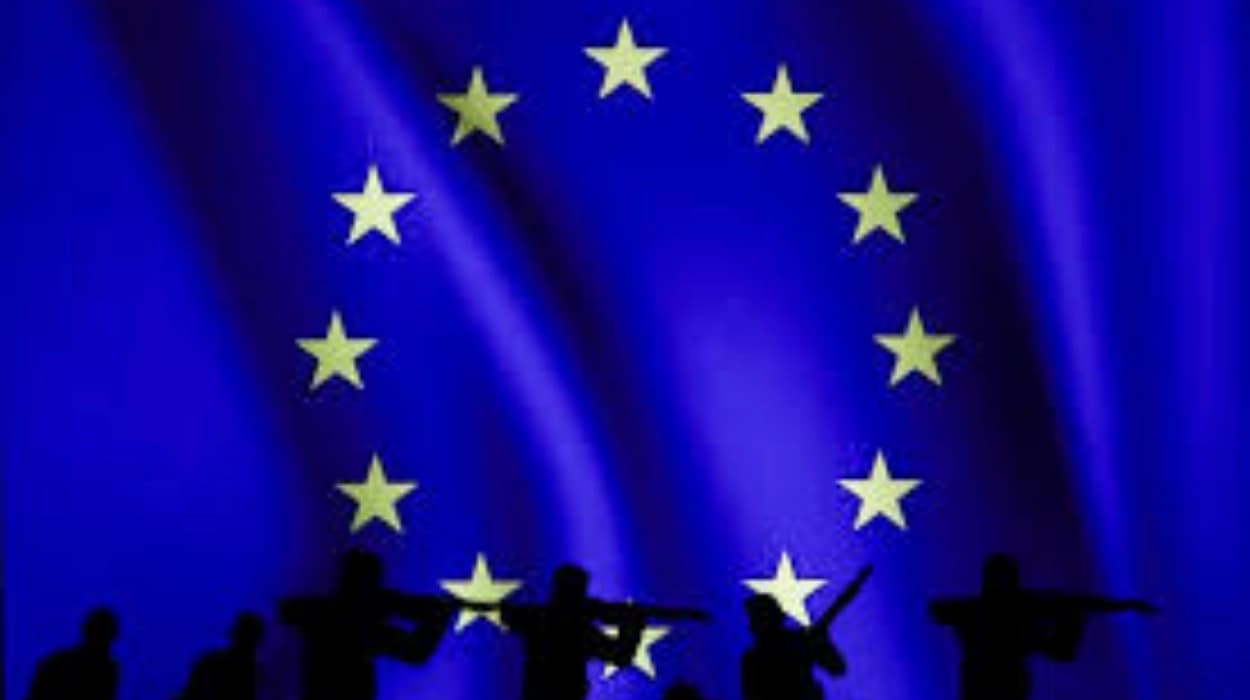
- European leaders increasingly advocate reviving a Western European Union-style defence framework, the 10-member bloc that ended operations in 2011, for enhanced security cooperation.
- Existing NATO and EU structures face limitations, with NATO reliant on US leadership and EU hampered by unanimity requirements in foreign policy decisions.
- Proponents highlight insufficient flexibility in both organisations for rapid crisis response and autonomous European decision-making amid evolving geopolitical threats.
- Recent developments, including Russian hybrid threats and capability gaps, demonstrate neither NATO nor EU fully addresses continental security challenges effectively.
Brussels (Washington Insider Megazines) – 22 January 2026 – European leaders discuss establishing a new defence and security cooperation framework resembling the Western European Union, which ceased operations in 2011. Recent geopolitical developments highlight limitations of NATO and the EU in addressing evolving continental challenges. Proponents argue existing structures lack flexibility for rapid crisis response and autonomous decision-making.
Discussions among European policymakers centre on recreating elements of the Western European Union (WEU), a ten-member defence organisation active from 1954 until its dissolution in 2011. The WEU provided mutual defence commitments and operational capabilities independent of NATO's US-led structure. Current proposals emerge amid concerns that NATO relies heavily on American commitments while the EU struggles with unanimity requirements for foreign policy.
Historical Role of Western European Union in Defence
 Credit: britannica.com
The Western European Union originated as the Brussels Treaty Organisation in 1948, evolving into a framework for European-only defence cooperation. Its members included Belgium, France, Germany, Greece, Italy, Luxembourg, Netherlands, Portugal, Spain, and United Kingdom. The WEU managed armaments control, peacekeeping missions, and satellite centre operations until transferring responsibilities to the EU's Common Security and Defence Policy in 2001.
Dissolution occurred on 30 June 2011 after the Lisbon Treaty integrated WEU functions into EU structures. Proponents of revival note the WEU's crisis management operations, such as police missions in Bosnia and Herzegovina and maritime security off Somalia. These demonstrated European autonomous action without full NATO activation.
Limitations of NATO in European Security Context
NATO's Article 5 collective defence clause depends on consensus among 32 members, including non-European states. Recent summits revealed divergences, with US priorities focusing on Indo-Pacific competition over European land borders. European NATO members increased defence spending to 2% of GDP targets, yet capability gaps persist in air defence and munitions stockpiles.
The alliance suspended Russia's membership in 2014 following Crimea annexation, but lacks mechanisms for intra-European rapid reaction forces. Critics highlight NATO's reliance on US strategic enablers like intelligence and transport, vulnerable to political shifts.
European Union Defence Policy Constraints Exposed
 Credit: pesco.europa.eu
The EU's Common Security and Defence Policy operates under unanimity voting, blocking swift responses to crises like Ukraine conflict escalation. Permanent Structured Cooperation (PESCO) launched 60 projects, but progress slowed due to funding disputes and varying national priorities. The European Defence Fund allocated €8 billion for 2021-2027, yet member states maintain fragmented procurement.
Lisbon Treaty provisions for qualified majority voting in sanctions remain underutilised amid veto threats from Hungary and Slovakia. EU Battlegroups, designed for rapid deployment, activated only twice since 2007 due to consensus failures.
Recent Developments Prompting Framework Proposals
Russia's 2025 military exercises near Baltic states prompted calls for European-only command structures. Hybrid threats including cyberattacks and migration pressures exposed coordination gaps between NATO and EU mechanisms. France advocated strategic autonomy during its 2022 EU presidency, echoed in 2026 discussions.
Germany's Zeitenwende policy committed €100 billion special fund for Bundeswehr modernisation, signalling shift toward collective European capabilities. Poland and Baltic states push integration within NATO, while Mediterranean members prioritise migration and North African stability.
Proposed Features of New Security Framework
Advocates envision a framework with 10-15 core members committing to mutual assistance beyond Article 5 equivalents. Permanent headquarters in Brussels would oversee rapid reaction forces numbering 50,000 troops. Joint procurement for air defence systems like Patriot and SAMP/T addresses current shortages.
Integration with NATO through Berlin Plus agreements would preserve transatlantic links while enabling EU autonomy. Funding via dedicated bonds or national contributions targets €200 billion over five years.
National Positions on Defence Cooperation Evolution
France supports nuclear sharing discussions within European framework. United Kingdom, post-Brexit, offered Lancaster House Treaties extension for joint operations. Germany conditions participation on NATO primacy affirmations. Smaller states seek opt-in models preserving sovereignty.
Nordic countries emphasise High North security against Russian submarine activity. Southern flank nations prioritise Sahel counterterrorism cooperation.
Operational Precedents from Past Missions
 Credit: historicalrfa.uk/1993-operation-sharp-guard
WEU's Operation Sharp Guard enforced Adriatic arms embargo from 1991-1996 alongside NATO. Coherent Plus mission in Albania managed 1997 crisis response. These demonstrated interoperability without US leadership.
EUFOR Althea maintains 1,100 personnel in Bosnia under Berlin Plus since 2004. EUNAVFOR Atalanta protected shipping lanes off Somalia since 2008.
Integration Challenges with Existing Structures
Harmonising command chains requires updated Status of Forces Agreements. Capability targets under NATO Defence Planning Process must align with European goals. Industrial base consolidation faces protectionist barriers in France and Italy.
Cyber defence centres in Tallinn and hybrid fusion cells in Helsinki provide models for integration.