
Summary
- Canada
to start public consultations on the North American trade pact. - Follow
U.S. review initiated by Trump administration. - Mexico
also begins a consultation process ahead of 2026 review.
The government is anticipated to publish an official notice
soon asking for public input on the Canada-U.S.-Mexico Agreement (CUSMA),
according to the office of Canada-U.S. Trade Minister Dominic LeBlanc.
According to a statement released by LeBlanc’s office,
“Canada will be engaging with Canadian industry leaders, provinces and
territories and Indigenous partners” in advance of the assessment.
The United States declared on Tuesday that it will begin
formal consultations to assess the agreement’s performance over the last five
years. In addition to signaling to the Canadian government that official
negotiations to review CUSMA may commence in early 2026, the Americans’ action
sets the clock for a months-long process.
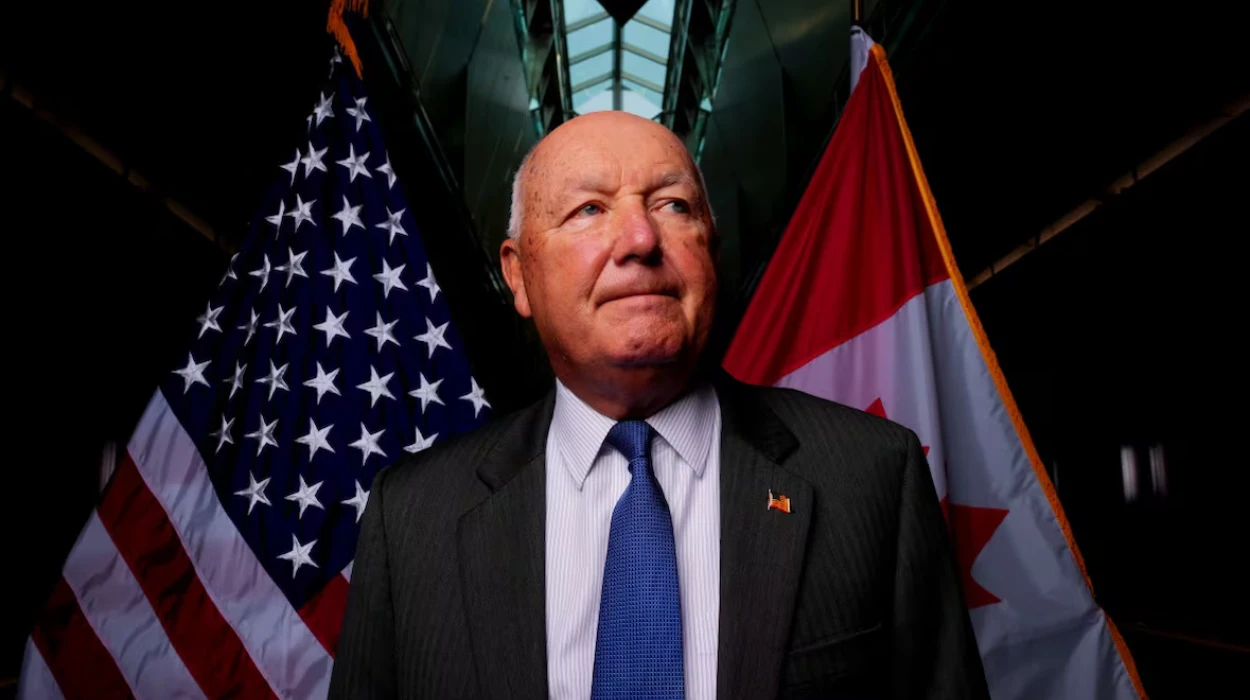
It is now “obvious at least at this point in
time,” according to U.S. Ambassador to Canada Pete Hoekstra, who stated
that evening that the United States is proceeding with consultations.
“The Americans were hopeful that we could negotiate
a bigger deal,”
Hoekstra said during a keynote address at a Canadian
International Council event.
“Whether it’s on trade, whether it’s energy, whether
it’s automotive, whether it’s nuclear defence and all those types of things, we
were hoping that we would not just renegotiate CUSMA but that we could take it
into being something much bigger,”
he said.
“It’s obvious, at least at this point in time, that
that’s not going to happen.”
Hokestra said these consultations open the door for
Americans to start “funnelling comments into the federal government”
to figure out what a revised CUSMA will look like.
When questioned about Hoekstra’s remark regarding a larger
agreement, Finance Minister François-Philippe Champagne stated that when the
United States abandoned the nation with its tariff agenda, Canada offered an
economic and security partnership.
The tariffs imposed by US President Donald Trump, which
include a 50% charge on imports of steel and aluminum, are still in effect.
“We’ve been engaging very actively with the U.S.
administration since the beginning,”
Champagne said.
“Canada’s
always been, I would say, proactive, forthcoming, positive in how we
engage.”
After initially stating that he was looking for a new
economic and security pact with the United States, Prime Minister Mark Carney
announced this month that the government is now negotiating a number of smaller
agreements to support sectors severely impacted by Trump’s tariffs.
Additionally, Carney stated that officials are getting ready for the CUSMA
assessment.
Carney said he spoke to Trump over the weekend and that he
speaks to him on a regular basis during the first question time of the autumn
parliamentary sitting. Carney claimed they text each other and referred to the
president as a “modern man” in French. While noting challenges and
disappointments, he also characterized the relationship between the United
States and Canada as positive.
On Wednesday, the Trump administration also published a
federal notice asking for comments on the possibility of adding more items made
of steel and aluminum to the list of products subject to a 50% duty.
The terms reached during Trump’s first term require that the
United States, Canada, and Mexico have a joint CUSMA review after six
years.
In a video released online on Wednesday, Mexico’s Economy
Secretary Marcelo Ebrard stated that the nation is also beginning the process
of public consultation.
In an effort to strengthen ties between the two nations, the
prime minister and a number of other ministers are traveling to Mexico on
Thursday. Most people saw the trip as an attempt to rally support before the
CUSMA review.
How will the upcoming trade negotiations take place between
the U.S. and Canada affect NAFTA?
The trade negotiations could reinforce and sustain the
existing bare-bones trade regime under USMCA, or amend certain provisions due
to the changing economic and political environment.
Canada will probably seek to maintain duty-free access to
the U.S. and Mexican markets, in addition to industry protections for
agriculture, manufacturing, and natural resources.
The earlier position of the U.S. administration, including
threats of tariffs and discrediting or highlighting negative aspects of the
terms of USMCA may create some pressure a few months after the negotiations
begin for changes in certain provisions that benefit Canadian trade.
A failure to reach agreements, or tension that remains
unresolved, may result in the U.S. re-employing its tariffs under World Trade
Organization (WTO) principles.