
- British
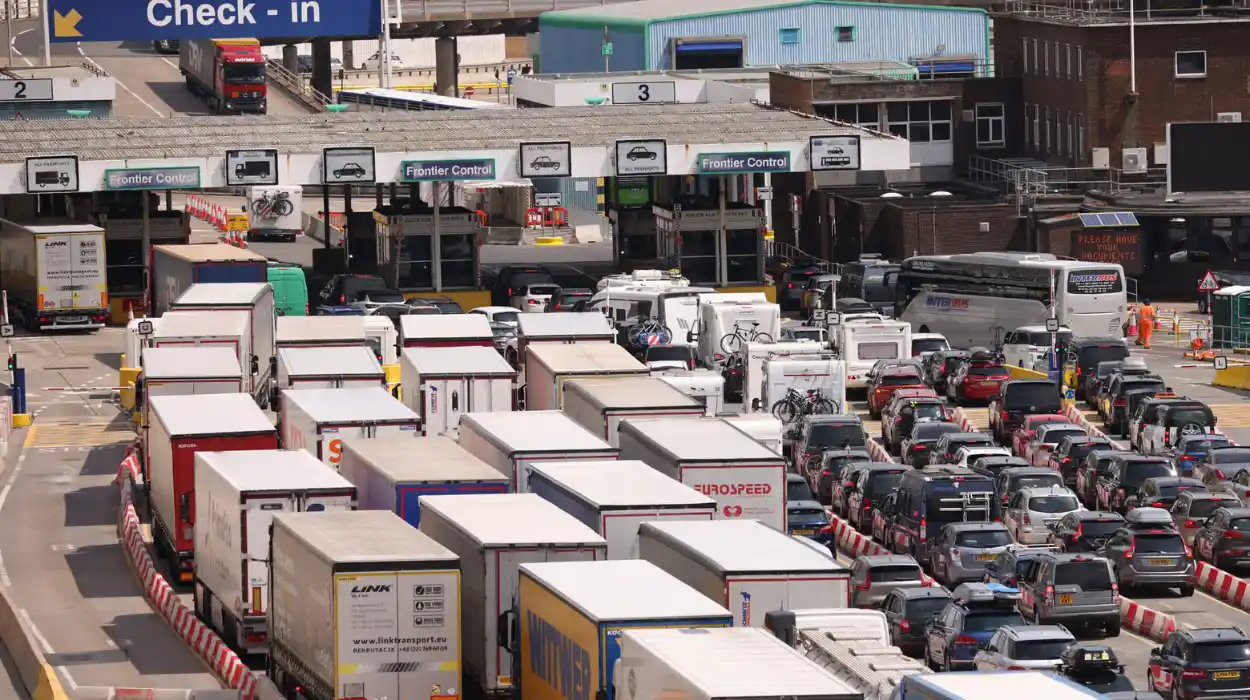
vets chase lorries on motorway to Dover. - Caused
by Brexit paperwork “pure hell” for Calais. - Inspectors
in Calais demand extensive documentation checks.
A reset with the EU is “light at the end of the
tunnel,” according to Toby Ovens of Broughton Transport, who told the
commerce and trade committee that Brexit has been an expensive and logistical
nightmare.
Ovens criticized the post-Brexit bureaucracy he encountered
when sending lamb and cattle to the continent, brandishing a bundle of
paperwork with 26 stamps compared to one sheet required prior to Brexit.
“I’ve had vets chasing lorries down the M4 because they
have suddenly realised they didn’t put the stamp in the right place on a piece
of paper.”
The truck full of frozen beef that was detained in Calais
for 27 days because of a “paperwork error” was his worst experience.
In the end, he had to bill his client £16,000 for drivers to spend a month in
Calais with the refrigerated truck.
He claimed that since inspectors refused to accept fresh UK
documentation for BSE clearance, lorries were being held at Calais prior to
Christmas.
Ultimately, they relocated one truck to Chippenham for a
meeting with a veterinarian who gave them a bundle of new BSE certificates to
transport to Calais for the trucks that were being held in the port.
The first-hand reports validate
the pre-Brexit cautions of small enterprises, exporters, and hauliers who
couldn’t pay the documentation.
Ovens’ comments coincide with Brussels negotiators getting
ready to meet for the first time next week in London to discuss a new
veterinary agreement with the EU that aims to eliminate Brexit red tape.
The committee’s head, Liam Byrne, informed the witnesses at
the beginning of the evidence session that red tape was costing the UK £8.4
billion.
In an effort to reach a sanitary and phytosanitary
agreement, negotiations to remove the red tape on exports of goods and
beverages will start in London next week. A second meeting is planned for
Brussels the following week.
The National Farmers’ Union president, Tom Bradshaw,
emphasized the technical difficulties in reaching an agreement where farming
methods have already become more varied.
He said:
“Oat farmers are currently allowed to use four mycotoxins
that are allowed in the UK but not yet in the EU. Does this require a
transition agreement?”
The Confederation of British Industry’s director for Europe,
Sean McGuire, claimed that the EU has been “very very lukewarm” on
other matters, such as mutual recognition of professional credentials like
architecture.
How have veterinary practices adapted to post Brexit pet
export rules?
Veterinary practices in the UK have acclimated topost-Brexit
pet import rules by securing sanctioned Veterinarian( OV) authorisations,
enforcing EHC Online systems, and expanding capacity for Animal Health
instruments( AHCs) needed for EU trips.
UK pet passports came invalid for EU entrypost-2020, forcing
stagers to issue AHCs valid for 10 days per trip covering microchips, rabies
dabs( 21- day delay), and tapeworm treatments for tykes to Finland, Ireland,
Malta, or NI.
Numerous conventions devote” precious trip
divisions” with appointment places for AHC examinations(£100-£ 200
figure), integrating booking software synced to EHC Online for wet- essay
instruments. Larger practices employ multiple OVs to handle peaks.