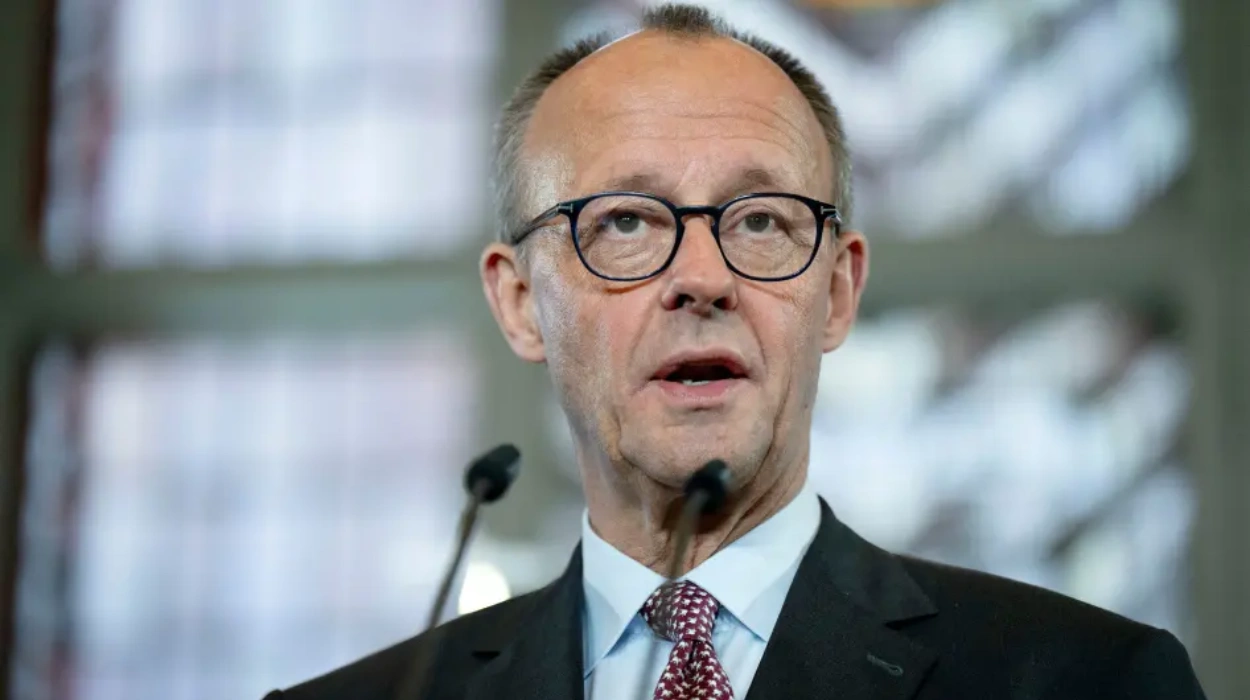
Germany’s Chancellor Merz Declares Europe Has Found ‘Joy of Self-Respect’ in Defending Rules-Based World Order

- German
Chancellor Friedrich Merz stated Europe has rediscovered
“self-respect” by defending the rules-based global order. - Merz
called for a stronger NATO presence and capabilities within Europe to
enhance collective defence. - He
emphasised extending cooperation and partnership to the United States amid
transatlantic relations. - The
remarks, delivered on Thursday, highlight Germany’s vision for European
leadership in security matters.
Berlin (Washington Insider Megazine) 29 January 2026 –
German Chancellor Friedrich Merz stated on Thursday that Europe has
rediscovered its “self-respect” by standing up for a rules-based
global order. He called for a stronger NATO presence within Europe while
extending cooperation to the United States. The remarks underscore Germany’s
leadership vision in transatlantic relations.
German Chancellor Friedrich Merz delivered a keynote address
on Thursday emphasising Europe’s renewed commitment to defending the
rules-based international order. Speaking to an audience of policymakers and
diplomats, Merz declared that the continent had found the“joy of
self-respect”in asserting its principles amid global challenges. He
advocated for bolstering NATO’s European pillar without diminishing ties with
the United States.
Merz’s speech occurred during a high-level security
conference in the German capital, where leaders gathered to discuss
transatlantic security dynamics under the current geopolitical landscape. The
chancellor highlighted Europe’s evolving role, stating,
“Europe had
found self-respect in standing up for a rules-based global order.”
His
comments reflect ongoing debates within the European Union and NATO on
strategic autonomy.
The event drew attention from international media, with
reports noting Merz’s balanced approach to alliance strengthening. He
explicitly called for “a stronger NATO within Europe,” signalling a
push for greater European contributions to collective defence. At the same
time, Merz extended
“the hand of cooperation to the United
States,”
reaffirming Germany’s commitment to the transatlantic
partnership.
Merz Outlines Vision for European Security Autonomy
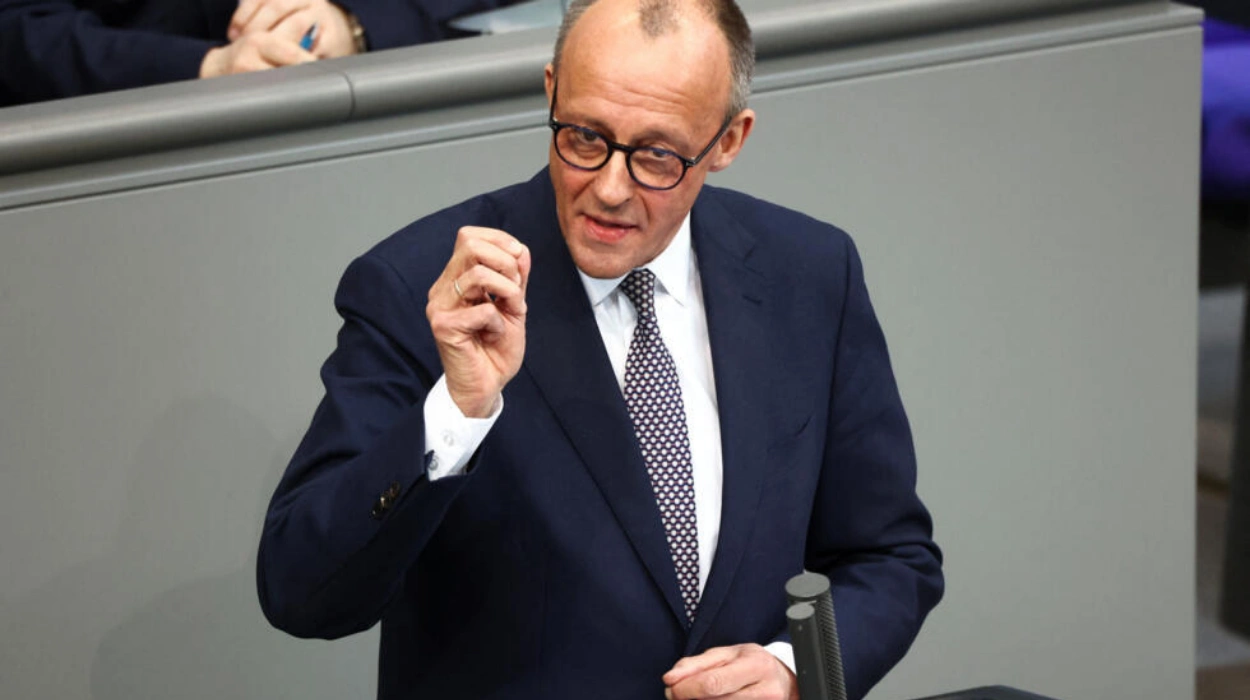
Credit: REUTERS – Liesa Johannssen
Chancellor Merz positioned his remarks within the context of
recent NATO summits and European defence initiatives. He argued that
self-respect emerges from Europe’s ability to defend shared values
independently when necessary.
“We have found the joy of
self-respect,”
Merz said, linking this sentiment to concrete actions
like increased defence spending across member states.
Reports from the conference indicate that Merz referenced
specific NATO commitments, including the 2% GDP defence spending target met by
more European nations. He urged further integration of European forces to
reduce reliance on external partners while maintaining alliance
interoperability. This stance aligns with positions voiced by other EU leaders
in recent months.
Merz’s call for a
“stronger NATO within Europe”
included proposals for enhanced joint procurement of military equipment and
standardised training programmes. Conference attendees noted his emphasis on
rapid response capabilities to address hybrid threats from eastern borders. The
chancellor’s words were met with applause from German delegates and nods from
allied representatives.
Transatlantic Cooperation Remains Central to Merz’s
Strategy
Despite advocating European strength, Merz stressed the
enduring importance of the US partnership.
“While still extending the
hand of cooperation to the United States,”
he remarked, underscoring
mutual interests in global stability. This dual approach aims to reassure
Washington of Europe’s reliability as an ally.
German government spokespersons confirmed that Merz’s speech
builds on bilateral talks held with US officials earlier in the month. The
chancellor referenced shared goals in countering aggression and upholding
international law, drawing parallels to ongoing multinational operations. Media
coverage highlighted how this messaging counters narratives of alliance
fracture.
In the address, Merz pointed to historical precedents of
transatlantic success, including joint responses to crises over the past
decade. He called for renewed dialogue on burden-sharing within NATO, ensuring
European initiatives complement rather than compete with American efforts. This
balanced rhetoric positions Germany as a bridge-builder in alliance politics.
Context of Germany’s Leadership Under Merz
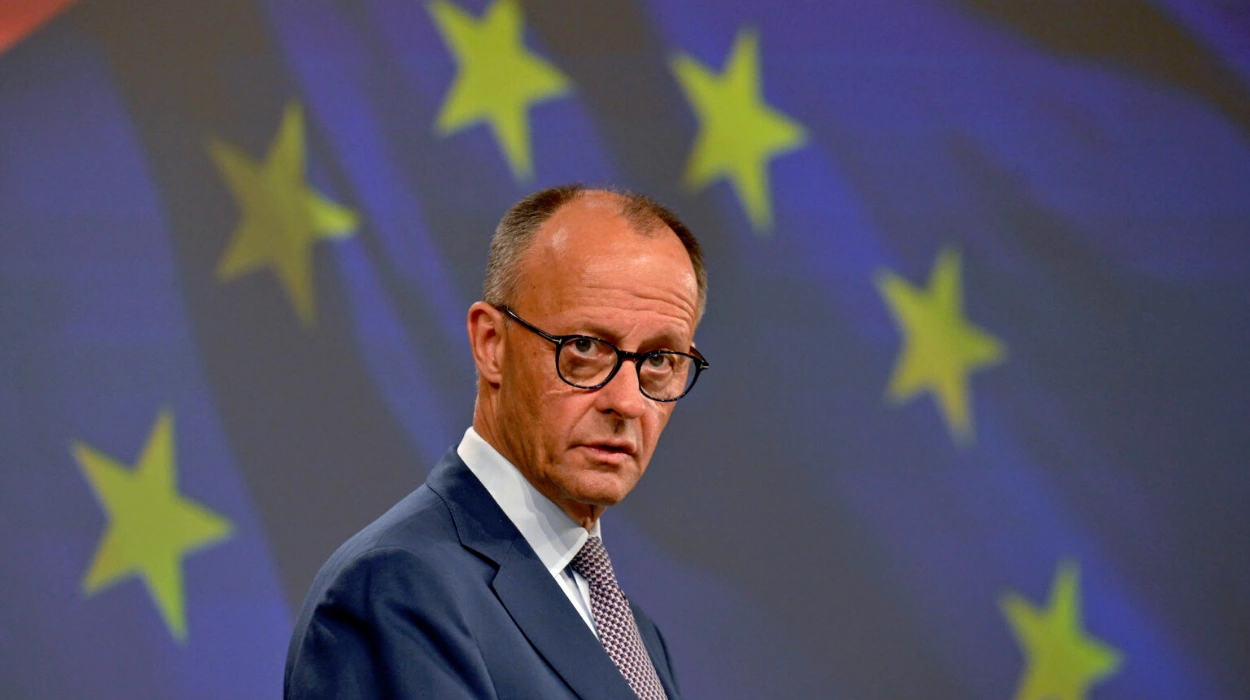 Credit: Photo by Nicolas TUCAT / AFP
Friedrich Merz assumed the chancellorship following
elections that shifted Germany’s political landscape towards centre-right
policies. His Christian Democratic Union-led coalition has prioritised security
and economic resilience since taking office. The Thursday speech marks a
continuation of Merz’s public diplomacy focused on European unity.
Conference organisers described the event as a platform for
frank discussions on defence postures. Merz’s participation alongside
counterparts from France, Poland, and the UK amplified the message’s reach.
Reports indicate that the audience included NATO officials who welcomed the
proactive tone.
Merz reiterated Germany’s role as NATO’s second-largest
contributor, citing troop deployments and financial pledges. He linked
self-respect to tangible investments, such as modernising Bundeswehr
capabilities and hosting alliance headquarters. These details provide backdrop
to his broader narrative of confident European engagement.
Broader Implications for NATO and EU Defence Policies
The chancellor’s statements come amid heightened focus on
NATO’s eastern flank reinforcements. Merz advocated for permanent European
battlegroups to enhance deterrence without sole dependence on US forces. This
proposal echoes recommendations from recent alliance strategic reviews.
European media outlets reported Merz’s praise for progress
in EU defence fund allocations, which support joint projects like air defence
systems. He noted that self-respect manifests in Europe’s willingness to
enforce sanctions and maritime patrols upholding global norms. These examples
illustrate practical steps towards the vision he articulated.
Attendees at the conference observed that Merz’s speech
prompted side discussions on integrating UK capabilities post-Brexit. His
emphasis on a “rules-based world” referenced adherence to UN charters
and WTO frameworks, areas where Europe has led multilateral efforts. The
address concluded with a call for unity against revisionist powers.
Reactions from European and US Stakeholders
 Credit: Getty Images
Initial responses from fellow European leaders affirmed
alignment with Merz’s outlook. French President Emmanuel Macron’s office issued
a statement supporting stronger intra-European defence ties. Polish officials
echoed the need for NATO robustness, citing regional security concerns.
US embassy representatives in Berlin described the remarks
as constructive, noting ongoing consultations. A NATO spokesperson welcomed the
commitment to alliance strengthening, highlighting Merz’s role in upcoming
ministerial meetings. These reactions indicate broad acceptance of the
chancellor’s framework.
Domestic German press coverage focused on Merz’s ability to
blend assertiveness with partnership. Outlets like Frankfurter Allgemeine
Zeitung quoted delegates praising the speech’s clarity. International wires
such as Reuters and BBC relayed the key phrases verbatim, ensuring wide
dissemination.
Historical Backdrop to Merz’s Rules-Based Order Advocacy
Merz’s rhetoric draws
from Germany’s post-war commitment to multilateralism. He invoked the legacy of
Atlanticist policies that fortified Europe’s post-Cold War stability. Recent
disruptions, including energy crises and territorial disputes, have catalysed
this renewed emphasis on principles.
The chancellor referenced specific instances where Europe
upheld rules, such as coordinating aid corridors and cyber defence protocols.
These actions, he stated, restore continental confidence. Conference materials
distributed background briefings on NATO’s adaptation to new threats.
Merz’s address also touched on economic dimensions, linking
trade compliance to security. He highlighted EU measures safeguarding supply
chains, which bolster the rules-based economic order. This holistic view
integrates defence with broader foreign policy.
Event Details and Attendance Highlights
The security conference spanned two days, featuring panels
on deterrence and innovation. Merz keynoted the closing plenary, attended by
over 500 participants from 30 nations. Security was tight, with protocols
reflecting the event’s prominence.
Organisers from German think tanks curated sessions drawing
on official NATO documents. Merz arrived via official motorcade, delivering
remarks from a podium emblazoned with alliance logos. The speech lasted 25
minutes, followed by a moderated question-and-answer segment.
Media access included live pools, with footage aired across
European networks. Transcripts in English and German were released promptly,
facilitating global reporting. The venue, a historic Berlin convention centre,
hosted similar gatherings in prior years.