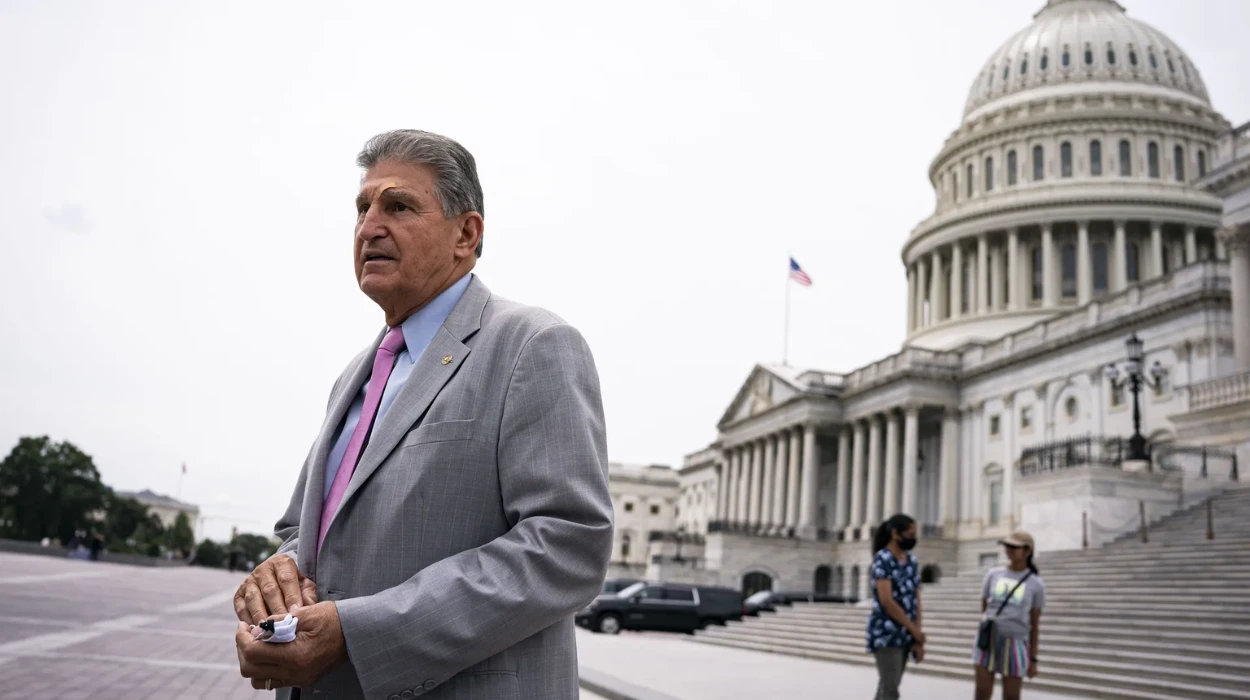

Joe Manchin, the centrist Democrat hailing from West
Virginia, embodies the complex interplay of regional interests and national
priorities in American politics. Representing a state synonymous with coal
mining and blue collar resilience, he has long navigated the tensions
between progressive ideals and pragmatic conservatism. His career offers a lens
into how moderates shape legislation amid polarization, influencing debates on
energy, infrastructure, and economic equity. This article explores his journey,
key contributions, and enduring legacy in bridging divides.
Early Life and West Virginia Roots
Born into a family of modest means in West Virginia’s coal
country, Joe Manchin grew up immersed in the rhythms of mining communities. His
father owned a furniture store and trap shop, while his mother managed a movie
theater hallmarks of small town entrepreneurship that instilled a work ethic
rooted in self reliance. Attending West Virginia University, Manchin played
football and studied business, forging connections in a state where energy
extraction defines livelihoods.
West Virginia’s economy, heavily reliant on fossil fuels,
reflects broader global patterns. According to the World Bank, resource
dependent regions often face volatility, with commodity price swings affecting
millions. Manchin’s early exposure to these cycles shaped his worldview,
emphasizing job preservation over ideological purity. He entered public service
as a state delegate in the 1980s, rising through the ranks with a focus on
local issues like flood recovery and education funding.
His tenure as West Virginia’s secretary of state from 2001
highlighted administrative competence, including efforts to modernize
elections. Tragedy struck in 2004 when his father was killed in a mine
explosion, underscoring the perils of the industry. Elected governor in 2004
amid a tight race, Manchin prioritized economic diversification while
safeguarding mining jobs Fa balancing act that foreshadowed his national role.
Rise to the U.S. Senate
Manchin’s ascent to the Senate came via a special election
in 2010, following the death of Robert Byrd, West Virginia’s long serving icon.
Campaigning as a pragmatic outsider, he won with bipartisan appeal, securing
over 53% of the vote in a Republican leaning state. As the centrist Democrat
from West Virginia, he quickly positioned himself as a swing voice, often
aligning with conservatives on fiscal matters while defending Democratic
priorities like healthcare access.
In the Senate, Manchin chairs the Energy and Natural
Resources Committee, leveraging his expertise on domestic production. He
advocates for “all of the above” energy strategies, blending
renewables with traditional sources. The OECD notes that energy transitions
must balance security and affordability, a principle central to his platform.
His votes have supported nuclear expansion and carbon capture technologies,
aiming to sustain jobs in coal heavy regions.
Manchin’s independence shines in high stakes negotiations.
He has brokered deals on infrastructure, securing billions for rural broadband
and roads vital for states like West Virginia, where the IMF highlights
infrastructure gaps as barriers to growth. His filibuster reform stance,
favoring targeted changes over abolition, preserves minority rights, reflecting
a commitment to institutional stability.
Key Policy Positions: Energy and Climate
No discussion of the West Virginia centrist Democrat is
complete without his energy stance. Coal employs thousands in his state, and
Manchin resists rapid phase outs that could devastate communities. Yet he
endorses clean energy incentives, backing tax credits for solar and wind when
paired with fossil fuel protections. This duality mirrors global challenges:
the World Economic Forum reports that just transitions require retraining 400
million workers worldwide as renewables rise.F
On climate, Manchin supports market based solutions over
mandates. He helped craft permitting reforms to expedite projects, arguing
delays inflate costs. His push for domestic natural gas as a bridge fuel aligns
with UNESCO’s emphasis on sustainable development that doesn’t exacerbate
poverty. Critics label this incrementalism, but supporters see it as realism
prioritizing affordability amid IMF warnings of energy poverty affecting
billions.
Manchin’s record includes vetoing extreme proposals, like
blanket drilling bans, while advancing bipartisan bills for methane reduction.
This approach has drawn praise from industry groups and environmental moderates
alike.
Healthcare and Social Safety Nets
Healthcare ranks among Manchin’s signature fights. He
championed the Affordable Care Act’s Medicaid expansion in West Virginia,
covering over 300,000 residents and reducing uninsured rates. The World Health
Organization underscores universal access as key to equity, a goal Manchin
pursues through targeted fixes rather than overhauls.
As a centrist, he critiques open ended entitlements,
insisting on work requirements for able-bodied adults. This echoes OECD
findings that well designed safety nets boost employment without
disincentivizing work. During pandemic relief debates, Manchin secured child
tax credits extended to families, blending compassion with fiscal
restraint child poverty drops significantly with such measures, per global
data.
On opioids, ravaging West Virginia, he pushes treatment
funding and border security. His state’s overdose rates, among the nation’s
highest, highlight a crisis demanding bipartisan action.
Economic Policy and Fiscal Conservatism
Manchin’s economic vision favors working families over
coastal elites. He opposes tax hikes on middle earners, arguing they stifle
growth in high-cost states. The IMF cautions that progressive taxation must
avoid undermining competitiveness, a line Manchin holds firmly.
Infrastructure stands out: he was pivotal in the 2021
bipartisan package, funneling funds to bridges and ports. West Virginia, with
aging infrastructure, benefits disproportionately. Globally, the World Bank
estimates poor roads cost economies 1-2% of GDP annually Manchin’s advocacy
addresses this head on.
On trade, he protects steelworkers, supporting tariffs
against dumping. His “Build American” ethos resonates in Rust Belt
echoes, prioritizing OECD recommended reshoring for supply chain resilience.
Bipartisanship and Political Influence
The hallmark of Joe Manchin’s career is bipartisanship.
Ranking high in cross aisle voting scores, he co sponsors bills with
Republicans on veterans’ affairs and gun safety. Post January 6, he backed
electoral reforms, reinforcing democratic norms.
As chair of the Senate Energy Committee, Manchin influences
global energy markets. His resistance to hasty green mandates has moderated
Democratic agendas, forcing compromises that pass muster. In a polarized era,
his West Virginia perspective grounded in coal’s decline and renewables’
promise offers a moderating force.
Manchin’s media savvy amplifies his voice. Frequent Sunday
shows and town halls humanize policy, fostering dialogue. He embodies the
centrist Democrat tradition of figures like Evan Bayh, prioritizing
constituents over party loyalty.
Challenges and Criticisms
Manchin’s independence invites scrutiny. Progressives decry
his fossil fuel ties, viewing them as climate obstruction. Environmental groups
track his donations from energy PACs, questioning motives. Yet defenders note
his evolution: from coal defender to clean tech proponent.
Electorally, West Virginia’s rightward shift tests him.
Trump won the state decisively, pressuring Democrats. Manchin’s 2024
independent run bid underscored viability, though he opted against it.
Balancing a red state with blue Senate demands deft navigation.
Nationally, his filibuster defense frustrates reformers, who
see it enabling gridlock. Manchin counters that abolishing it invites abuse, a
view shared by institutionalists.
Legacy in American Politics
Joe Manchin’s tenure illustrates moderates’ vital role. In a
divided Senate, his swing votes unlock progress from gun background checks to
semiconductor investments. His West Virginia lens ensures rural voices endure
in urban dominated debates.
As energy evolves, Manchin’s all of the above model may
prove prescient. Global bodies like the WEF advocate hybrid strategies to meet
Paris goals without economic fallout. His fiscal discipline tempers spending
sprees, aligning with IMF debt sustainability pleas.
Ultimately, the centrist Democrat from West Virginia reminds
us politics thrives on compromise. In an age of extremes, figures like Manchin
preserve the center, crafting policies that endure