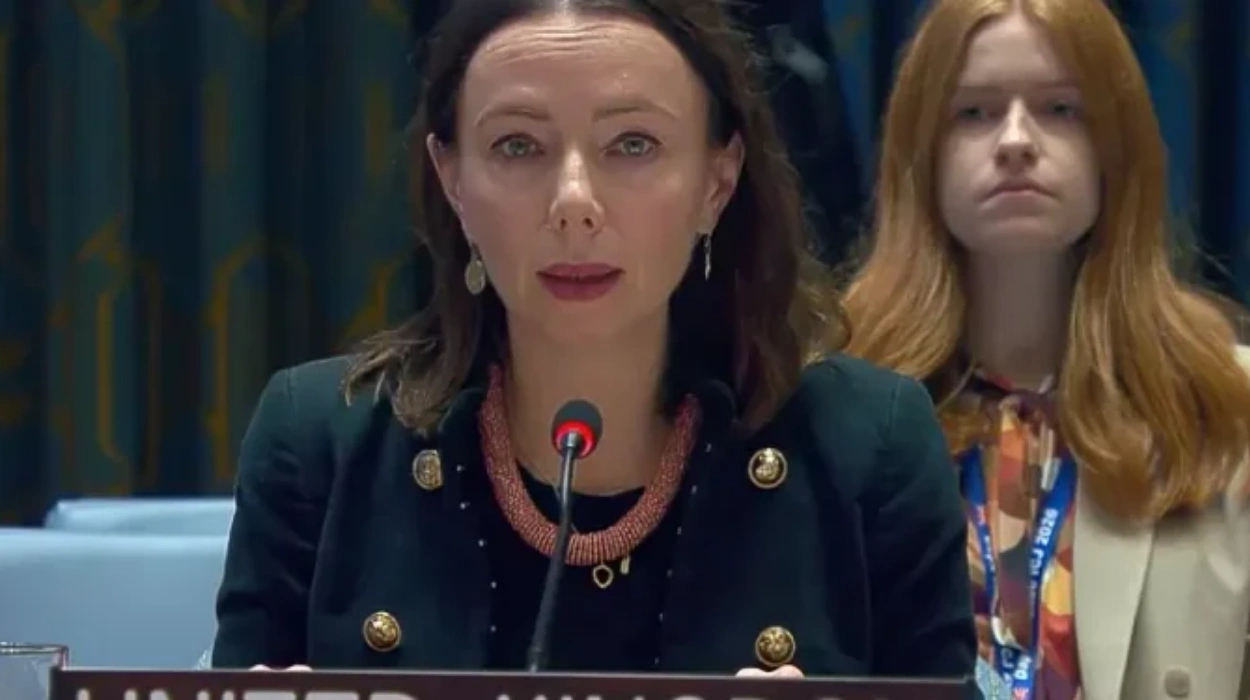

UK (Washington Insider) – The UK condemned coups in
Guinea-Bissau and Benin at the UN Security Council; Jennifer MacNaughtan
supported ECOWAS, urged constitutional rule, and warned that 12.1 million
people in the Sahel need aid by 2026.
As Tosin Oyediran reported on Punch, the United Kingdom has
condemned the recent military coup in Guinea-Bissau and the attempted coup in
Benin, saying both events threaten democratic rule in West Africa. The
criticism was made public in a statement released on Friday, Dec 19, 2025,
after a United Nations Security Council meeting on West Africa and the
Sahel.
Speaking at the meeting, UK Minister Counsellor Jennifer
MacNaughtan said Britain strongly opposes any takeover of power by force. She
said such actions weaken democratic institutions, undermine the rule of law,
and increase instability in a region already facing political and security
pressures.
“The UK strongly condemns the recent coup in
Guinea-Bissau and the attempted coup in Benin: UK statement at the UN Security
Council.”
What is driving
instability in West Africa?
In Guinea-Bissau, the coup followed disputed elections that
led to the removal of President Umaro Sissoco Embaló, raising fresh concerns
about the country’s fragile political system and repeated military вмеш
вмешments in civilian rule.
In Benin, a group of soldiers briefly announced a takeover,
but the move was quickly blocked by forces with support from regional partners,
including the Economic Community of West African States (ECOWAS). Although the
attempt failed, the UK said it showed a growing strain on democratic systems
across West Africa, including in countries once seen as stable.
“These actions undermine democratic governance
across the region. We urge a swift return to constitutional order in
Guinea-Bissau, the publication of official election results, and the immediate
release of political prisoners.”We commend the mediation efforts of ECOWAS
and the African Union, as well as their leadership.”
Jennifer MacNaughtan delivered the UK statement on December
18, 2025, during a United Nations Security Council meeting on West Africa and
the Sahel. She said regional cooperation remains vital to addressing security
threats across the region. MacNaughtan said close coordination is needed to
counter terrorism and cross-border violence.
MacNaughtan also highlighted the growing humanitarian crisis
in the central Sahel. She said the UK remains deeply concerned about conditions
in the region, where conflict and displacement continue to drive urgent
needs.
According to estimates cited in her remarks, about 12.1
million people are expected to require emergency assistance in 2026. She said
many communities face food shortages, limited healthcare, and reduced access to
basic services, increasing pressure on already vulnerable populations.
“Terrorist attacks, organised crime, and climate
change continue to destabilise communities and weaken national governance.
“Regional coordination is critical, and we welcome the work towards a
regional standby force and efforts to build on the ECOWAS Counter-Terrorism
Strategy. We commend too the increased engagement between ECOWAS and the AES.”
Concluding her remarks, MacNaughtan said the United Kingdom
will continue to
support efforts aimed at building peace and security in West Africa and the
Sahel. She said Britain remains committed to the work of the United Nations
Office for West Africa and the Sahel, or UNOWAS, as well as regional
organisations.
“As reflected in the Secretary-General’s report,
access challenges and bureaucratic impediments continue to undermine the timely
and efficient delivery of life-saving assistance. “We urge all efforts to
ensure rapid and unimpeded humanitarian access to those in need.”
In recent years, the nations located within West Africa and
the Sahel region are experiencing increasing levels of political and social
instability due to an increase in the number of coups and coup attempts
occurring in the region. Since the military coup in August 2020, Mali has
experienced two military coups (the most recent in May 2021), as well as the
military coups in July 2023 against the governments of Burkina Faso and Niger.
The nation of Guinea-Bissau has a history of gaining
independence from Portugal in September of 1974 with a long history of military
involvement in the political affairs of the country and a long history of coups
and civil unrest; in fact, there was an attempted coup in that country in
February 2022. The nation of Benin has remained relatively stable since it
regained its democratic government in the early 1990s; therefore, it has seldom
been threatened with a military coup.
Along with this increasing number of coups in West Africa
and the Sahel region has come an increase in insecurity in the central Sahel
region due to a spike in the number of attacks on civilians by armed groups,
subsequent mass population displacements caused by military operations, as well
as food shortages, which were highlighted by the United Nations in their 2024
and 2025 reports.