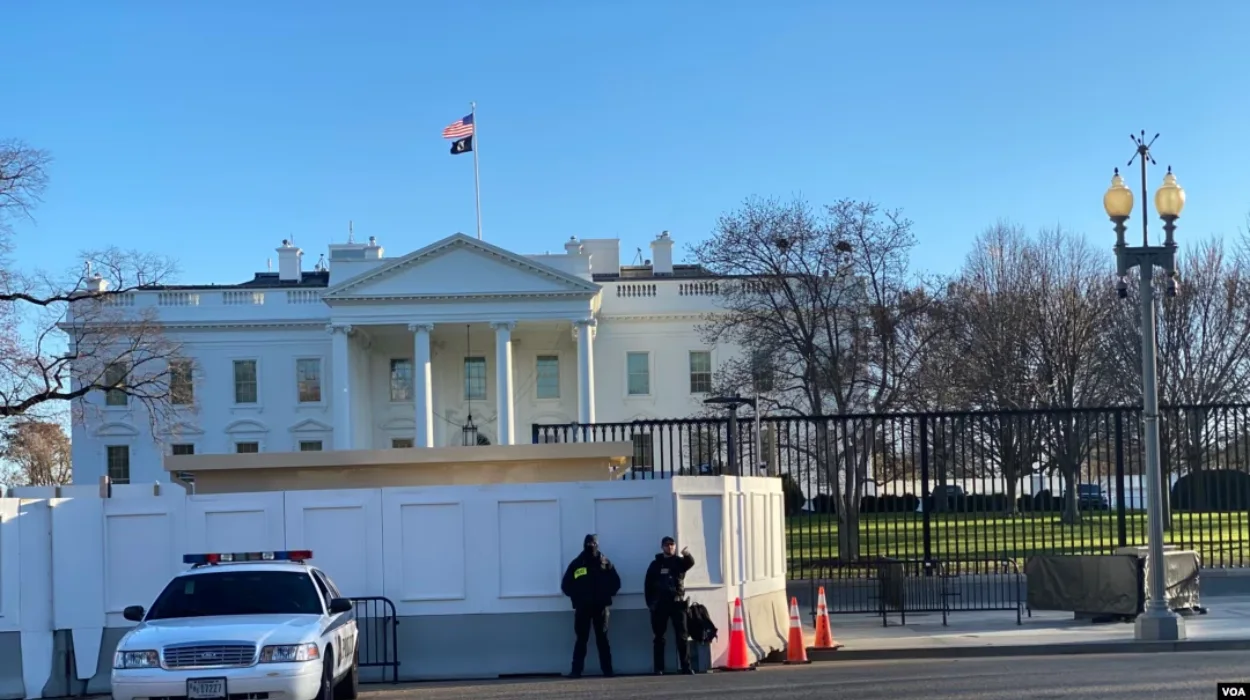

- Guard
shooting fuels pressure on White House. - Hardliners
demand stricter U.S. immigration limits. - Focus
on tightening entry criteria sharply.
The shooting, which was carried out by an Afghan man who had
been granted refuge, is seen by a number of politicians and Trump
administration officials as a chance for a vigorous attempt to impose further
screening requirements on prospective migrants and asylum seekers worldwide.
Proposals vary from deporting millions of individuals the
administration claims entered the country without proper screening under the
Biden administration to requiring in-person interviews for asylum applicants.
Additional recommendations include a range of extra investigations to identify
any ties to terrorist organizations.
An administration official said to “expect a full overhaul
of all adjudications,” adding:
“We are at a critical moment of vetting
foreign nationals, not just those from typical countries of concern.”
Like others, the official was allowed to remain anonymous in
order to freely discuss the U.S. government’s shifting preparations for
responding to the killing of two West Virginia National Guard troops, which
resulted in one soldier’s death and another’s critical condition.
“We need to screen and screen and screen some more
because really and truly this is a tragedy beyond belief,”
said
West Virginia Republican Sen. Jim Justice.
“If I were President Trump, I
would say, ‘If you think there’s a better way, then fix it.’”
Since the incident, the Trump administration has taken steps
to halt Afghan citizens’ applications for visas and refuge and said that it
will audit green cards granted to people from 19 different nations.
Additionally, Trump has promised to “permanently pause” immigration
from all “third world countries” and stated that the United States
must “reexamine” any Afghans who entered the country under Biden.
Kristi Noem, the secretary of homeland security, seems keen
to advance. On Monday, she wrote on X that she had suggested the president
extend travel restrictions “on every damn country that’s been flooding our
nation with killers, leeches, and entitlement junkies.”
“There were some plans already afoot to find ways to
revisit some of these cases. It was kind of tinkering around the edges,”
said one person close to the administration.
“But now, it’s going to be much
more systematic, and I suspect they’re going to have to devote more resources
to it.”
“I would call it an inflection point,”
the person
added.
Procedural obstacles are added by some of the proposals. In
an effort to identify any security risks, a government commission was
established following the terrorist events of September 11, 2001, and
immigration hawks on Capitol Hill are pushing for U.S. officials to reinstate
these requirements.
The resumption of in-person interviews for asylum applicants
and more thorough evaluations to ascertain whether an applicant has any
connections to terrorist organizations would be the main steps, according to
Sen. Josh Hawley (R-Mo.), who has advocated for legislation restoring those
stringent screening requirements.
“Does that take time? Of course it does, which is the
point.
I mean, the point is to zero in and make a judgment about each person
you’re letting in because who knows how long they’ll be here,”
Hawley said
in an interview.
Rahmanullah Lakanwal, the alleged shooter, was an Afghan
national who was granted humanitarian release in 2021. In 2025, the Trump
administration granted his asylum request.
Lakanwal, a member of a paramilitary group in Afghanistan
supported by the CIA, may have been motivated to carry out the shooting for
unknown reasons, however reports have indicated mental health issues. Soon
after his detention, Noem claimed that Lakanwal had become
“radicalized” in the US.
The breadth of some of the proposals being considered would
be unparalleled. According to two senior intelligence officials, members of the
National Counterterrorism Center are actively pressuring the White House to
implement a strict plan that would deport about 2 million immigrants from
mostly Muslim nations who entered the country under Biden and require them to
reapply from overseas if they wish to return.
The first intelligence official refused to provide an
explanation for how the NCTC arrived at the 2 million figure.
The head of the NCTC, Joe Kent, has previously publicly
proposed the notion, arguing on social media that recent immigrants should be
vetted retroactively and that those who were “illegally admitted”
under Biden should be deported.
NCTC “fully supports the mission to undo the damage
caused by the previous administration’s lax vetting standards and get these
monsters out of our country,” according to Olivia Coleman, a spokesperson
for the Office of the Director of National Intelligence.
NCTC will “continue our efforts to identify individuals
with terrorist ties, rigorously vet them, and equip DHS with the intelligence
needed to remove these criminals from our country,” Coleman added.
Longtime supporters of limiting legal paths for immigrants
to enter the United States are intensifying calls for further action. They
contend that the Biden administration screened visa applicants insufficiently.
“Many of them were, at best, very, very superficially
vetted. Many probably weren’t vetted at all, and we’ve been paying the price
for it.
Not just with this attack on the National Guard, but in terms of
criminal gangs moving in,”
said Ira Mehlman of the Federation for American
Immigration Reform think tank in Washington, which favors restrictions on legal
pathways to emigrate to the United States.
Based on data from federal databases, migrants and asylum
applicants have often been checked during several administrations, including
Biden’s, for connections to terrorist organizations and potential risks to U.S.
national security. Afghan citizens who were employed by the United States in
Afghanistan and thus eligible to apply for a special visa were usually first
screened by military personnel at bases abroad. Furthermore, not every Afghan
immigrant received a humanitarian parole offer.
However, a 2022 Department of Homeland Security Office of
Inspector General investigation faulted the Biden administration’s procedure,
stating that federal authorities “did not always have critical data”
to adequately screen Afghan migrants.
All eight Republicans on the Senate Intelligence panel
encouraged acting national security advisor Marco Rubio to remove Afghan
“evacuees” who are considered a security risk and to fully execute
the OIG report’s recommendations in a letter sent on Friday.
Not every ally of the White House is advocating for swift
and significant action. Before advocating for any changes, several Republicans
are expressing caution because they want to understand more about the gunman.
“Secretary Noem says that he was radicalized after he
came to the United States, and that may be, but we just don’t have the facts
yet,”
said Sen. John Kennedy (R-La.), who in the past has supported visa
programs for Afghans who helped the U.S. in its two-decade war.
“We don’t
have the facts about the extent to which, if any, President Biden’s
administration vetted the folks. We were told they would all be vetted, but we
don’t know if that was the case or not.”
In order to repair the harm caused by the Biden
administration’s “reckless approach” to refugee settlement, U.S.
Citizenship and Immigration Services is “working to implement the most
rigorous screening and vetting protocols in agency history,” according to
Department of Homeland Security spokesperson Tricia McLaughlin. The Trump
administration is “reviewing all immigration benefits granted by the Biden
administration to aliens from countries of concern,” McLaughlin continued.
Trump is “fulfilling his promise every day and any
policy changes needed to more effectively achieve” his objective to
“put America first and carry out the largest mass deportation operation in
history,” according to White House spokesperson Abigail Jackson.
According to Kathleen Bush-Joseph, an immigration attorney
who works as an analyst at the nonpartisan Migration Policy Institute, a large
portion of the administration’s recent actions have built on its gradual steps
to tighten scrutiny of applications and reduce pathways to legally enter the
United States.
Bush-Joseph stated that one of the modifications might be
the reinstatement of asylum regulations from the first Trump administration.
During Trump’s first term, the courts halted several of those regulations, but
the administration has previously demonstrated a readiness to revise other
immigration policies that were hindered by litigation at the time, such
modifications to the diversity visa lottery.
The administration should pursue a three-pronged strategy,
according to Ken Cuccinelli, who was acting deputy DHS secretary during the
first Trump administration and wrote the chapter of a 2024 Heritage Foundation
report that previewed many of the immigration policy changes Trump has since
made. This strategy would involve blocking new applicants from countries where
vetting is impossible, re-vetting all applicants from those countries in the
U.S., and deporting anyone who cannot be properly screened.
It’s unclear how far the efforts to re-screen foreign
nationals will go. According to the first senior intelligence official,
counterterrorism officials have briefed senior White House officials about the
plan to deport the two million migrants.
In reaction to the shooting, the second senior intelligence
official warned that “a lot of things are floating around right now,”
but he acknowledged that this theory was one of them.
Meanwhile, political pressure is building, with even MPs who
have previously supported programs that allow Afghans and others who supported
U.S. troops admission into the country admitting that additional screening is
necessary.
“I am all about allowing those that assisted our military
passage into the United States. I am very firm on that,”
said Sen. Joni
Ernst (R-Iowa).
“But they must be properly vetted and we know that this was
not done.”
What policy changes immigration hardliners are demanding
now?
Expanding expedited disposal and shutting down shelter
access at the US- Mexico border, targeting all undocumented settlers anyhow of
previous procedures. Offers to end automatic citizenship for children born in
the US tonon-citizen parents aiming to reduce” anchor babies.”
Halting programs that allowed significant figures of
settlers from Cuba, Haiti, Nicaragua, Venezuela, and expatriates from
Afghanistan to enter on philanthropic grounds. Removing geographic restrictions
on immigration raids, allowing law enforcement to target undocumented emigrants
extensively, indeed within” sensitive” areas like seminaries and
hospitals.
Increased biometric and security checks on Special Emigrant
Visa holders and shelter campaigners, with calls for doldrums on similar
programs following incidents like the National Guard firing.