
- Treasury
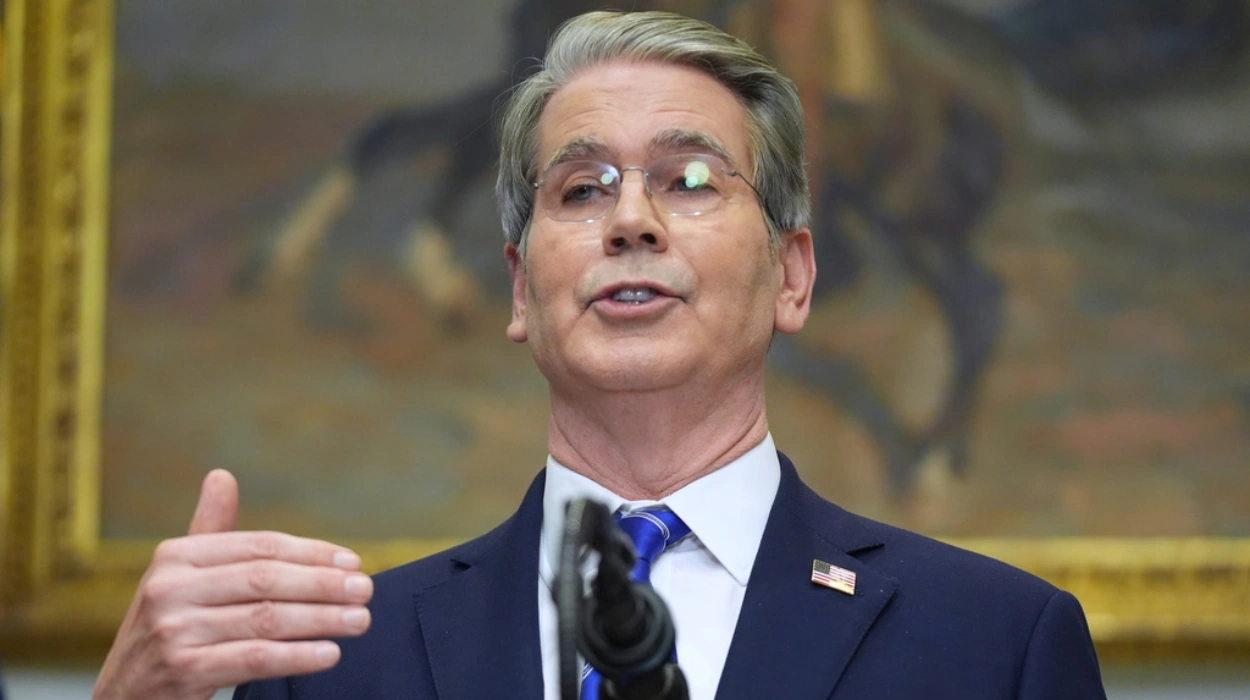
Secretary Scott Bessent pushes residency rule. - Requires
three years living in Fed district. - Before
regional bank presidents take office.
Bessent stated at the New York Times’ DealBook Summit on
Wednesday that “there is a disconnect with the framing of the Federal
Reserve” and that, “unless someone has lived in their district for
three years, we’re going to veto them”.
Bessent has increased his criticism of the Fed’s 12 regional
bank presidents in recent weeks, after several of them stated in a series of
speeches that they oppose decreasing the Fed’s key interest rate at the next
meeting in December. US President Donald Trump has strongly criticized the Fed
for not cutting short-term interest rates more swiftly. When the Fed lowers
interest rates, it can eventually lower borrowing costs for mortgages, auto
loans, and credit cards.
The possibility of the administration “vetoing”
regional bank presidents represents another attempt by the administration to
gain more authority over the Fed, which has generally been independent of
day-to-day politics.
The Federal Reserve aims to keep prices under control and
employment up by setting a short-term interest rate that influences borrowing
rates throughout the economy.
The Federal Reserve has a convoluted
organization that comprises a seven-member board of governors centered in
Washington and 12 regional banks that serve specific districts across the
United States. The method, outlined in the Federal Reserve Act, was intended to
ensure that US central bank policy reflected input from officials around the
country, not simply political appointees in Washington.
There are no residence requirements for regional bank
presidents under the Federal Reserve Act. Regional Fed banks have consistently
stated that when it comes to picking new CEOs, merit and aptitude are the
driving factors.
Every interest-rate decision is voted on by seven governors
and the president of the New York Fed, with four of the remaining eleven
presidents voting on a rotating basis. However, all presidents attend meetings
of the Federal Reserve’s interest rate-setting committee.
Bessent, who is in the process of picking a candidate to
nominate to Trump as the successor to Fed Chair Jerome Powell, said the fact
that several of the current regional bank presidents were appointed from
outside their districts is at odds with the spirit of the US central bank’s
system.
In an interview with CNBC last month, Bessent stated that
the regional Fed banks were established to bring their districts’ perspectives
to the Fed’s interest rate decisions and “break the New York hold” on
interest rate setting.
However, he stated last month that “three, maybe
four” of the Fed presidents were appointed from outside their districts,
with several residing in New York.
“I’m not sure that’s the way the Federal Reserve was
designed,”
Bessent said in the interview.
What legal authority allows the White House to veto regional
Fed picks?
The legal authority allowing the White House to blackball
indigenous Federal Reserve bank chairpersons derives from the Federal Reserve
Act, which gives the Board of Governors in Washington, D.C., the power to
authorize or disapprove indigenous bank chairman movables.
While the indigenous chairpersons are nominated by their
separate bank boards, their movables bear evidence by the Board of Governors.
Thus, the White House, by impacting or controlling the Board of Governors,
effectively can blackball or block movables .
Treasury Secretary Scott Bessent emphasized that the Fed’s
Board of Governors should” proscription” appointees for indigenous
bank chairman positions who haven’t abided in the quarter for at least three
times before taking office, motioning a way for the administration to ply
further influence on the indigenous Fed banks, which traditionally have some
independence.