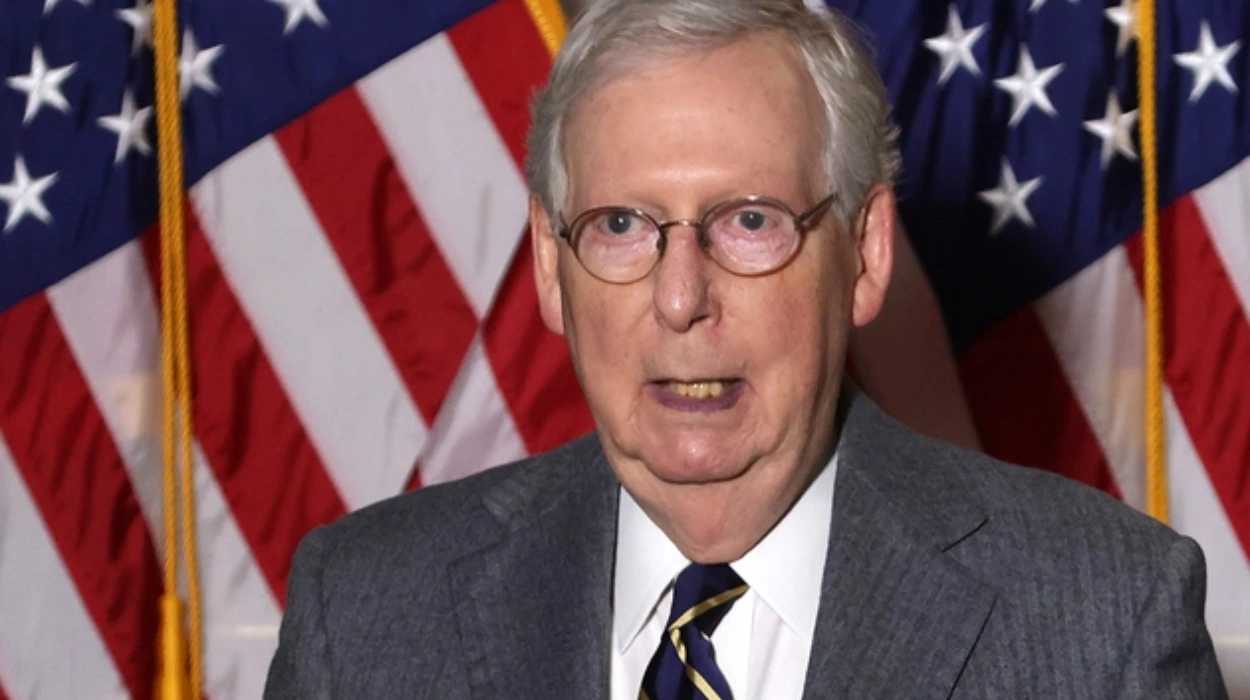

Mitch McConnell Kentucky’s longtime Senate GOP leader – has
been a defining figure in American politics for nearly four decades. As the
senior senator from Kentucky and the longest-serving Senate Republican leader
in U.S. history, McConnell’s career is marked by his strategic political
maneuvering, legislative leadership, and unwavering influence within both his
party and the Senate.
Early Life and Education: Foundations of a
Political Career
Born Addison Mitchell McConnell III in 1942 in Sheffield, Alabama,
Mitch McConnell’s early years were shaped by resilience and perseverance. At
the age of two, he contracted polio, which partially paralyzed his left leg, a
challenge that he overcame through intensive treatment. His family later moved
to Louisville, Kentucky, where he attended duPont Manual High School and became
student council president, indicating early leadership skills.
McConnell went on to earn a Bachelor of Arts in political science
from the University of Louisville, graduating with honors, followed by a Juris
Doctor degree from the University of Kentucky College of Law. His internship
with Senator John Sherman Cooper and participation in civil rights rallies,
including the historic March on Washington for Jobs and Freedom, exposed him to national political currents and helped ignite his
interest in public service.
Early Career and Ascension to the Senate
After briefly serving in the U.S. Army Reserve in 1967, McConnell
began his political career as a legislative assistant to Senator Marlow Cook.
He returned to Kentucky and gained experience working as an attorney, teaching
political science, and holding local political office. In 1977, McConnell was
elected Jefferson County Judge/Executive, the highest political office in the
county.
In 1984, McConnell won a seat in the U.S. Senate, defeating the
incumbent. Since taking office in 1985, he has been reelected multiple times,
becoming the longest-serving senator in Kentucky’s history. His tenure reflects
a trajectory from moderate Republican roots toward a more staunchly conservative
and partisan leadership style.
Senate Leadership and Political Influence
McConnell has held numerous leadership roles, most notably as Senate Majority Leader from 2015 to 2021 and Senate Minority Leader
before and after that period. His leadership tenure is the longest for a Senate
Republican, reflecting his deep mastery of Senate rules, negotiation tactics,
and party discipline.
He is widely recognized as one of the most skilled political
strategists in Washington. His approach is often characterized by calculated
obstructionism and an emphasis on maintaining Republican unity, especially
during Democratic presidencies. McConnell spearheaded opposition to many
Democratic initiatives, frequently using procedural tools such as the
filibuster to block legislation and judicial nominees.
Legislative Achievements and Political Tactics
Despite his reputation as an obstructionist, McConnell has
overseen significant legislative achievements when Republicans controlled the
Senate. Key accomplishments under his leadership include the passage of
landmark tax reform legislation, regulatory rollbacks, criminal justice reform
with the First Step Act, and confirmation of a record number of federal judges,
including three Supreme Court justices.
He notably changed Senate norms by invoking the “nuclear option”
to eliminate the 60-vote threshold for ending filibusters on Supreme Court
nominations, facilitating confirmations during the Trump administration.
At the same time, McConnell’s tenure shows a pattern of
prioritizing political gain over bipartisan cooperation, particularly evident
in his handling of Supreme Court nominations and resistance to popular health
care reforms.
Relationship with Presidential Administrations
McConnell’s leadership was defined by his relationship with
successive presidents. During Barack Obama’s administration, McConnell adopted
a strict opposition strategy, urging Republicans to block major initiatives to
weaken the Democratic agenda. His stance emphasized party loyalty and electoral
advantage.
Under President Donald Trump, McConnell was aligned with many
domestic and foreign policies, facilitating landmark conservative reforms.
However, he publicly criticized Trump’s efforts to overturn the 2020 election
and held the president morally responsible for the January 6 Capitol attack,
reflecting a complex dynamic.
Impact on U.S. Senate and American Governance
Mitch McConnell fundamentally reshaped the U.S. Senate’s operational
landscape. His strategic use of Senate rules, including filibusters, procedural
delays, and nomination blocks, has changed how legislation and confirmations
are managed. He has been both lauded for his tactical brilliance and criticized
for contributing to partisan gridlock and diminished democratic norms.
His influence extends beyond legislation to shaping the
judiciary’s composition, thereby affecting American law and society for
decades.
Legacy and Retirement
After decades of service, McConnell announced in 2024 that he
would step down as Senate Republican Conference Leader and would not seek
reelection in 2026. His retirement marks the end of an era in Senate
leadership.
Time magazine recognized McConnell among the 100 most influential
people multiple times, attesting to his far-reaching impact. As Kentucky’s
longest-serving senator and the longest-serving Senate Republican leader in
history, he leaves behind a complex legacy of strategic dominance, partisan
battles, and institutional transformation.
Mitch McConnell’s career exemplifies the exercise of political
power through strategy, discipline,
and persistence. As Kentucky’s senior senator and longtime GOP leader, he has
shaped Senate politics in profound ways, influencing legislation, judicial
appointments, and party dynamics. His tenure reflects the challenges of
governance in a polarized environment and demonstrates how political acumen can
define an era in American politics.