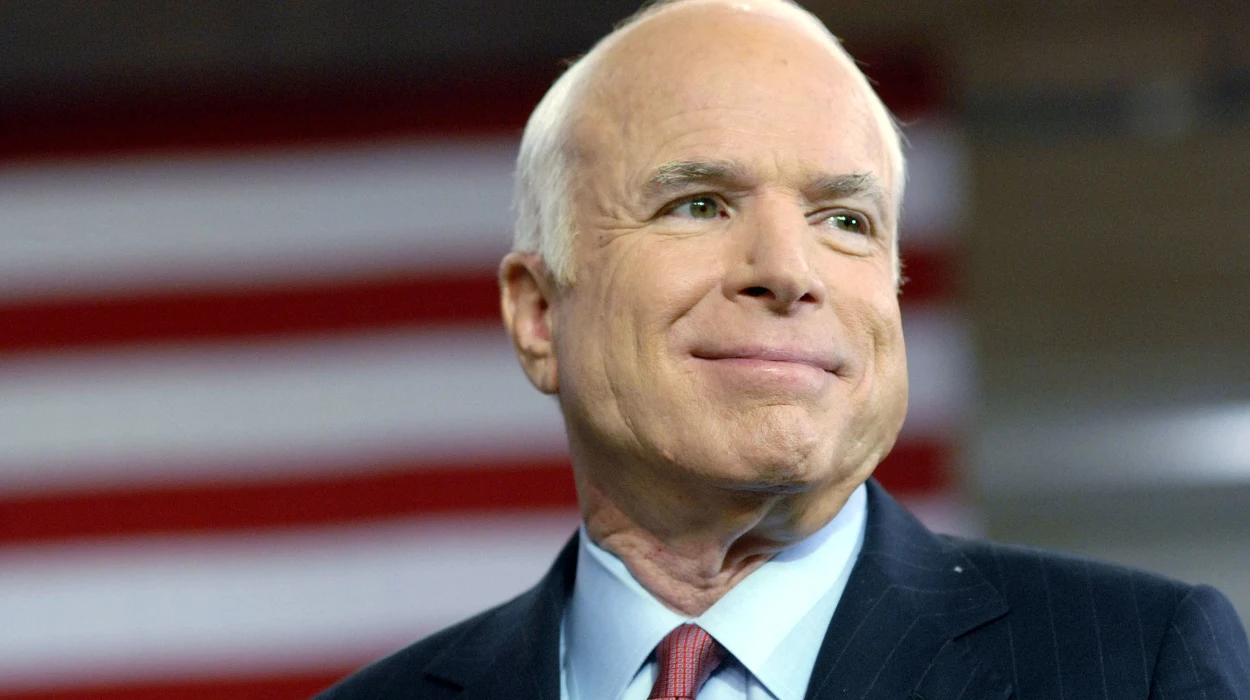

John McCain
Arizona’s 2008 Republican presidential nominee (deceased 2018) remains an
iconic figure in American political and military history. His life story
encompasses distinguished naval service, harrowing experiences as a prisoner of
war, and a long tenure as a public servant marked by both principled leadership
and political maverickism.
Early Life and
Military Heritage
John Sidney McCain III was born on August 29, 1936, at Coco Solo Naval Air Station in the
Panama Canal Zone to a family with a storied naval tradition. Both his father
and grandfather were admirals in the United States Navy, and McCain was raised
amid frequent moves associated with his father’s naval career. The family
eventually settled in Northern Virginia, where John McCain attended Episcopal
High School before entering the United States Naval Academy, graduating in 1958.
Despite early academic challenges, McCain showed leadership and
resilience, earning the nickname “John Wayne” for his demeanor. Following
graduation, he trained as a naval aviator, preparing for active military duty.
Military Service
and Vietnam War Experience
McCain served as a naval pilot flying ground-attack aircraft from
aircraft carriers during the Vietnam War. In 1967, during Operation Rolling
Thunder, he narrowly survived the devastating USS Forrestal fire that killed
over 130 sailors. Later that year, McCain’s aircraft was shot down over Hanoi,
leading to his capture by North Vietnamese forces.
Severely injured in the crash and subsequent capture, McCain
endured brutal torture and imprisonment at the infamous Hỏa Lò Prison, also known as the “Hanoi
Hilton.” Despite offers of early release intended for propaganda purposes, he
refused to accept special treatment, honoring the military Code of Conduct by
waiting to be released only after those captured before him. McCain endured
five and a half years of imprisonment marked by physical abuse and solitary
confinement—before his release in 1973.
Transition to
Political Life
After retiring from the Navy as a captain in 1981, McCain entered
politics in Arizona. He won election to the U.S. House of Representatives in
1982 and subsequently to the Senate in 1986, succeeding the legendary Barry
Goldwater.
Known for his independent streak, McCain often broke with his
party on issues such as campaign finance reform, immigration, and LGBT rights.
His reputation as a “maverick” grew, reflecting his willingness to cross party
lines and challenge political norms. He was pivotal in bipartisan efforts such
as the Gang of 14, which helped prevent judicial nomination gridlocks.
The 2008
Presidential Campaign
John McCain secured the Republican nomination for President in
2008 after a fiercely contested primary, confronting candidates like Mitt
Romney and Mike Huckabee. His campaign emphasized national security credentials
and experience, partly shaped by his military service and Senate leadership.
Despite his efforts, McCain lost the general election to Democrat
Barack Obama amid an economic crisis and evolving political landscape.
Nevertheless, his campaign reinforced his stature as a leading voice within the
Republican Party and American conservatism.
Senate
Leadership and Policy Influence
During his Senate tenure, McCain chaired the Senate Commerce
Committee and later the Armed Services Committee, focusing on defense,
veterans’ affairs, and government oversight. He championed torture prevention
through the McCain-Feingold campaign finance reform effort and was outspoken on
foreign policy matters, particularly related to Iraq and Afghanistan.
Though conservative on many fiscal and security issues, McCain’s
occasional dissent such as his decisive vote against repeal of the Affordable
Care Act showcased his complex policy approach prioritizing pragmatism over
strict partisanship.
Health
Challenges and Legacy
In 2017, McCain was diagnosed with glioblastoma, an aggressive
brain cancer, which eventually led to his death in 2018. In his final months, he continued to engage in key
Senate votes, exemplifying dedication to public service.
Posthumously awarded the Presidential Medal of Freedom, McCain’s
legacy encompasses valor, bipartisanship, and a commitment to American ideals.
His life story remains a powerful narrative of sacrifice, leadership, and
tenacity.
John McCain’s impact transcends his military valor and presidential bid; his long Senate career reflected a commitment to principles
often at odds with prevailing political trends. As a prisoner of war,
legislator, and sometimes dissenting voice, McCain embodied a complex but
enduring vision of American leadership.
His legacy continues to inspire discussions about patriotism,
political courage, and the responsibilities of public service in a democratic
society.