
Columbus Day honors the landing of Christopher Columbus in
the Americas on October 12 in the year 1492, which fundamentally changed the
course of history in the global context by bringing together Europe and the New
World. It has been celebrated as a federal holiday since 1937, and the main
purpose was to acknowledge the spirit of exploration and to reflect on the
contributions of Italians in the history of the United States.
Formally designated as a holiday in 1968, Columbus Day was
observed on the second Monday of October, as designated by the Uniform Monday
Holiday Act of 1971 in an effort for uniformity and to allow workers an
extended weekend. For many decades, Columbus Day was viewed as a celebration of
national pride in discovery and expansion and Columbus had become a
representative character in a narrative in which Americans could take pride and
see progress and opportunity.
Columbus’s legacy and the roots of controversy
Initially framed as exploration and Italian-American
celebrations, Columbus’s legacy and rightful stature has begun to experience
more scrutiny historically-based investigation of the consequences of his
voyages. His voyages to the Americas ushered in European colonization,
including subjugation, exploitation, and violence directed toward indigenous
peoples.
Critics bring forward the devastating effects of the
treatment of Native Americans, the forced labor, cultural devastation, and the
massive death toll due to diseases foreigners brought with them to the Western
Hemisphere. The shock
of these realities has led to critical reframing and a movement to rethink the
story of Columbus Day as a day of recognition, rather than a day of
celebration, of a legacy replete with suffering and violation.
This reframing falls neatly in line with the critical social
movements that work against historical injustices, colonization, and race in
contemporary society and have prompted many to question the honor of Columbus,
given his legacy and all of the harm that stemmed from that legacy.
Emergence and growth of Indigenous Peoples Day
Indigenous Peoples Day became a counter-observance in honor
of Native American cultures, histories, and contributions, and in recognition
of the impacts of colonization. The proposal came during a United Nations
conference in 1977, and South Dakota formally adopted the observance in 1989.
The celebration occurs on the same day, the second Monday in
October, as Columbus Day in the interest of directly providing a
counter-narrative and the perspective of Indigenous peoples. Celebrating
Indigenous Peoples Day honors the persistence and endurance of Native peoples,
and it expresses respect for Native sovereignty and the values of social
justice and cultural preservation. The observance itself reflects a larger
project of acknowledging omissions in history and raising awareness of the experiences
and rights of Native peoples within American society.
States and cities recognizing Indigenous Peoples Day
In the last few decades, Indigenous Peoples Day has become
increasingly common in the United States. By 2025, fourteen states including
Alaska, New Mexico, and Maine officially set aside the day to value indigenous
peoples and the contributions of native peoples and cultures, either replacing
or alongside Columbus Day. Adopted in over 130 cities, including Seattle,
Boston, and Washington D.C., Indigenous Peoples Day is honored with official
proclamations, cultural events, and public education.
This expansion also aligns with changing values in society
that emphasize inclusivity and equity while attempting to make sense of our
historical realities. When local communities adopt Indigenous Peoples Day, they
also often include it in school curricula or cultural programming to provide
the opportunity for the next generation to learn about indigenous people and
some contemporary issues that indigenous people continue to face, share their
heritage.
Dual observance and public reaction in 2025
Again on October 13, 2025, Columbus Day and Indigenous
Peoples Day coincide, demonstrating the complication of historical memory in
America. Federal offices, federal courts, federally chartered banks and various
other institutions will shutter for Columbus Day, as required by federal
law.
Simultaneously, Indigenous Peoples Day will be observed with
cultural festivals, educational workshops, and advocacy efforts to raise
awareness about Native American histories and contemporary concerns. The
observance is varied, as some states only recognize Indigenous Peoples Day
while others recognize both.
Public opinion is divided; while some Americans celebrate
Columbus Day because of ethnic pride and historical legacy, more and more
proponents of Indigenous Peoples Day mention the day because of its recognition
of historical injustices experienced by Native Americans and its recognition of
indigenous empowerment. These activities recognized simultaneously bring people
into cultural conversations and debates about historical memory that dovetail
larger social attempts to reconcile history and identity.
Cultural and educational initiatives surrounding the
holidays
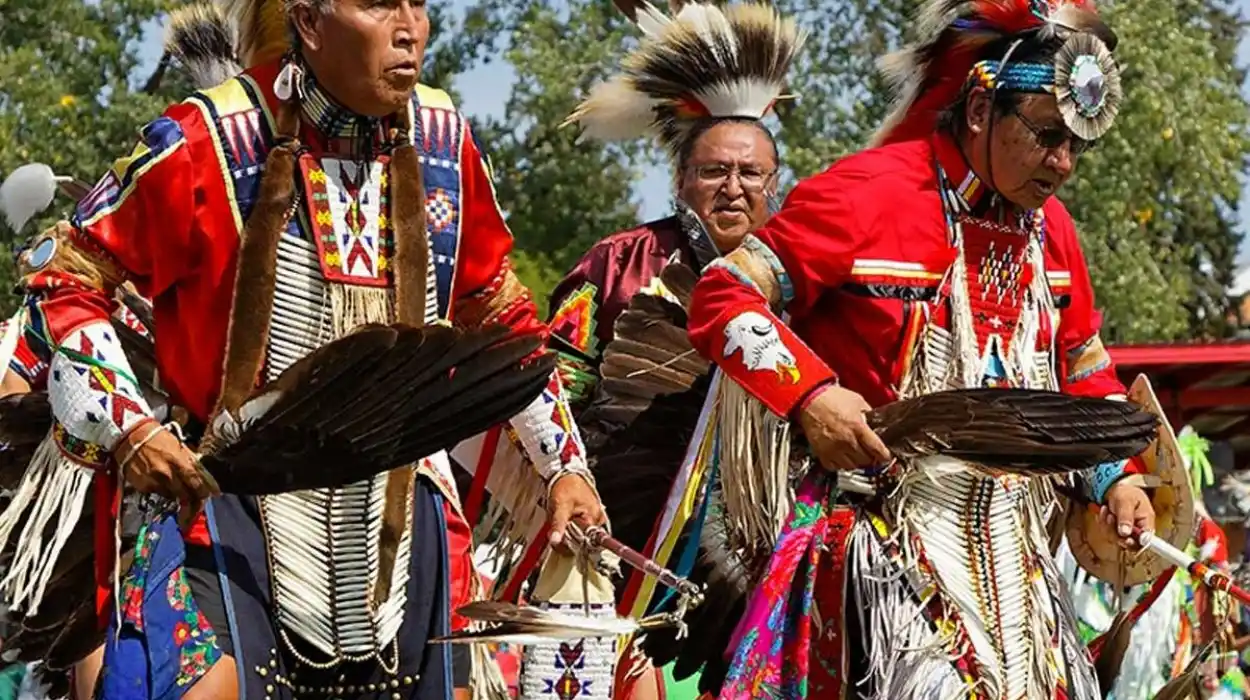
Columbus Day and Indigenous Peoples Day, both provide
opportunities for cultural representation and education. The events associated
with Indigenous Peoples Day typically include a representation of aspects of
Native American culture, such as dance, storytelling, powwows, art exhibitions,
and lectures that are closely tied to the cultural traditions and perspectives
of Native American peoples.
Concurrently, cultural organizations use this time to raise
awareness about issues faced by these indigenous communities relating to land
claims, tribal sovereignty, socioeconomic inequities, and other contemporary
issues. Educational programs are offered to impart knowledge regarding Pre
Columbian histories, colonial impacts, and contemporary contributions and
activism of indigenous communities.
Columbus Day’s activities tend to be celebrations of Italian
and American culture, and the events organized are typically marked by parades,
or Italian festivals or other community events associated with neighborhoods,
schools, or other organizations that highlight holiday- or region-based
participation or solidarity with Italian Americans. These events are an
additional layer of the public’s engagement with history and identity.
Legal status and governmental recognition
Columbus Day is one of eleven federal holidays in the U.S.
Office of Personnel Management. The holiday authorizes closure of federal
agencies, including courts and banks, on the observed day.
Unlike Columbus Day, Indigenous Peoples Day is not
officially recognized as a federal holiday. Still, it has garnered ground at
the state and local government level. The first substantive national
recognition of Indigenous Peoples Day came soon after President Biden’s
executive proclamation on Indigenous Peoples Day in 2021.
The continued legal and congressional action has been
deliberating on Indigenous Peoples Day as a federally recognized holiday. Some
states have passed legislation that either replaces Columbus Day with
Indigenous Peoples Day, recognizes both days, or continues to recognize only Columbus
Day.
Economic and societal effects of October celebrations
The observance of Columbus Day and Indigenous Peoples Day
has some direct economic impacts due to closures of governments and financial
institutions disrupting banking, retail, and direct services.
Some businesses take advantage of Columbus Day for
commemorative sales, while Indigenous Peoples Day often supports local
economies through cultural tourism, festivals, and events, especially in cities
that have significant Native American populations. Additionally, socially,
Indigenous Peoples Day has been an expansion of public conversation on
colonialism, reparations, and indigenous sovereignty, challenging people in
different communities to balance celebration with a responsibility for historic
accountability.
Columbus Day has been a way to provide Italian and American
communities a day of pride, connectivity to one another, and presence in public
spaces. Together, these two holidays represent the plurality of American
culture, and can provide moments of reflection, education, and intercultural
exchange.
The future of bicultural October observance
The simultaneous recognition of Columbus Day and Indigenous
Peoples Day in October signifies a growing awareness within the United States
regarding its divergent historical record, and both days are part of a larger
conversation surrounding identity, heritage, and justice. In recent years,
there has been increased momentum toward recognizing Indigenous Peoples Day,
while some long-standing organizations uphold Columbus Day reflecting the
realities of the past for historical and immigrant communities.
This duality of recognition is indicative of ongoing
national tensions and progress toward reconciliation and belonging, and in the
future, this reality will generate further dialogues, educational changes, and
policy initiatives that strive to balance respect for all cultural identities
and to promote societal healing and unity.
Broader implications for American history and identity
The debates around Columbus Day and Indigenous Peoples Day
manifest broader societal reflections on how we remember history, and what
groups it favors and obscures. They raise questions surrounding national
mythology, collective memory, and the power of public symbol project meaning
and identity. Efforts to disrupt these holidays represent a recognized context
for more substantive calls for truth telling, inclusivity, and recognition of
historically marginalized groups.
Discourses developed around the appropriateness of a
national holiday and its representation are moving public conceptions after
educational curricula, media representations, and local or state policy on how
young people will connect with text readings, education about America’s
colonial past, and indigeneity.
The changing of what has historically been a celebratory and
commemoratory single day exploration holiday to an open question of cultural
awareness and equity activism represents the local, national, and international
emphasis on equity in the ways we, as a country, account for history. The
anniversary of Columbus Day and Indigenous Peoples Day on October 13, 2025,
brings the emerging complexity of American cultural and historical identity
into focus.
Their coexistence suggests a nation continuing to negotiate
based upon national history, memory, and rightful recognition, with
educational, cultural, and social justice implications.