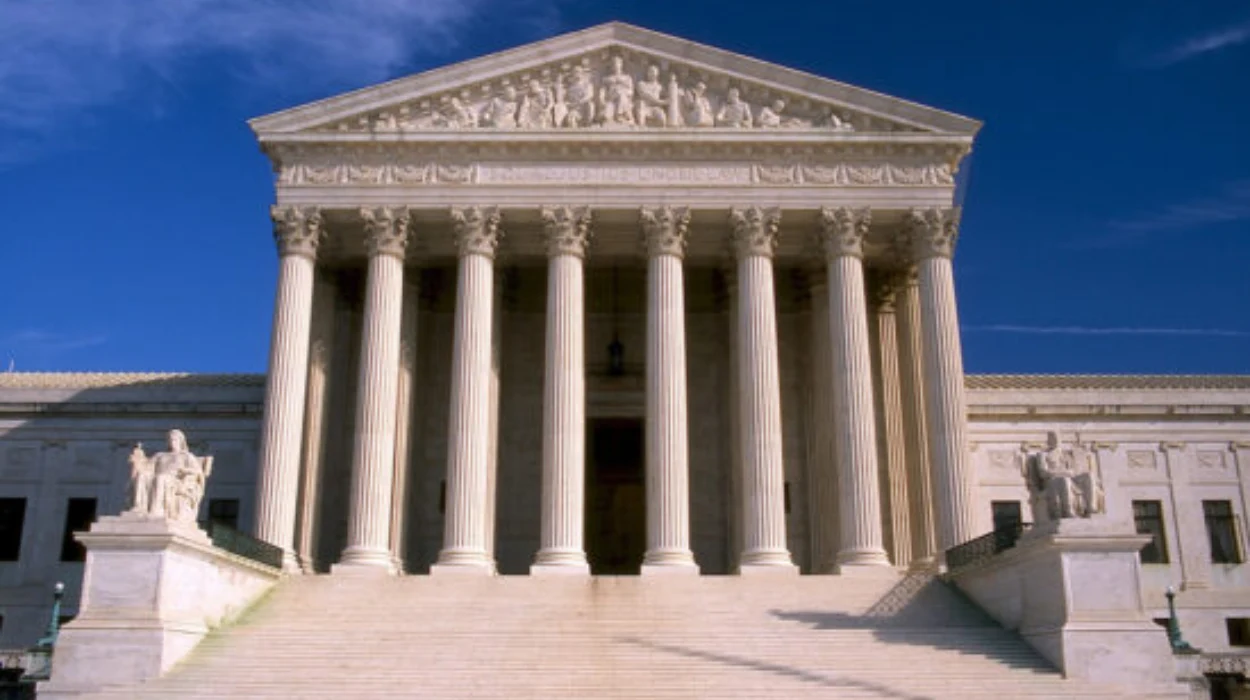

Since its formation in 1789, the United States Supreme Court
has been central in developing constitutional law and public policy. Major rulings
have established the meaning of civil rights, individual freedoms, executive
authority, and the equilibrium of governmental power.
This article highlights 10 distinct precedent-setting
Supreme Court cases that dramatically altered U.S. Law and society, detailing
the circumstances leading up to the case, the ruling of the case, and the
lasting impact of those rulings as they relate to current legal and public
policy discussions. Familiarity with these cases is essential to the background
of American democracy, and its evolution of constitutional protections.
Marbury v. Madison (1803): Establishing judicial review
Marbury v. Madison has become a widely recognized decision
marking the first case establishing the Supreme Court’s authority of judicial
review. This case arose in the early days of the Republic when William Marbury
sought a court order (writ of mandamus) directing Secretary of State James
Madison to deliver his commission as a justice of the peace.
Chief Justice John Marshall ruled that while Marbury was
entitled to the commission, the law that gave the Court the authority to grant
that order was unconstitutional.
Thus, Marbury established the Court’s ability to invalidate
acts of Congress that conflicted with the Constitution, placing the judiciary
on equal footing with Congress as a governmental branch and as a guardian of
constitutional supremacy. This precedent assures that any law contrary to the
Constitution can be struck down, greatly influencing the balance of power.
Dred Scott v. Sandford (1857): A controversial legacy
Dred Scott v. Sandford remains one of the most notorious
Supreme Court rulings. Dred Scott, an enslaved man who petitioned for his
freedom based on residency in free territories, was denied citizenship in a 7–2
ruling by the Court. The Court determined that African Americans, both free and
enslaved, were not citizens and, therefore, they had no legal right to sue. In
addition, the Court deemed the Missouri Compromise unconstitutional, ruling
that Congress had no power to take away slavery from a territory.
The ruling intensified sectional tensions, undercut plans to
limit the spread of slavery, and directly contributed to the Civil War. The
repudiation of the ruling by the 13th and 14th Amendments marked a momentous
shift towards abolition and citizenship rights, but the ruling will remain a salient
memory of the complicity of the judiciary in oppression.
In Brown v. Board of Education, the Supreme Court
unanimously reversed the rule of “separate but equal”, established in Plessy v.
Ferguson. The case was about public school racial segregation, and the Court
found that segregation violated the Equal Protection Clause of the 14th
Amendment. This landmark decision announced that separate educational
facilities are inherently unequal, and secured the advancement of the civil
rights movement.
It ordered desegregation and established legal authority
against discrimination based on race in public institutions. Brown continues to
be an important part of civil rights law and symbolizes a role of the judiciary
in fighting racial injustice and promoting equality.
Miranda v. Arizona (1966): Protecting self-incrimination
rights
In Miranda v. Arizona, important procedural safeguards were
established to protect suspects’ Fifth Amendment rights against
self-incrimination in a custodial context of interrogation. Ernesto Miranda had
confessed to serious offenses after not being informed of his right to counsel
or his right to remain silent.
The Court held that any statements obtained without
informing suspects of these two rights would be inadmissible in court, which
ultimately led to the development of the “Miranda warning” that law
enforcement officers now use and recite when questioning a suspect.
The case was considered a watershed moment for due process
of the law in regard to providing legal protections to suspects, ultimately
informing suspects of other constitutional protections, which ultimately
ensured fair procedures for policing and police interrogations.
Roe v. Wade (1973): The right to privacy and abortion
Roe v. Wade acknowledged the constitutional right of a woman
to decide to end a pregnancy as part of the right to privacy protected by the
Due Process Clause of the 14th Amendment. The Court ousted the restrictive
Texas abortion laws, deciding that states could not denounce the practice of abortion
before fetal viability.
Roe created a legal balancing framework between competing
state interests and individual liberties. The ruling had a lasting impact on
reproductive rights, and it generated years of political and legal discussions.
Roe was overturned nationally during 2022, but the footprint of Roe continues
today with various state bills and national discussions of privacy, bodily
autonomy, and reproductive health.
United States v. Nixon (1974): Limits of executive privilege
The case of United States v. Nixon came about when President
Richard Nixon was subpoenaed for the taped conversations surrounding the
Watergate investigation. Nixon claimed executive privilege in his refusal to
disclose the tapes. The Supreme Court ruled unanimously that the assertion of
executive privilege is not absolute when it conflicts with the obligations of
the judicial process.
This case established the rule of law, asserting that no
one, including the president, is above the law. It led to Nixon’s eventual resignation,
as well as a greater emphasis on judicial accountability over executive
privilege.
Allan Bakke challenged the affirmative action program at the
University of California’s medical school on the basis of reverse
discrimination, claiming that he was more qualified than the individuals who
were accepted. The Court indicated that strict racially based quotas were
unconstitutional, although race could remain a consideration among various
factors in admissions.
The decision marked a move towards a more complex viewpoint
on affirmative action, which influenced public and private affirmative action
policies across the country. It continues to provide ways to think about
race-based admissions and equal opportunity.
Mapp v. Ohio (1961): Exclusionary rule and evidence rights
Mapp v. Ohio extended the exclusionary rule to state courts
by barring evidence obtained illegally. It established that evidence obtained
through unconstitutional searches could not be used in state court
trials.
The ruling had a significant effect by enhancing protections
of the Fourth Amendment against unreasonable searches and seizures, enhancing
the procedural fairness of the criminal justice system. The decision has had
ramifications on law enforcement practices and the constitutional rights of
defendants.
Gideon v. Wainwright (1963): Right to counsel
Clarence Gideon was denied a lawyer in a felony trial
because Florida’s laws only provided counsel in capital cases. The Supreme
Court unanimously held that the Sixth Amendment guarantees the right to counsel
in all felony prosecutions, mandating that states provide attorneys for
defendants unable to afford one. This decision expanded defendants’ rights and
contributed to the development of public defender systems across the United
States, ensuring fairer trials.
Obergefell v. Hodges (2015): Marriage equality
In Obergefell v. Hodges, the Court legalized same-sex
marriage nationwide, holding that the Fourteenth Amendment requires states to
license and recognize marriages between two people of the same sex. The ruling
represented a landmark achievement for LGBTQ+ rights, affirming principles of
equality and dignity under law. Today, it continues to influence civil rights
protections and societal attitudes toward marriage and gender identity.
Legacy and contemporary influence of landmark decisions
These landmark Supreme Court cases continue to shape modern
American legal and political landscapes. Decisions such as Marbury v. Madison
founded judicial authority; Brown v. Board and Obergefell propelled civil
rights forward; Miranda and Gideon expanded individual liberties in due
process; Roe (and its recent reversal) remains central to debates on bodily
autonomy; while United States v. Nixon reinforced limits on executive
power.
The enduring influence of these rulings is evident in
ongoing legislative reforms, public discourse, and judicial interpretations.
Each case establishes legal principles that courtrooms, policymakers, and
citizens invoke when confronting contemporary issues from racial justice and
reproductive rights to executive accountability and free speech.
The historical milestones
The United States Supreme Court’s landmark cases are more
than historical milestones; they are living sources of constitutional doctrine
continually impacting governance, civil rights, and societal values. Through
judicial review, the Court shapes the balance between individual rights,
governmental powers, and democratic principles.
Understanding these landmark cases provides critical insight
into the foundations of American law, the evolution of constitutional
protections, and the ongoing debates that surround them. Continuing study and
reflection on these rulings remain vital as new challenges arise in an ever-evolving
democracy.