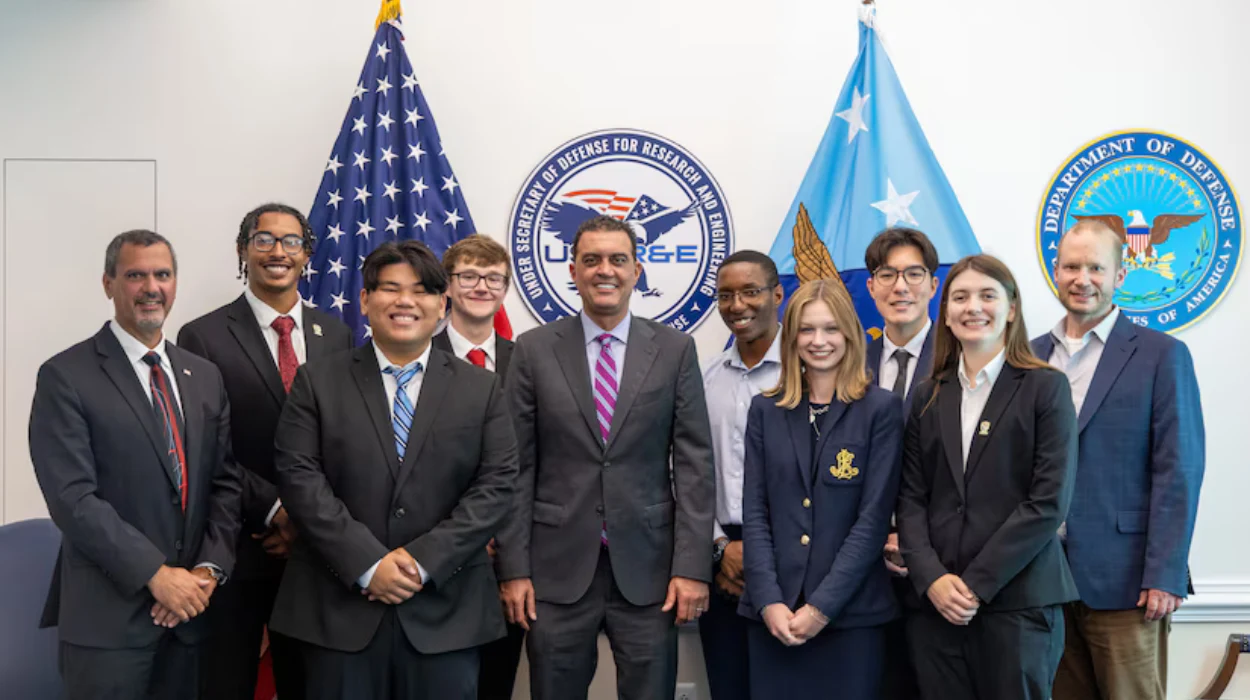

In a significant acknowledgement of the next generation’s
role in safeguarding the nation, senior leaders from the U.S. Department of
Defense (DoD) convened at the Pentagon on August 4, 2025, to honor
top-performing student interns from the Virtual Institutes for Cyber and
Electromagnetic Spectrum Research and Employ Maven internship program, known as
VICEROY. These students have made impactful contributions to ongoing cyber and
national security missions, underscoring the strategic importance of
cultivating skilled talent within the defense cyber workforce.
Acknowledging Rising Cyber Talent
The event was hosted by the Office of the Under Secretary of
Defense for Research and Engineering and brought together leading figures
including Emil Michael, the Undersecretary of Defense for Research and
Engineering; Mark Gorak, Director of the Cyber Academic Engagement Office;
Kevin Rudd, Principal Director for Integrated Sensing and Cyber; and Chester
Maciag, VICEROY National Director. The gathering marked a milestone in
recognizing emerging professionals whose work is helping bridge the gap between
innovation and operational defense needs.
Emil Michael emphasized
the value of fresh ideas and adaptability in defense technology,
stating,
“Their fresh perspectives on navigating a digital world and
ability to quickly adopt and implement ever-evolving technology provide us an
advantage in our mission to modernize our forces. The Department of Defense
values bold thinkers. We need people who aren’t afraid to take risks, who move
quickly and who adapt to complexity.”
The event was not just a ceremony but a clear signal about
the future-ready workforce the Department of Defense seeks. The VICEROY
internship program aligns closely with national priorities to rebuild military
capabilities, restore warrior ethos, and reestablish deterrence in an
increasingly contested cyber and electromagnetic environment.
VICEROY Internship Program: From Classroom to Cybersecurity
Frontlines
The VICEROY program is merit-based and designed to embed top
students from academic institutions across the country into real-world defense
research and operational sites. This year’s seven honored interns were selected
from hundreds participating in the program for distinguished performance in
diverse roles supporting the DoD’s cybersecurity mission.
These interns worked at notable host sites including the
U.S. Indo-Pacific Command, Naval Information Warfare Center Pacific, and the
Air Force Research Laboratory. Their contributions ranged from operational
support to cutting-edge research in areas such as quantum-resilient
cryptography, drone security, electromagnetic warfare, and artificial
intelligence applications for cyber defense.
Chester Maciag highlighted the critical nature of their
contributions,
“The department faces over 20,000 unfilled cyber roles today
— many in critical mission areas. VICEROY interns aren’t waiting to make a
difference. They’re applying their knowledge now, supporting warfighters and
driving solutions where the threat is most acute.”
This reflects the interns’ role not only as learners but as
active contributors in one of the nation’s most important defense domains.
Strengthening the Cyber Workforce Ecosystem
The United States’ national security increasingly depends on
expertise in the digital and electromagnetic spectrum realms, and programs like
VICEROY represent a vital pipeline for building that expertise. Mark Gorak
emphasized how the interns stand out for their experience and readiness,
saying,
“Every day you spent in this program has built your
competitive advantage. You now carry experience, clearances and a mission-first
mindset that sets you apart.”
Beyond just technical skills, the program imbues
participants with an operational understanding that is crucial for integrating
new technologies into defense systems effectively and swiftly. This real-world
preparedness ensures that the interns are not only future leaders but can make
immediate operational impacts.
The collaboration within the defense ecosystem also extends
to partnerships with innovation hubs such as the Defense Innovation Unit (DIU)
and academic institutions that specialize in cutting-edge cyber education. Doug
Beck, Director of DIU, stressed the critical role of such partnerships
stating,
“Harnessing the American spirit and building the pipeline of
skilled, dual-fluency talent with authentic experience and expertise in both
the tech sector and national security is a critical differentiator for the
United States.”
DIU helps bolster the defense tech ecosystem, ensuring that
the US retains an edge in cyber capabilities.
Symbolism and Recognition
To honor their achievements and contributions, each intern
received a VICEROY challenge coin from Emil Michael. This coin symbolizes the
department’s gratitude and the intern’s official entry into the national
security cyber workforce.
Michael remarked during the ceremony,
“I am proud to recognize our future cyber leaders who have
chosen to dedicate their talents to defending our nation in the digital domain
— a domain that grows more critical and more contested every single day.”
This statement emphasized the importance of cyber defense in
contemporary security strategies and the recognition that the next generation’s
talents are indispensable.
Building a Resilient National Cyber Posture
The recognition of VICEROY interns aligns with broader
efforts by the Department of Defense to address workforce shortages in cyber
roles and enhance technological modernization. The program is seen as a model
for integrating young, highly skilled talent into the Department’s research and
development ecosystem with a focus on practical, mission-oriented experience.
Through embedding students in actual defense projects,
VICEROY ensures that these emerging professionals gain hands-on exposure to
current challenges and solutions in cyber and electromagnetic warfare
environments. This approach cultivates leaders who are technologically adept
and who deeply understand the strategic and operational contexts of national
security.
Maciag concluded by underscoring the program’s ongoing
importance,
“VICEROY will remain essential as the department continues
to rebuild the military by aligning emerging threats with technical capability.
We are forging the next generation of cyber and spectrum leaders — individuals
who understand global context, master advanced technologies and are ready to
deliver operational impact on Day 1.”
The Road Ahead for Cybersecurity Talent
With cyber threats evolving rapidly and geopolitical
tensions increasing in the digital domain, the significance of nurturing
skilled talent cannot be overstated. The Department of Defense’s
acknowledgement of young, emerging leaders through the VICEROY program is a
strong indicator of where cybersecurity workforce development is headed.
In addition to feeding talent into defense, the program
creates a pipeline of experts who may shape cybersecurity policy, innovation,
and operational practice across government and industry. Such a holistic
approach is critical for maintaining national security in an era where threats
increasingly exploit technological vulnerabilities.
As the US continues to safeguard its interests across
multiple fronts, the infusion of innovative young minds into its cyber defense
apparatus ensures a robust response to persistent and emerging challenges,
safeguarding the nation’s critical infrastructure and defense systems.