
Summary
- Japan
wants to ban fixed-wing training at Iwakuni. - Training
by the George Washington Carrier Strike Group caused controversy. - Training
occurred during a Japanese national holiday.
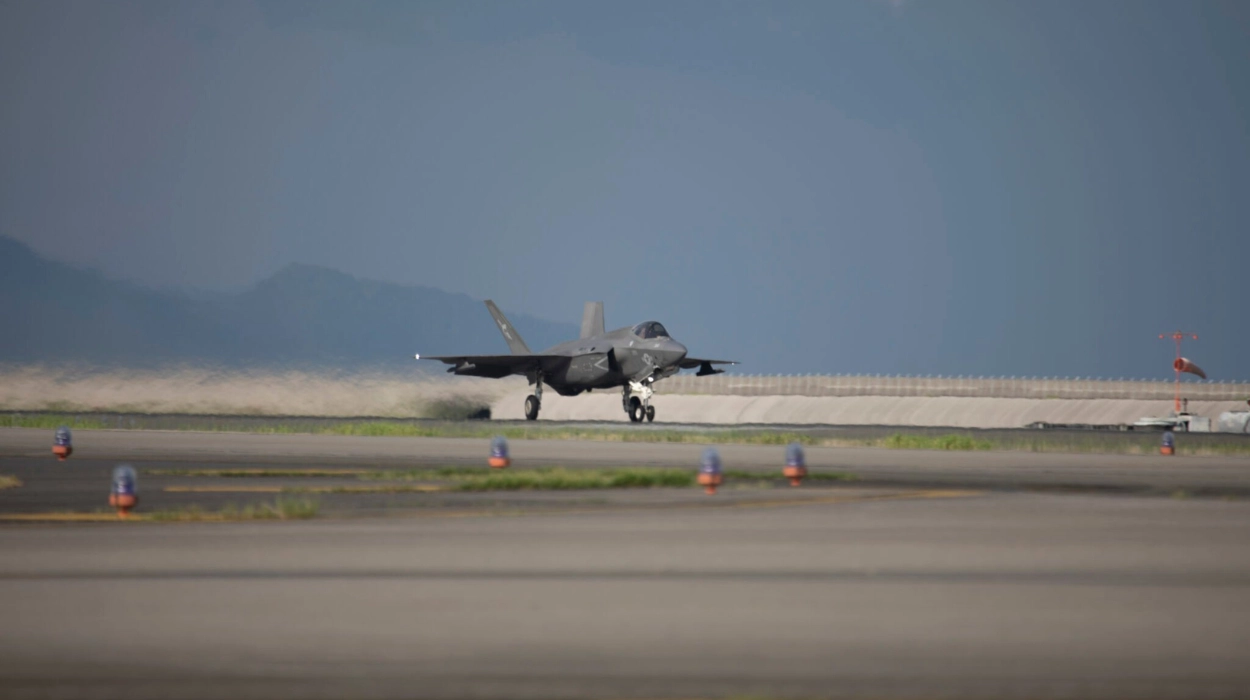
The forward-deployed aircraft carrier USS George Washington
(CVN-73), home of Carrier Air Wing (CVW) 5, recently held its field carrier
landing practice (FCLP) training at MCAS Iwakuni. The drills coincided with the
September 23 national holiday known as Autumnal Equinox Day.
A group of regional city mayors and prefectural government
representatives, led by the Japanese Defense Minister, the Ministry of Foreign
Affairs, and the US Embassy in Japan, voiced their displeasure with the noise
caused by the fighter jet training and demanded that it not be repeated in
Iwakuni.
“As a city that has repeatedly requested that the training
be canceled, not only before the training but also during its implementation,
we cannot help but feel deeply indignant,”
reads a statement from the
delegation.
“In this regard, we ask that you take seriously the enormous burden
that this FCLP has placed on the residents living near the base, and we urge
the U.S. side to ensure that an FCLP is never conducted at MCAS Iwakuni again,
regardless of the reason, and to take all measures to ensure this.”
Although there were demands to stop
the training because of noise concerns, the delegation stated that the noise
from normal flight operations at MCAS Iwakuni already “burdened
daily” the local population. Additionally, the delegation objected to the
training being held after the allotted hours.
According to a news release from the Iwakuni City Council,
CVW-5 FCLP training started on September 17 and ended on Thursday. The
training, which is done in advance of an assault, was originally scheduled to
take place on Iwo Jima, but it had to be moved because to volcanic activity on
the isolated island.
On September 16, Yoshihiko Fukuda, the mayor of Iwakuni
City, met with Gen. Nakatani, the Japanese defense minister, to ask that the
training at Iwakuni be canceled. According to the MOD, the training was
necessary to improve U.S. response and deterrent capabilities, therefore it
could not be avoided.
In a meeting with Japanese officials after the training, the
Japanese Defense Minister stated that while the U.S. retains the right to alter
training dates and times based on weather and aircraft availability, the MOD
will continue to emphasize to the U.S. the significance of adhering to
established schedules in order to reduce the impact on local residents.
“The MOD will encourage the U.S. to conduct FCLP training elsewhere,”
Nakatani added.
During the conference, the group inquired about the
situation on Iwo Jima. A MOD official responded that although there were fewer
tremors, smoke was still coming from the volcano. Facilities there are also
damaged, particularly the pipeline that supplies fuel to the Iwo Jima airbase.
After volcanic activity stops, the airbase will be repaired.
Due to the fact that many airbases are located close to
major cities, military aviation training has proved problematic for both the
Japanese and American troops in Japan. The Japanese and American armed forces
have begun moving flight training to farther-flung Japanese air sites. The
United States has occasionally moved aviation training to Guam.
What legal steps are required to ban fixed-wing training at
Iwakuni?
U.S. military installations in Japan, such as MCAS Iwakuni,
are subject to U.S.-Japan SOFA, which governs access, status, and activity of
U.S. forces. Changing the character of training would entail bilateral
discussions and possible agreement under SOFA protocols.
Both the U.S. and Japanese governments have agreements for
defense cooperation that permit U.S. training in Japan. Changing the nature of
training to prohibit certain participation would entail diplomatic negotiations
with a possible amendment or even new protocols to defense cooperation
agreements.
Local governments and the public may raise concerns and
request limitations, but their authority to impose bans through local
democratic processes is limited to national agreements. Ongoing local
opposition can influence the Japanese government to seek concessions and
changes to existing policies.