
The United States Senate‘s Candy Desk is a charming and enduring
tradition that adds a sweet touch to the serious business of legislation.
Established informally in the mid-1960s, the candy desk tradition has been
maintained by a series of Republican senators who occupy a specific desk near
one of the busiest entrances to the Senate chamber, providing an assortment of
candies for their colleagues.
Origins of the
Candy Desk Tradition
The candy desk tradition began in 1965 with Senator George Murphy
of California, a former Hollywood actor known for his work in musicals and a
noted sweet tooth. After joining the Senate, Murphy kept a supply of hard
candies and lozenges in his desk drawer possibly to soothe his throat and soon
started sharing them with his fellow senators. In 1968, he moved to a desk located
near the eastern entrance of the Senate chamber, where traffic was heavy.
Offering candy to colleagues passing by, Murphy’s desk quickly became known as
the “candy desk.”
Despite Murphy’s defeat in his 1970 re-election bid, subsequent
senators who occupied the same desk continued the practice. For some years, the
rule was informal, and the tradition was little known outside the Senate
chamber until the mid-1980s when Senator Slade Gorton (Washington) publicly
acknowledged the candy desk in a press announcement, citing his intent to
maintain the tradition started by Murphy and his successors.
Location and
Physical Setup
The candy desk is not a fixed piece of furniture but a designation
for a specific seating location within the Senate chamber. It is positioned on
the Republican side the last row on the right side near the chamber’s eastern
entrance, adjacent to elevators connecting to the Capitol subway system. This
strategic location ensures frequent foot traffic, allowing senators easy access
to the sweet treats while moving throughout the chamber.
Although traditionally held by Republican senators, the candy desk
is a bipartisan amenity enjoyed by members regardless of party. The Democrats
maintain a separate, lesser-known candy desk in their section of the chamber, a
tradition dating back to at least the 1980s, managed through contributions to a
communal candy fund.
The Senators
Behind the Candy Desk
Since its inception, more than 19 senators have been custodians of
the candy desk. Notable occupants include:
- George Murphy (California): The founder of the tradition, he initially stocked the desk with
hard candies and brought the custom to prominence.
- Paul Fannin (Arizona), Harrison Schmitt (New Mexico), and Roger
Jepsen (Iowa): Continued the practice
with mostly hard candies during their terms.
- Steve Symms (Idaho): Expanded
the range to include assorted sweets supplied by candy and chocolate
associations.
- Slade Gorton (Washington): Publicly
acknowledged the tradition and stocked candies from his home state.
- John McCain (Arizona): Known for
keeping the desk supplied during his Senate tenure.
- Rick Santorum (Pennsylvania): Famously stocked the desk with Pennsylvania-made candies such as
Hershey’s chocolates and Just Born products. Hershey chocolates were shipped in
quantities of around 100 pounds four times annually to replenish the desk
during his tenure.
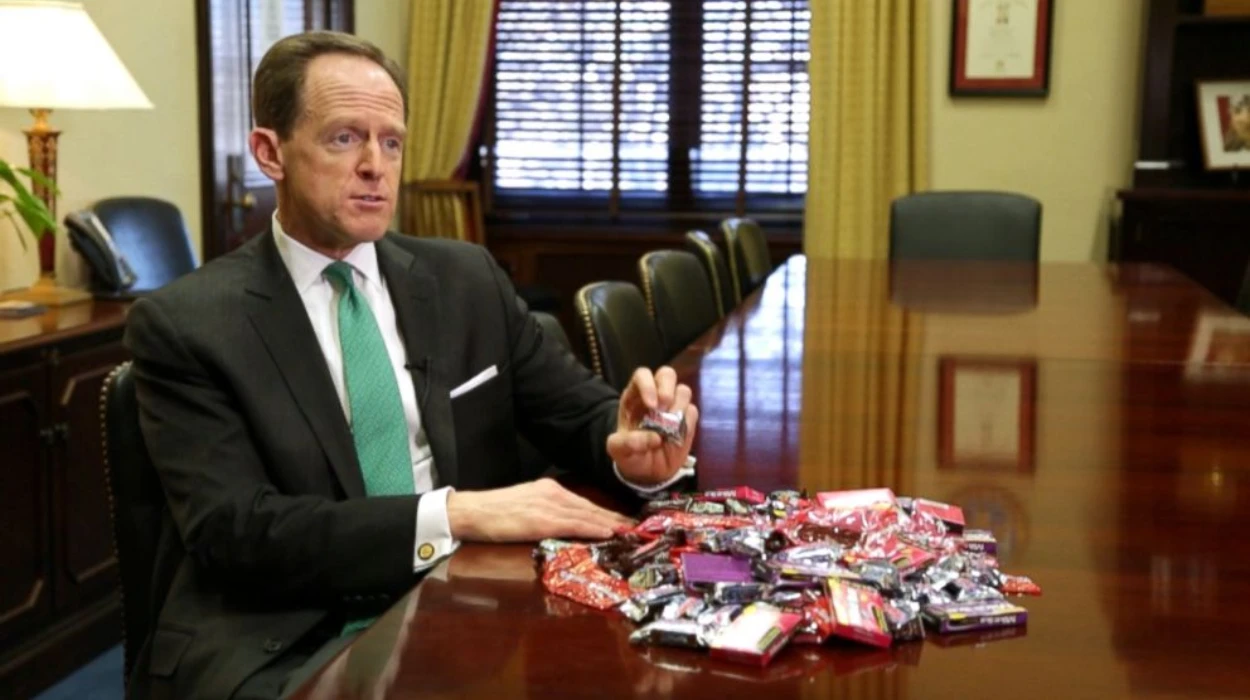
- Pat Toomey (Pennsylvania): Maintained
the tradition from 2015 to 2023, continuing the tradition of featuring
locally-produced sweets.
- Todd Young (Indiana): Took over
in 2023, stocking the candy desk with well-known Indiana candies like Kraft
caramels and Albanese gummies, sourced from local companies.
- Markwayne Mullin (Oklahoma): The current occupant as of 2025, continuing the tradition at the
historic desk location.
Candy and Senate
Ethics
Senators face unique challenges in stocking the candy desk due to
government ethics rules limiting gifts worth more than $100 annually from a
single source. Confectioners must structure donations to comply with these
rules, often relying on multiple local small businesses rather than a single
large candy manufacturer.
For example, Wyoming Senator Craig Thomas dealt with the
difficulty of soliciting candy donations due to Wyoming’s small confectionery
industry. Local chocolatiers and candy producers were invited to contribute
smaller quantities on a rotating basis to uphold the tradition without
violating ethics regulations.
Cultural and
Social Significance
The candy desk tradition exemplifies the lighter, more collegial
side of Senate life. It provides a communal space that fosters informal
interaction among senators, across party lines and during breaks in legislative
sessions. The snack-filled desk offers a brief pause from the intense political
work, nurturing camaraderie in the nation’s high-stakes political environment.
Beyond its social value, the candy desk also represents a way for
senators to showcase and promote products from their home states, blending
regional pride with personal generosity. This localized touch adds to the
humanizing charm of the tradition.
The candy desk occasionally enters the public spotlight, such as
during the 2020 first impeachment trial of President Donald Trump, when a
senator was seen eating a candy bar from the desk during proceedings, sparking
media and popular interest.
The Democratic
Candy Desk
Less widely known is the Democratic candy desk maintained since at
least the 1980s. Located on the front wall of the chamber and managed by the
Senate Democratic Conference Secretary, this desk relies on contributions from
participating senators to fund a candy fund. Hershey’s Kisses were notably
popular candies offered here in the 1980s, followed by small caramels and other
treats. The tradition continues quietly, offering Democrats their own source of
sweet relief during long Senate days.
The US Senate candy desk stands as a cherished tradition blending history, politics, and
simple human pleasures. What began as a modest personal indulgence by Senator
George Murphy grew into a symbolic seat of sweetness and bipartisan goodwill.
It reflects the lighter side of the Senate’s intense deliberations, fostering
connections and morale amid the work of governance.
As it continues with new senators upholding the custom, the candy
desk remains an iconic symbol of the Capitol’s rich heritage, representing not
just sugar but unity and camaraderie in America’s legislative heart.