
Summary
- Missouri
GOP advances Trump-backed redistricting plan amid backlash. - Plan
splits Kansas City’s Democratic district for GOP advantage. - Seeks
to flip Emanuel Cleaver’s seat, creating a 7-1 GOP majority. - Critics
call it a power grab undermining Missouri democracy.
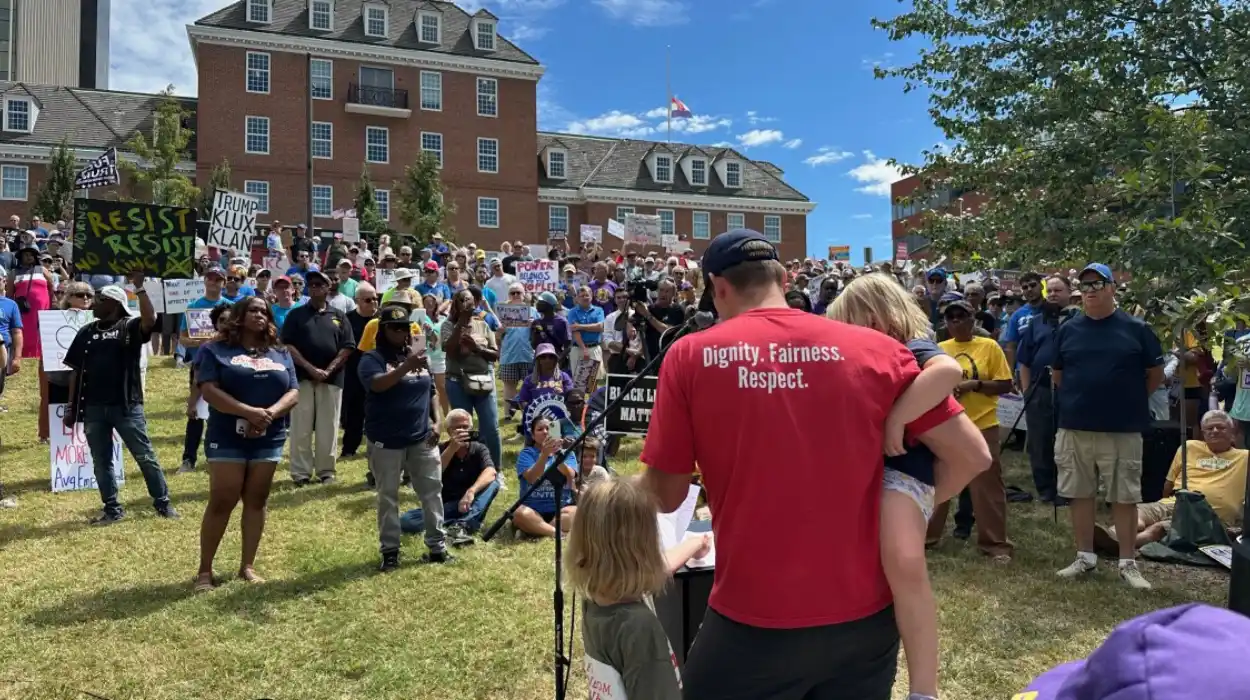
The first public hearing on a proposal to divide a
congressional district in Kansas City so that Republicans may run for seven of
Missouri’s eight U.S. House seats drew dozens of attendees. Six of those seats
are already held by Republicans.
“Kansas City does not want to be divided. We deserve
representation and a voice,”
said Kristen Ellis Johnson, an attorney from
Kansas City who came to the Capitol with her husband and daughter.
“You are
dividing the urban-dwelling, liberal-leaning population to purposely change
those votes.”
In a developing national struggle between Republicans and
Democrats for control over the distribution of U.S. House districts, Missouri
is the third state to join the fray.
Texas redrew its U.S. House districts last month to offer
Republicans a chance to capture five more seats at Trump’s insistence. To give
Democrats a chance to win five additional U.S. House seats, California
responded with a redesigned map of its own. In November, voters must still
approve the California plan.
Because Democrats only need to win three seats nationwide in
the 2026 elections to seize control of the House, the stakes are very high.
Additionally, as was the case during Trump’s first term in office, the
president’s party typically loses congressional seats in midterm elections.
Republican Governor Mike Kehoe’s proposed
amendment to Missouri’s congressional map would extend it eastward from Kansas
City to include rural areas with a Republican leaning, so targeting a seat held
by Democratic Representative Emanuel Cleaver.
On Thursday, a few rural people expressed their opposition
to being placed in the same district as Kansas City.
“If they do that, people in Kansas City will not get
their needs met in Congress. It totally dilutes their vote,”
Glenda
Bainbridge, a resident from rural Odessa, told The Associated Press as she
waited her turn to testify against the bill.
The proposed design is an improvement over the current
congressional districts, dividing fewer counties and cities among numerous
districts, according to state representative Dirk Deaton, who is supporting the
redistricting legislation.
Demographic information revealing the racial composition of
the recently suggested districts was not made public by Deaton. The Republican
claimed he lacked information on the estimated party makeup of the electorate.
The scheme was condemned as a “morally corrupt”
attempt to force Cleaver “into an early retirement” by Kansas City
state representative Mark Sharp, the ranking Democrat on the redistricting
committee.
If the revised map is approved, Cleaver has stated that he
will contest it in court.
To stop the special session, the Missouri NAACP has already
sued in state court. It contends that since there is no extraordinary
circumstance to support Kehoe’s call for a special session, it is illegal.
What legal challenges could opponents mount against the
special session map?
Opponents could try to assert that the map dilutes the
voting strength of minority communities, such as African American and Latino
voters by either “cracking” or “packing” these communities
into fewer districts, which could arise as a federal VRA issue for racial
gerrymandering.
While federal courts have limited intervention on purely
partisan claims for gerrymandering, opponents could still make a claim of
severe partisan bias that unfairly favors Republicans that might lead them to
state courts for any remedy available, assuming Missouri’s constitution
prohibits partisan gerrymandering.
Legal challenges could be filed on the process of adopting
the map if the opponents assert the special session and map adoption bypassed
procedural steps, namely providing adequate public notice of a special session,
acting too quickly to adopt the map, or unlawfully convening a special session
without a quorum or due process.