
Summary
- The US
sanctioned three Palestinian human rights groups on Thursday. - Groups
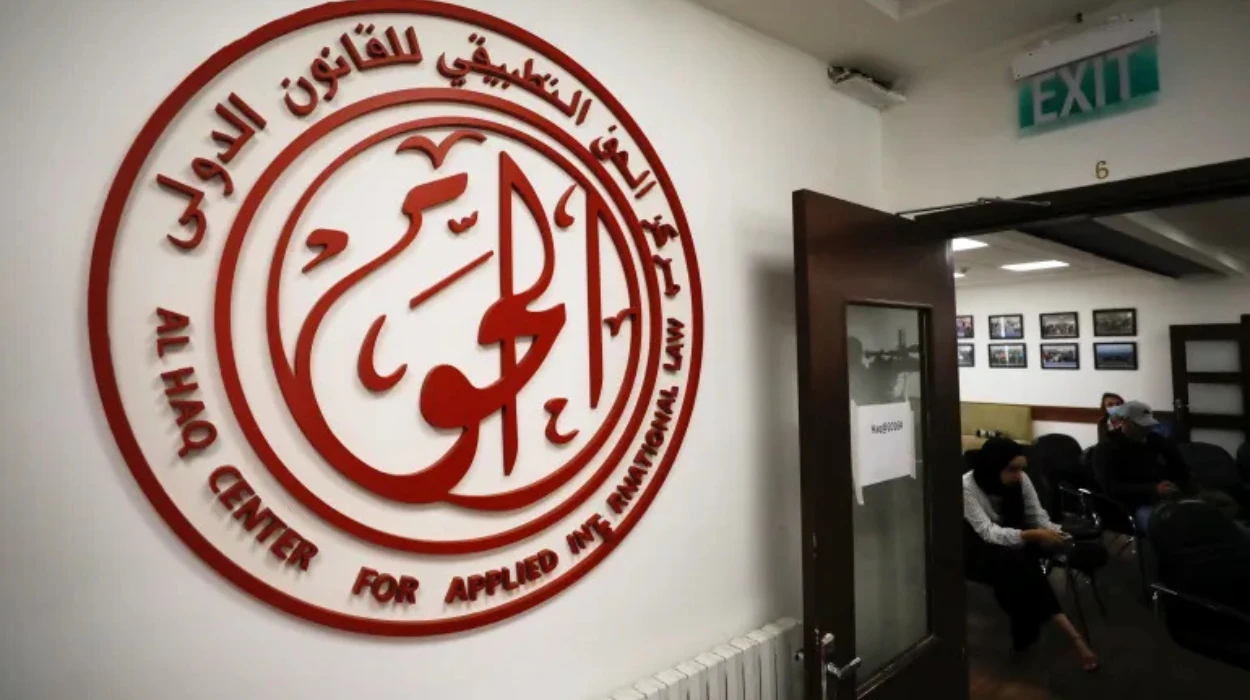
include Al-Haq, Al-Mezan Center, Palestinian Centre for Human Rights. - Sanctions
follow their request for ICC investigation of Israel. - The US
labels their actions as illegitimate targeting of Israel.
The Treasury Department has taken action against the three
organizations—Al-Haq in Ramallah, the Palestinian Centre for Human Rights in
Gaza, and the Al Mezan Center for Human Rights—under authorities related to the
International Criminal Court.
In November, the three organizations reported to the ICC on
Israeli airstrikes against crowded civilian areas in Gaza, the siege in that
area, and displacement of the population.
A year later, the ICC issued arrest warrants for Hamas
leader Ibrahim al-Masri, Israeli Prime Minister Benjamin Netanyahu, and
Israel’s former Defense Minister Yoav Gallant for war crimes and crimes against
humanity.
The administration of U.S. President Donald Trump sanctioned
the ICC prosecutor and ICC judges for those arrest warrants issued by
Israel.
Among states parties, the United States, China, Russia and
Israel and some of the states parties do not recognize its authority.
Days after the largest academic association of genocide
researchers in the world passed a resolution stating
that the legal requirements to prove Israel is committing genocide in Gaza have
been satisfied, the United States imposed sanctions on Palestinian
organizations.
The announcement was deemed shameful and “entirely
based on Hamas’ campaign of lies” by Israel.
In October 2023, Israel began its war on the Gaza Strip
after 1,200 people were killed and 250 hostages were taken back into Gaza by
fighters from Hamas, the Palestinian militant organization that controls the
region.
What legal effects do ICC-related sanctions have on NGOs’
operations?
Sanctions generally include asset seizures, prohibited
funding transfers, and prohibited provision of financial services which in
effect severely diminish NGOs’ abilities to receive funding, pay staff, obtain
supplies, and conduct regular operations that are a necessary component of NGO
work.
In practice; many financial institutions and donors (for
example, international agencies and foundations) will likely avoid working with
any sanctioned NGOs or individuals due to fears over secondary sanctions or any
legal implications. This reduces an NGOs ability to access funding and banking
services.
Sanctioned NGOs often have difficulties sustaining
partnerships with other international NGOs, multilateral agencies and bodies,
and/or even just other local NGOs, which limits their ability to conduct
cross-border advocacy, research, and humanitarian action.