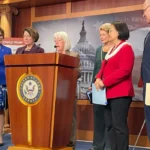

The United States Senate is a vital component of the
American political system, serving as one of the two chambers of Congress. Each
state, regardless of its population, is represented by two senators, making the
Senate a unique institution that balances the interests of both populous and
less populous states. Michigan, known for its rich industrial history and
diverse population, has had a significant impact on national politics through
its Senate delegation. This article explores the current and historical U.S.
senators from Michigan, their election history, and the broader implications of
their roles in the Senate.
Current U.S. Senators from Michigan
As of now, Michigan is represented by two Democratic
senators:
Gary Peters
- Party:
Democratic - Date
Assumed Office: January 3, 2015 - Date
Term Ends: January 3, 2027
Gary Peters has been an influential figure in the Senate,
focusing on issues such as economic development, healthcare, and national
security. His background as a businessman and state legislator has shaped his
approach to governance.
Elissa Slotkin
- Party:
Democratic - Date
Assumed Office: January 3, 2025 - Date
Term Ends: January 3, 2031
Elissa Slotkin, a former CIA officer and assistant secretary
of defense, brings a wealth of experience in national security and foreign
policy to her role. She won her seat in the 2024 elections, succeeding in a
competitive race that highlighted her commitment to serving Michigan’s
interests.
Election History of U.S. Senators from Michigan
The election process for U.S. senators in Michigan is
competitive and reflects the state’s political dynamics. The following sections
outline the recent election history for the U.S. Senate from Michigan.
General Election Results
In the most recent general election for the U.S. Senate in
Michigan, held on November 5, 2024, the following candidates participated:
- Elissa
Slotkin (D): 48.6% (2,712,686 votes) - Mike
Rogers (R): 48.3% (2,693,680 votes) - Joseph
Solis-Mullen (L): 1.0% (56,697 votes) - Douglas
P. Marsh (G): 1.0% (53,978 votes) - Dave
Stein (U.S. Taxpayers Party): 0.7% (41,363 votes) - Doug
Dern (Natural Law Party): 0.3% (18,779 votes)
The election was closely contested, with Slotkin narrowly
defeating Rogers, showcasing the competitive nature of Michigan’s political
landscape.
Democratic Primary Election
In the Democratic primary held on August 6, 2024, Elissa
Slotkin emerged victorious against Hill Harper:
- Elissa
Slotkin: 76.3% (712,791 votes) - Hill
Harper: 23.7% (221,053 votes)
This decisive win allowed Slotkin to secure her position as
the Democratic candidate for the general election.
Republican Primary Election
The Republican primary also took place on August 6, 2024,
where Mike Rogers won against several candidates:
- Mike
Rogers: 63.2% (555,766 votes) - Justin
Amash: 15.6% (137,565 votes) - Sherry
O’Donnell: 12.1% (106,466 votes) - Sandy
Pensler: 9.1% (79,772 votes)
Rogers’ strong performance in the primary set the stage for
a competitive general election.
Historical Context of U.S. Senators from Michigan
Michigan has a rich history of representation in the U.S.
Senate, with a total of 42 individuals serving as senators since the state’s
admission to the Union in 1837. The political landscape has evolved over the
years, with shifts in party dominance and key political figures emerging.
Notable Historical Senators
Debbie Stabenow
served as a U.S. Senator from Michigan from 2001 to 2025 and was a prominent
figure in the state’s political landscape. Throughout her tenure, she was
particularly known for her advocacy in agriculture and healthcare, championing
policies that aimed to support farmers and improve access to affordable
healthcare for Michigan residents. Her efforts in these areas significantly
impacted the lives of many constituents and highlighted her commitment to
addressing critical issues facing the state.
Carl Levin, who held office from 1979 to 2015, was another
influential senator from Michigan. His long tenure in the Senate was marked by
his significant contributions to defense and foreign policy matters. Levin
played a crucial role in shaping national security legislation and was known
for his ability to work across party lines to address complex issues. His
expertise and leadership in these areas earned him respect both within Michigan
and on the national stage.
Spencer Abraham, a Republican senator who served from 1995
to 2001, focused on technology and energy issues during his time in office. He
was an advocate for policies that promoted technological innovation and energy
independence, reflecting Michigan’s industrial strengths. Abraham’s work in
these fields contributed to discussions on economic growth and sustainability,
making him a notable figure in the Senate during his tenure..
Party Representation Over Time
Historically, Michigan’s Senate representation has included
a mix of Democratic and Republican senators. The current delegation reflects a
Democratic majority, which has been a significant shift in recent years.
The Electoral Process for U.S. Senators
U.S. Senate elections in Michigan are held every six years,
with the entire state participating in a general election. Voters cast their
ballots for candidates representing various political parties, and the
candidate receiving the majority of votes is elected to the Senate.
The Role of Proportional Representation
While the U.S. Senate does not utilize a proportional
representation system, the electoral process allows for a diverse range of
candidates to compete. This system encourages voter engagement and provides
opportunities for various political parties to present their platforms.
Key Issues and Legislative Focus
Economic Development
Both current senators from Michigan prioritize economic
development, particularly in the wake of challenges faced by the automotive
industry and manufacturing sectors. They advocate for policies that support job
creation, infrastructure investment, and innovation.
Healthcare Access
Access to affordable healthcare is another critical issue
for Michigan’s senators. They work on legislation aimed at expanding healthcare
coverage, reducing prescription drug costs, and improving public health
initiatives.
National Security and Foreign Policy
Given Elissa Slotkin’s background in national security, both
senators emphasize the importance of a robust defense policy and international
cooperation. They advocate for policies that enhance national security while
addressing global challenges.
The U.S. Senate delegation from
Michigan has a rich history and plays a vital role in shaping national
policies. With current representatives Gary Peters and Elissa Slotkin, Michigan
continues to influence legislative decisions at the federal level.
Understanding the election history and the electoral process provides valuable
insight into the state’s political landscape and the importance of its senators
in Congress.