
Summary
- The
Senate Foreign Relations Committee approved Mike Waltz’s nomination as
U.S. ambassador to the U.N. by a 12-10 vote. - Waltz
was removed as Trump’s national security adviser in May after a Signal
chat scandal. - Democrat
Sen. Jeanne Shaheen crossed party lines to support Waltz; Republican Sen.
Rand Paul opposed him. - No
date set for full Senate vote; Senate GOP might delay August recess to
confirm Trump nominees. - Waltz
pledged to “make the U.N. great again” and emphasized a strong U.S. stance
against China.
Waltz, who was fired as Trump’s national security adviser in
May after being embroiled in a scandal concerning a Signal discussion among
senior Trump staffers, was voted in favor by the panel 12–10.
Republican Senator Rand Paul joined Democrats in voting
against Waltz, while ranking Democrat Senator Jeanne Shaheen joined Republicans
in supporting him.
When the nomination might be considered
by the entire Senate was not immediately apparent. There were no changes to the
schedule, according to a spokesman for Senator John Thune, the Republican
leader of the chamber.
Thune has hinted that if Democrats do not permit Republicans
to confirm Trump candidates sooner, he may postpone the Senate’s yearly August
recess. Trump recently called for the Senate to remain in Washington so that it
could vote on his candidates in a post on his Truth Social platform.
Waltz, a former Republican legislator from Florida and a
retired Army Green Beret, is among the final significant Trump nominations
awaiting Senate approval.
Following his involvement in a March incident concerning the
Signal chat, which revealed specifics of a U.S. military operation and
inadvertently included a journalist, he was fired as national security advisor
on May 1. Waltz was then swiftly appointed as Trump’s ambassador to the United
Nations.
Shaheen stated in a statement regarding her vote that she
didn’t agree with Waltz on a number of points, including his
“use of
unclassified systems to coordinate sensitive discussions.”
She did,
however, also describe him as a moderating factor who does not appear to be isolationist
and has experience in developing national security policy.
“Mike Waltz did not represent himself to me as
someone who wants to retreat from the world – and this is a quality I value in
nominees,”
Shaheen said.
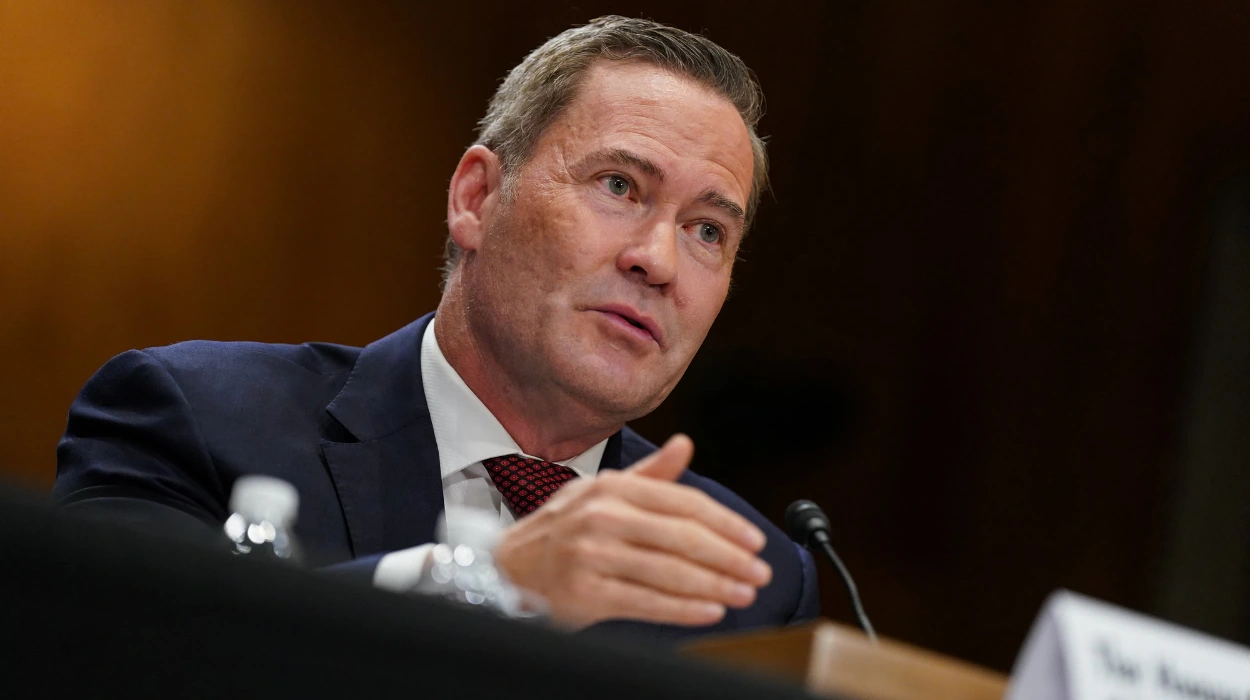
During his confirmation hearing this month, Waltz stated
that he is
“confident we can make the U.N. great again”
and that the
United States has to have a strong voice to oppose China. He also noted that
the U.N. needs change.
What factors contributed to the narrow vote for Waltz’s nomination
in the Senate?
Waltz was previously removed from his role as Trump’s
national security adviser due to a scandal involving a Signal group chat. He
was criticized for adding a journalist to the chat that discussed sensitive
U.S. military operations in Yemen. Senators, particularly Democrats such as Tim
Kaine, Chris Coons, and Cory Booker, questioned Waltz extensively about the
incident, his handling of responsibility, and potential national security
risks.
Waltz was criticized for deflecting blame onto the Biden
administration for the Signal chat usage rather than taking full responsibility
himself, which drew harsh questioning and a lack of confidence from opposing
senators.
The vote largely followed party lines with Republicans
backing Waltz due to his experience and perceived patriotism, especially his
role as a retired Army Green Beret and former congressman, and Democrats
opposing him.